Thursday, August 14, 2008

Relaxing in Indiana

It’s been awhile since we’ve blogged. The end of July we were busy wrapping things up in Moz in order to take our every two year leave that our church provides for us. It was another whirlwind exit as Steve was busy traveling to Maxixe with the organic certification for the coconut oil, we did two Ancient Paths seminars, the church had a quarterly meeting and to top it all off, Steve took a day trip to Chokwe with Sam to work on ag and business future directions the day before we left.

In September it will be four years since we left home and went to Brazil for language study on our way to Mozambique. My, how time flies. In retrospect, we see our lives have been full of new growth points, new people and places to know, lots of cultural and spiritual challenges and God’s complete provision for our lives, family and ministry.

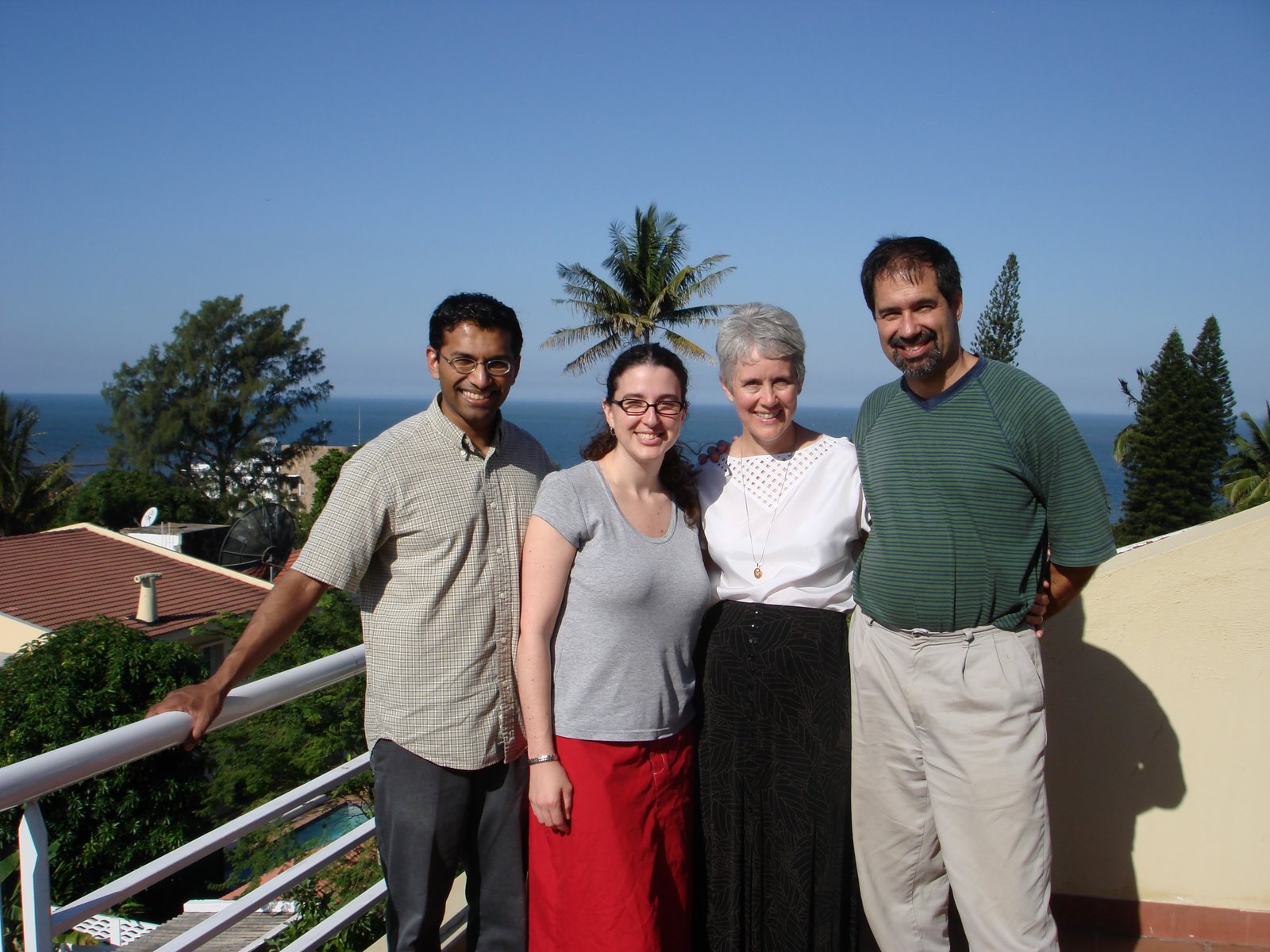
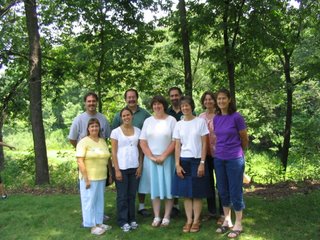
Since we’ve been home we’ve participated in a Good family reunion. As always it was great to catch up with the family and even welcome some new ones (by birth and marriage). Here's Steve with his siblings and some of his cousins.


The big news from this past week is that Steve had LASIK done on both eyes. This was done in Ohio by Dr. Davis, whom we met on a trip from The Chapel. He is a great doctor and even a greater guy! Right now I can see quite well without contacts at a distance, but still need reading glasses. Sometimes I find myself thinking it is about time to take the old contacts out for the night if my eyes have gotten tired. “Older” eyes (and minds) apparently take more time to adapt and get over the surgery.

We were able to visit family and friends. We also visited two “The Chapel” locations who partner with World Relief. It was fun and refreshing to spend time with people we have known and gotten to know over the years and see them in their own settings. We are always amazed at how God has expanded our friendships and opportunities.

Usually our days consist of enjoying two of our children (Joel and Joanna and spouses were with us for some days), watching Olympics, studying (Rachel is plugging away on a course), preparing presentations/sermons, meeting with friends and family, reading (Steve read four books in five days), pulling some weeds and doing maintenance on the house. It is a nice change of pace and we are relaxing well. September will be busier with WR travels and meetings.

Tuesday, June 24, 2008

Maria

Last week I was talking to our friend who helps us with cleaning once a week, Maria. She heard that the sun was getting closer to the earth and it would be hotter now. Since she is bothered very much by heat, she was very worried! First I explained global warming a bit. Then I told her what the Bible says about not worrying about tomorrow. The next week I wrote down some passages for her to read and wrote out a couple of verses.

When I gave it to her she clasped the paper and said, "Oh, this is a gift! No one has done this for me before."

I was struck by her response. How often do we consider the Scriptures a gift to be treasured?

Monday, June 09, 2008

Xenophobia

Xenophobia definition from the American Heritage Dictionary: "NOUN: A person unduly fearful or contemptuous of that which is foreign, especially of strangers or foreign peoples."

Unfortunately, this word describes what has been happening in South Africa lately. A violent minority of mostly poor South Africans have decided to take matters into their own hands because they feel there are too many foreigners coming into SA and taking their jobs and places to live. Their answer has been to kill some, and threaten many. They show up one day and tell them to be out by nightfall or their houses will be burned (or worse). To read more about it click here: http://allafrica.com/stories/200806040897.html

Not only has these been a problem in S Africa, it is also directly affecting us here in Mozambique. Crime in the city has gone up dramatically since those fleeing from S Africa have arrived. They have no jobs, plenty of time to think up mischief and hungry stomachs motivating them to steal. This past week a restaurant and all its patrons were held up. I've just returned from visiting one of our WR colleagues who was assaulted Saturday. He is a tall, broad man but a gang of six jumped him, took his keys (all he had on him) and knifed him in the chest. Thankfully the wound wasn't deep and didn't damage any organs.

I will not be ruled by fear, but I will be more cautious and street-wise now. When we first arrived we were strongly cautioned about going out at night, etc. Lately we have been more lenient, but now will be more careful and aware. Perhaps you can send up some prayers that our angels will stay on duty and that God will protect us. Thanks.

Thursday, May 29, 2008

Chinhangane

Time moves on and we need to record what has happened. Steve and I and Anastase (the new WR church development director) headed out to the village of Chinhangane about 5 hours from Maputo for three days in mid-May. We joined a group of people from Calvary Church in Grand Rapids who are WR church partners.

Along the way we experienced God's protection as we came within inches of being hit in the truck. We were traveling in a very remote area. Every now and then one sees a mud hut, there are hardly any people and there is no cell phone service. So we were driving along and we saw a pickup with some guys in the back on the other side waiting to come onto the road. He seemed to motion to Anastase (who was driving) to go on by. However, as we got close, he came onto the road and proceeded to drive into our lane and our path! Anastase saw him coming and kept pressing the horn, but the guy just kept on coming. Anastase had to go off the road to miss hitting him. Finally after we passed him within inches he stopped. As I looked back I saw him put his hands together out the window in a gesture of prayer. I think he was trying to say he was sorry.


When we arrived at Chinhangane the first sight we saw was many women knitting. The Calvary women taught them how to knit and they were all making a simple shawl. It was amazing to see. The group and the women from the U.S. went for a walk once and the Chinhangane women took their knitting along and asked them to slow down because they were knitting! The only time I saw them put their work down was when they were listening to a teaching or during a meal. Now the challenge is to make this a self-sustainable project as it is very difficult to get good yarn for a good price in Mozambique and it is not sustainable for Calvary to bring in all the yarn from the U.S. I even tried my hand at knitting for awhile, but decided to revert to what I do better - crochet.

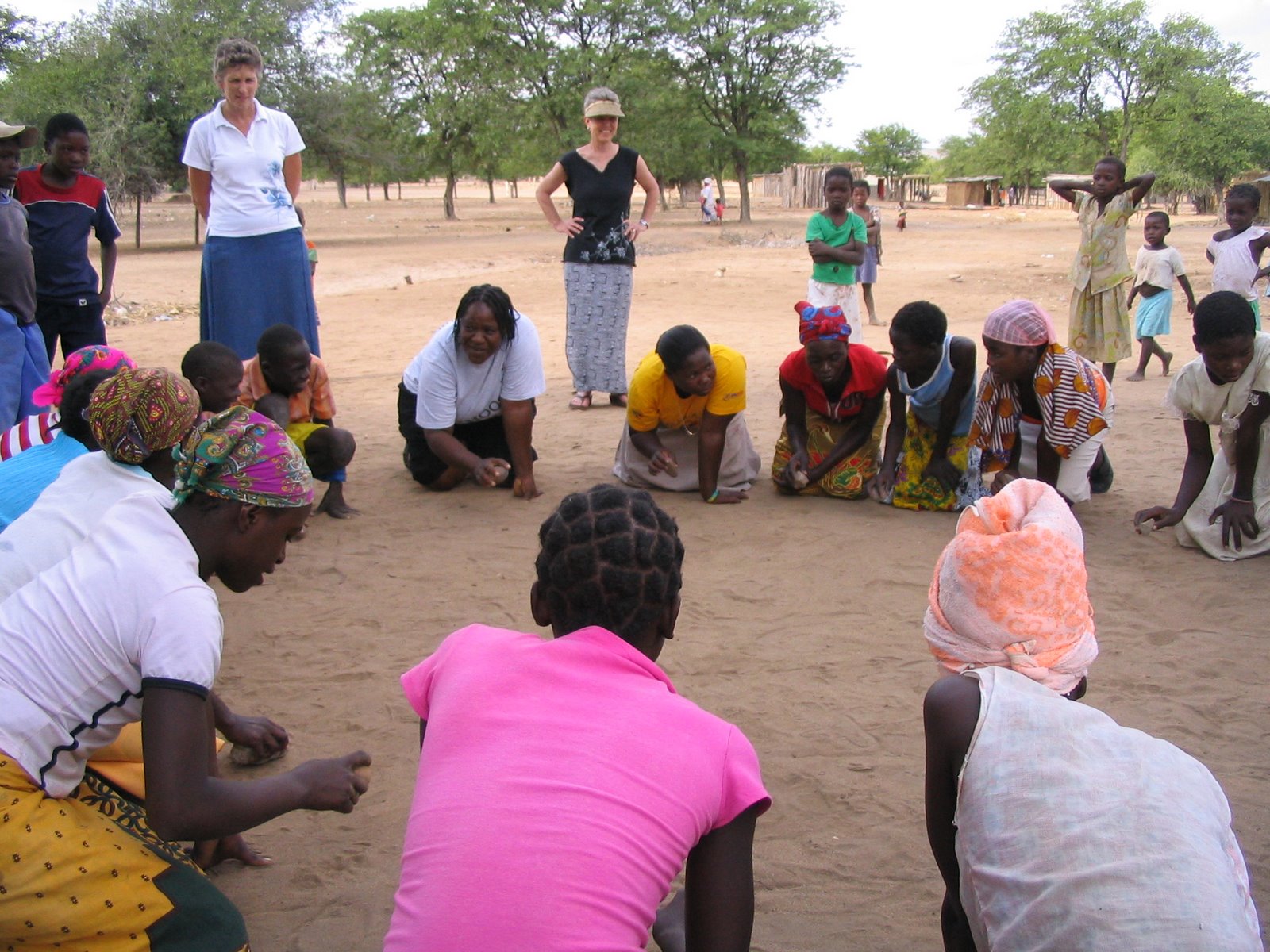
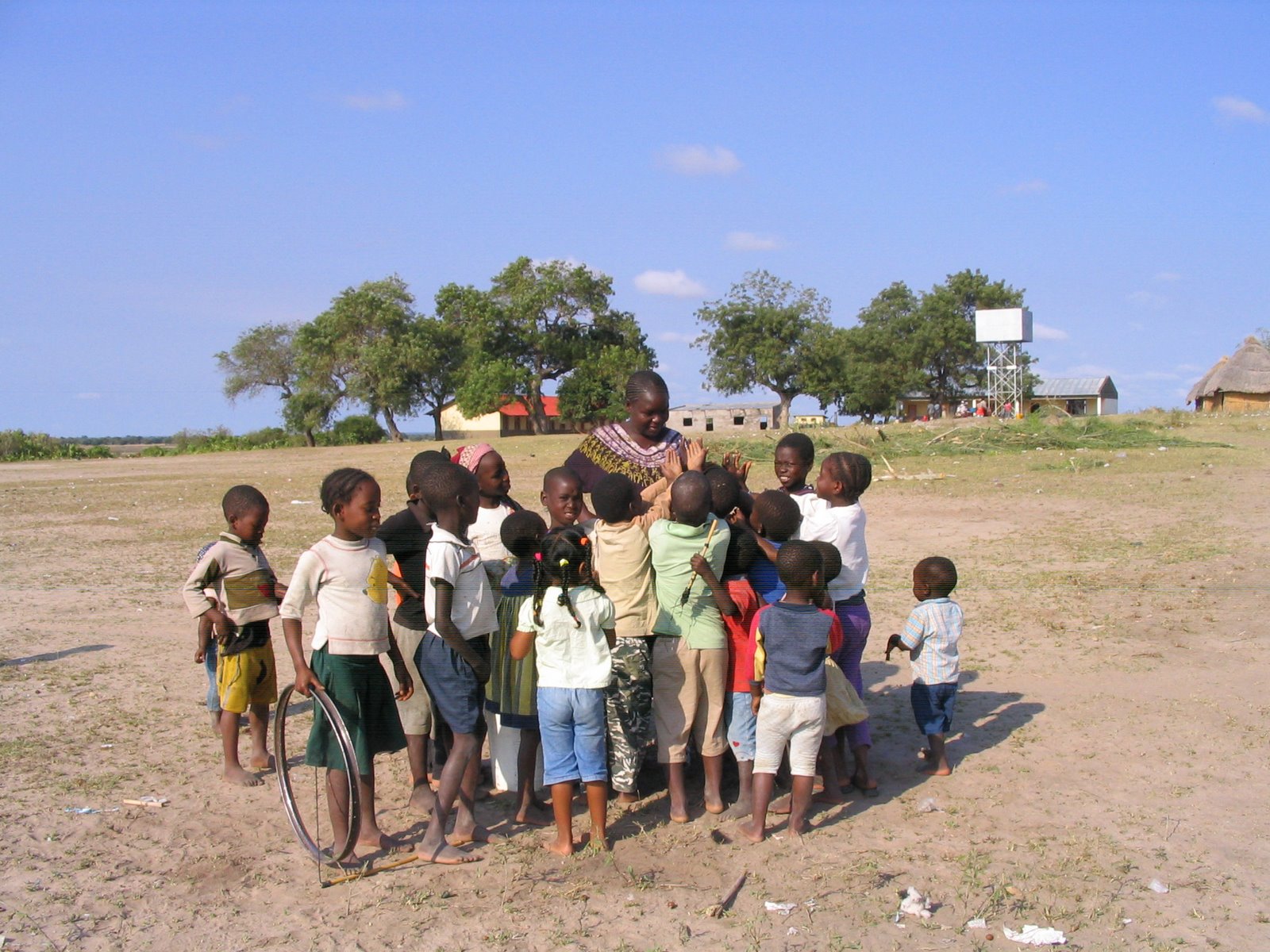
Here's Sybil doing some starter games for youth club.


Several of the men from the U.S. set up a solar electrical system to power the guesthouse that they had built. Here they are along with Steve putting it in place.


The team also did trainings for pastors, children and WR women and taught them to make woven rag placemats on small looms. I'm impressed with the creativity of the teams that come.

One of the tear-jerking moments was a visit we made to a family with a sick baby. He is 2 but outside of a miracle he won't make it to his 3rd birthday. He is very frail and just sits on his mother's lap and whimpers. He was in the hospital for awhile and had an HIV test, but the results have not been released to the parents. The mother was also tested, but she doesn't know the results. I'm afraid this is a common thing, especially with those who are positive.

Chinhangane and many villages like it are in a desperate situation due to the drought. Their crops all failed and what few crops they have been able to irrigate have been destroyed by the elephants. There is a wildlife park across the river, but when the river is down it is easy for them to cross over to find food. In order to have money to eat, the people have been traveling further into the bush to find trees to cut down and make charcoal to sell. In a few years there will be no more trees and their situation will be more desperate.

This past weekend we had an Ancient Paths seminar in Portuguese in the next town. Friday night especially, there was a real spirit of repentance as God showed them the dishonor in their lives. The rest of the seminar there was also a lot of repentance as they saw the consequences and curses attached to immorality. There was one man in our group who sobbed out that he was a prodigal son coming home to the Father. Many burdens were lifted and we may not know all the work God did until eternity.

One man wrote, “I am grateful to God because before the seminar I lived a life of dishonor toward my parents and I felt I was at the bottom of a hole and didn’t know how to get out. But on the first day of ministry I heard the word of God, I opened my heart and God worked in my life. I feel peace and joy and my sins were forgiven and the doors of dishonor were closed. Today I have peace with those who were my enemies. The weight on my soul was lifted.”

Saturday morning we start a process group with a few of the participants for the next 8 weeks. We thought we would do this after we return from the U.S., but they don't want to wait, so others will lead the last sessions. It's exciting to see their hunger and what God is doing.

Friday, May 16, 2008

Coconut Bread Instead

The week after Rachel did her trip out to the village, we were blessed by a visit from a food scientist from the US. Last fall while I was thinking about the high quality coconut press cake that we produce alongside our coconut oil (and the fact that the local bakery people had basically ignored us after we gave them a big sample to experiment with) I realized we needed to connect with some real food science people to help create higher value uses for the product.

In pursuit of someone, I thought first about our partner churches in the US who have a large number of professional people and diversity of skills that might surely yield one or two good hearted souls who might have an interest to help. So I wrote our staff in Baltimore asking what they thought about the idea. One of them, Sharla, said, “my husband Tim is a food scientist, grew up in Sri Lanka and loves coconut. Could he help?” Who would have guessed such a close connection?

We traveled to Maxixe one morning and saw the mill, with its oil production, and by-products of mature coconut water and press cake. The cake smells and tastes like coconut, is white in color and only needs grinding to make a good nutritional flour with lots of protein, fiber and some residual oil. Everyone who talked about it said how excellent it was and all the things you could do with it, but the local people were only feeding it to chickens.

The next morning, we visited a small bakery and talked to them about possibly using it in their bread making process. The main point of interest for them was that it was a lower cost ingredient. We got their recipe for the standard flour, yeast and water mix and went to our manager Romeu’s kitchen to see what Tim could figure out to do with a combination of the coconut flour and their recipe. When the first batch of bread came out of the oven around 5 PM, one of the 25% coconut flour buns broke apart because it stuck to the bottom of a well-used pan. After our first nibble, we could not stop eating from it. Even the niece, Epiphany, came back for more.

We had promised to come back to the bakery at 7 the next day to show them our results. When we arrived, they were not baking anything. After explaining to them about 3 times and letting them nibble on the samples, they got it and said,
“Where is some flour so we can make our own?”
“You mean now?”
“Yes, right now before you go back to Maputo.”
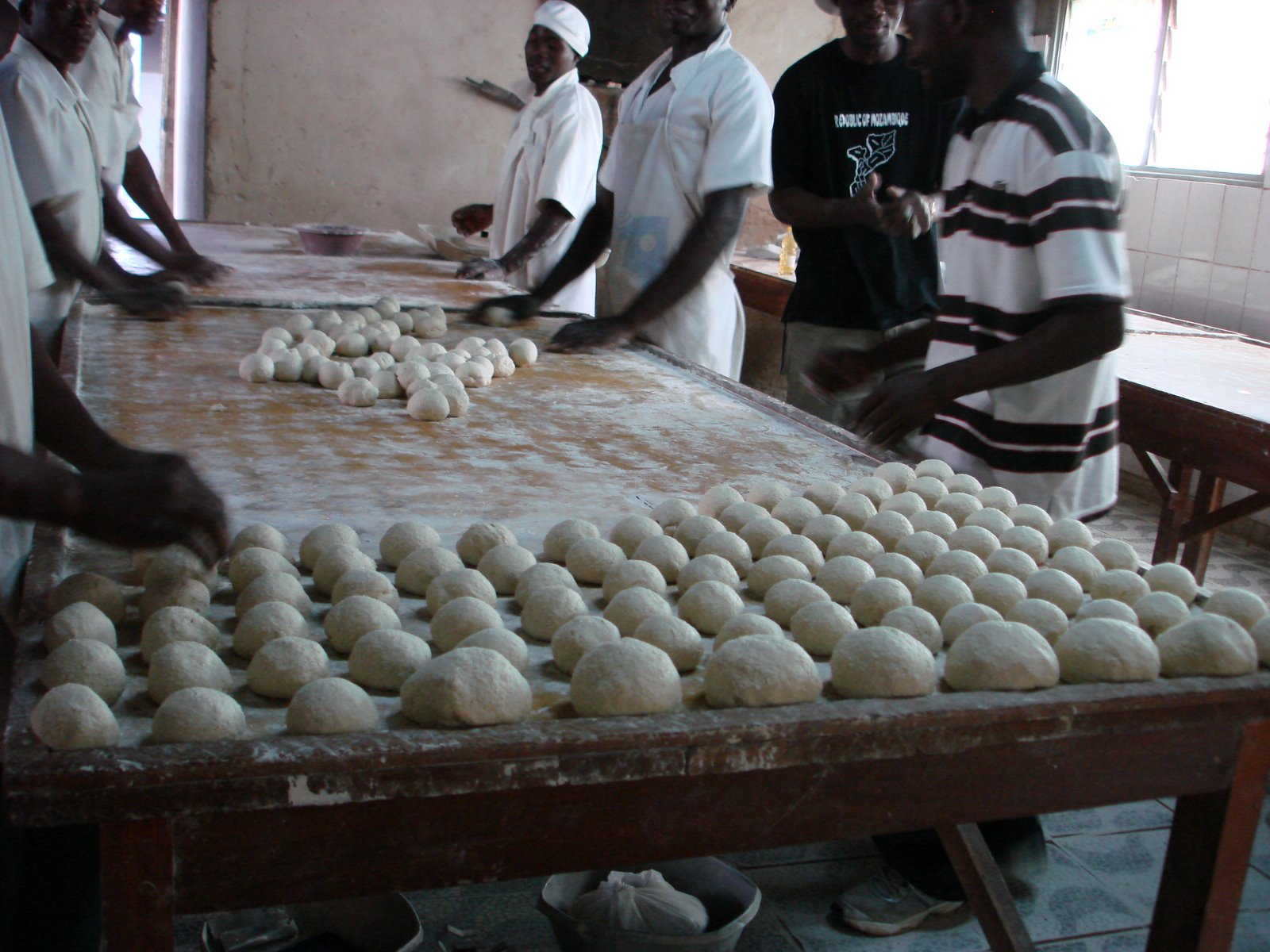
So, we helped them do the math and made a 1/5th batch in the commercial mixer. We had to pinch ourselves (and take photos) while they were cutting and rolling the balls for individual buns. It really exceeded our expectations.

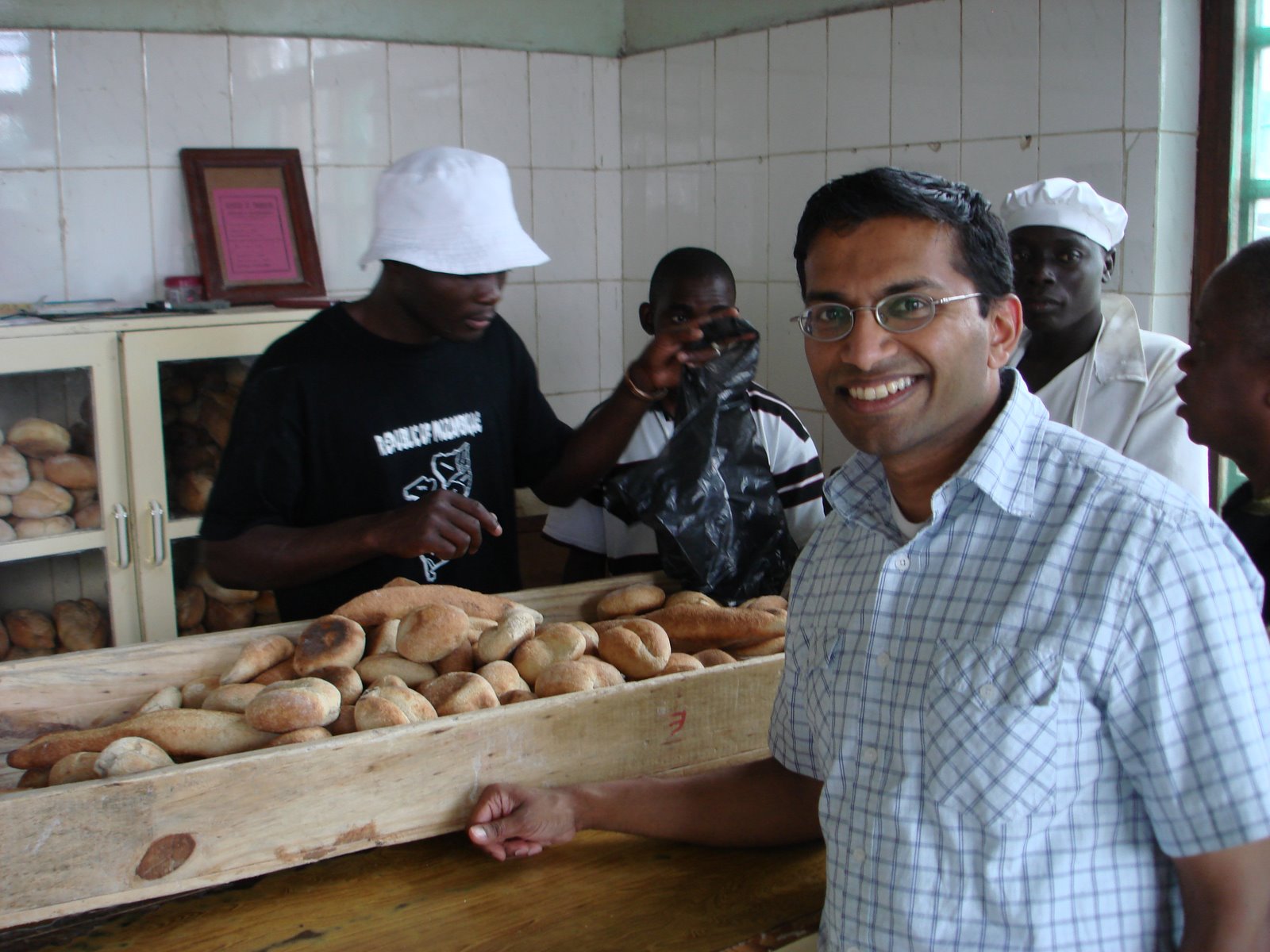
We left the bakery to let the bread rise and get some breakfast, (eating some of our own creations from the night before). When we got back, they had a tray full of bread out on the counter they were sharing with their customers. I bought a bag to bring back to evaluate and share it at the office. It was quite a hit as it made for a great story and interested eaters who said they really liked it (almost 24 hours after baking). Usually this style of bread gets stale and crusty as it has no oil or fiber to retain the moisture (or preservatives). It was still good Saturday, and even Monday it was still soft to the touch.

Now for the ultimate test—seeing if those who sampled it in Maxixe come back to ask for more and if we can sell it to the bakery on a regular basis.

Monday, May 12, 2008

In the Village

This past week Rachel spent a few days in a village with a team from Akron, OH. It was great to get out of the city for awhile and experience village life. It is really quite different. First we stopped in Chokwe and I was able to see many people whom I´m sad to say I haven´t seen in about 6 months or longer. After traveling to Chokwe for a few days every week, not being there for a long period of time has been very different. I miss the people, especially our ¨kids¨ that we spent a lot of time with at the beginning. They all seem to be doing well and are working and ministering in different areas, some with WR, some with Samaritan´s Purse. Atalia (in picture) is one of these.


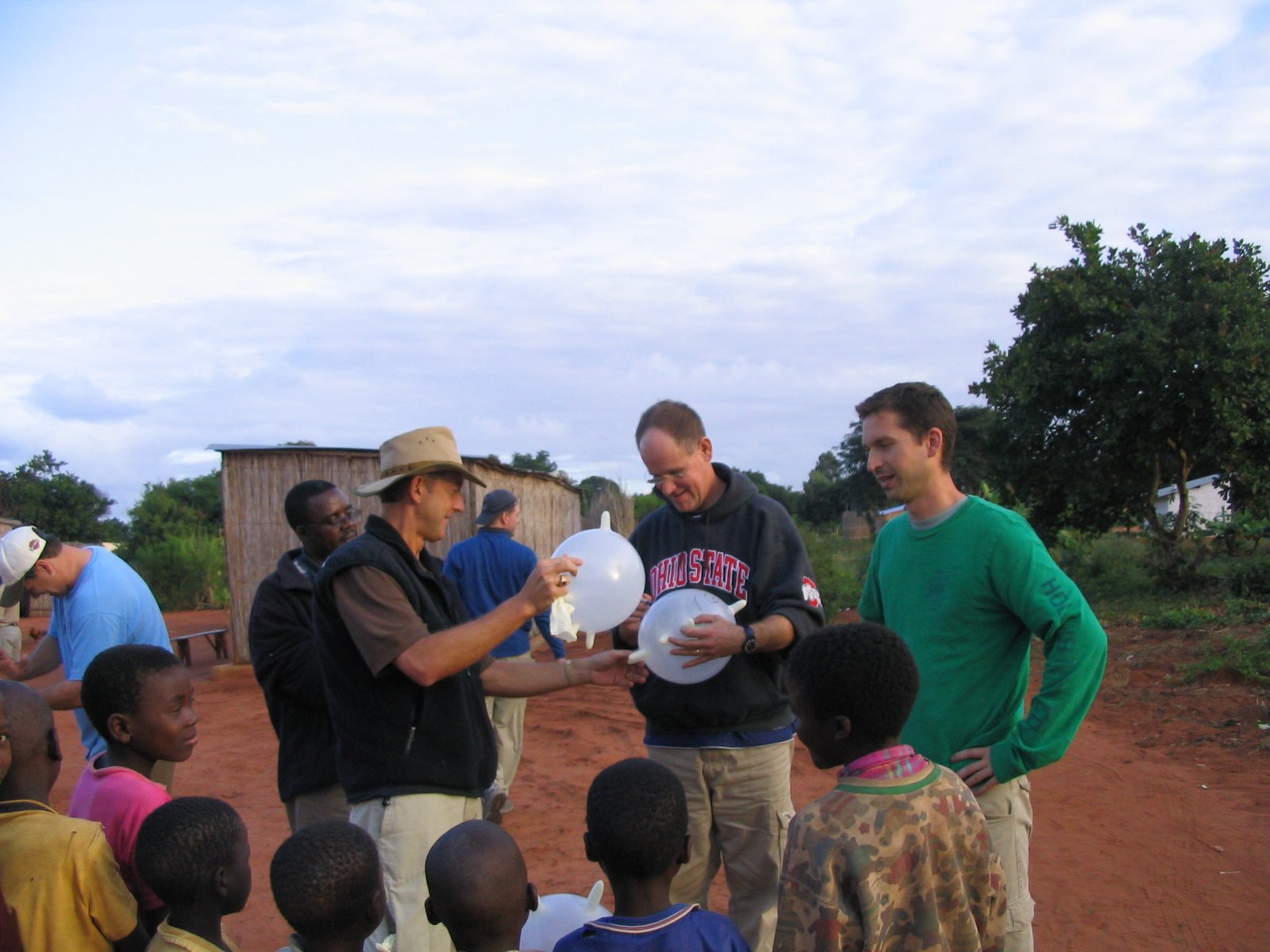
The team worked with teaching pastors and women´s groups, one guy taught welding, there were kids clubs and an eye doctor who did examinations and handed out Lions Club glasses. I joined them for a couple of half days and learned a lot about eyes in the process. The driver and I even figured out what kind of reading glasses a woman needed, put them on her, and she could read! (The Dr. was busy blowing up gloves like balloons and giving them to the kids.)
This is his second trip and on the first trip he learned that many people have had cataract surgery but have not had lenses replaced, which means they can’t see very well at all. This time he brought special glasses that had been donated from older people as they are no longer made or needed in the U.S. He brought 31 pairs and gave away at least 25. Many of these people would walk in hunched over and looking dejected. When they discovered they could see they walked straight with a spring in their step and huge smiles on their faces!

He also examined an albino and as he rarely sees albinos, he was trying to remember the distinctive characteristics about their eyesight. And then the guy pulls his prescription out of his pocket. Now before the Dr. left the U.S. a friend of his gave him two pairs of glasses of his dad’s who had just passed away. They were a very specific prescription with a special correction for astigmatism and the Dr. didn’t think he would find anyone that could use them. Lo and behold, the prescription the man handed to him was the exact one that he had the glasses for! Unfortunately he could only find one pair of sunglasses at the time, which he gave to him. On a different day, Doc found the other pair in his luggage but didn’t think he’d ever see the man again. We left the village and on our way back to Maputo we stopped at a Bible school for their graduation. One of the team members saw our friend walking in to the ceremony. So Doc quickly climbed up on top of the Land Cruiser, got to his luggage and pulled out the other pair of glasses. He handed it to the man and the guy was very excited. Hopefully by now he knows that God really loves him to arrange all those details so he could have two pairs of special glasses!

I found out that it’s a lot of work to stay two steps ahead of a team, but I had plenty of help. I don’t normally do this, but the woman who does needed to go to the U.S. so I took her place. It was a great bunch of people and it was a privilege to serve them.

Steve is currently spending time with a food scientist who is volunteering his time to research uses for coconut meal (what is left after the oil is extracted). It is high in protein and fiber, gluten free and supposedly becoming popular (and expensive) in the West. They are also experimenting with vinegar and fruit juices using the coconut water. Who knows what will come of it all--we’ll keep you posted.

Saturday, April 12, 2008

Pictures and thoughts of Malawi

We’ve just returned from spending 12 days in Malawi. Most of the time we were in Lilongwe, the capital city. It has almost 1,000,000 people, but it doesn’t seem like it. It was designed in areas with lots of open spaces and cornfields in between the areas. So it feels like you are in Illinois part of the time and then a shopping mall appears and a few buildings. There are no high rises or apartment buildings. Everyone seems to have a brick house (bricks are very abundant) and a yard. Traffic is not bad, even during rush hour, unless you get caught waiting for the presidential motorcade to pass by. It is very different than Maputo!


One day we went out with our friends who used to live in Maputo, Jon and Margaret. They took us to the crafts market and we started negotiating as the prices are cheaper than Maputo and they had some unique items. At one point Steve came over and told me that Jon was getting the price of 500 for the item that I was bargaining over. He said it in Portuguese and immediately several of the guys crowded around said, “Oh, I’m from Inhambane and I’m from Maputo.” So much for trying to be sly. At one point I was on my own and I said I’d have to consult with my husband. So I called him across the way “Steve.” Well, then everyone started calling him Steve and acted like they’d known him forever!

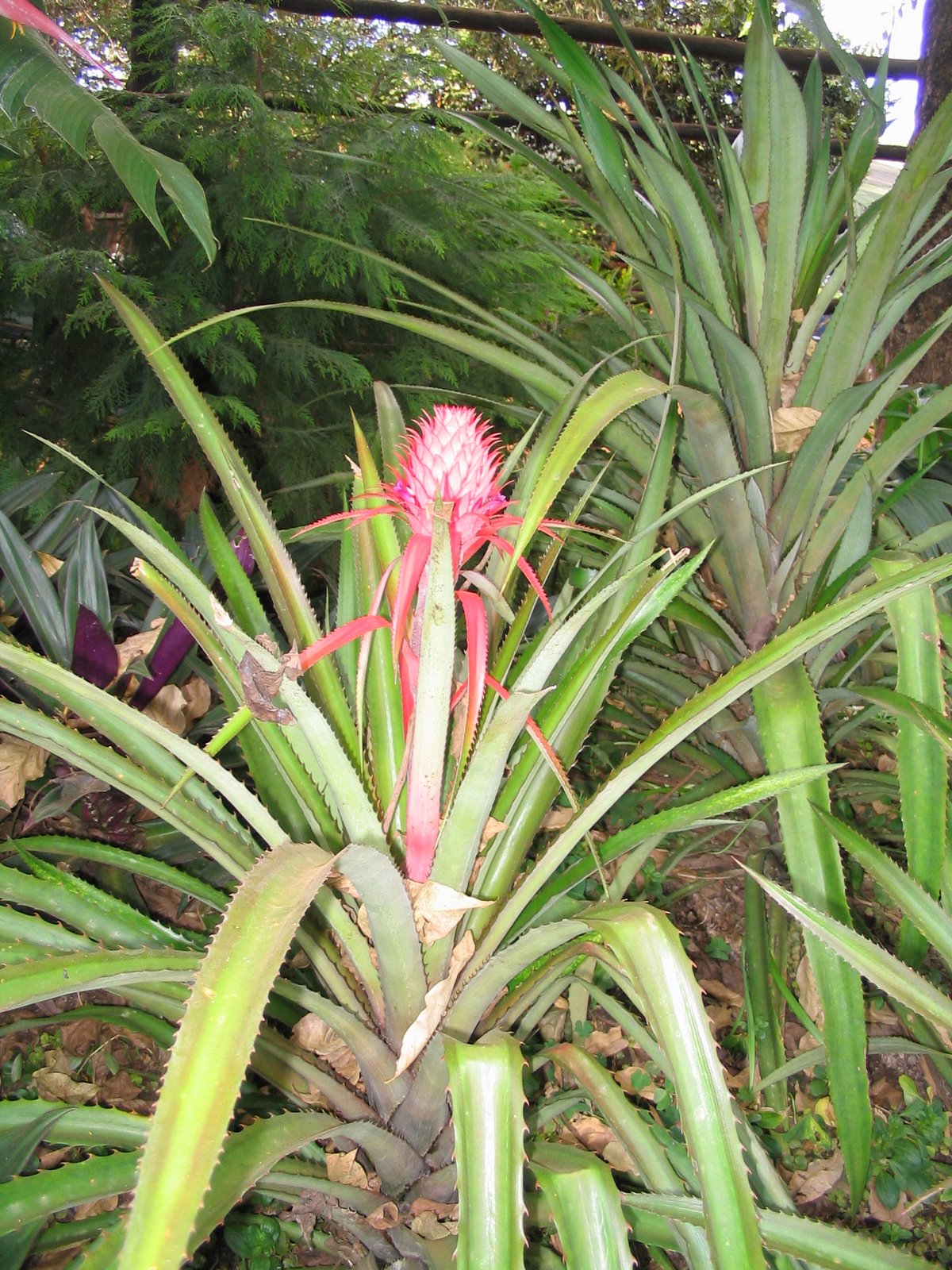
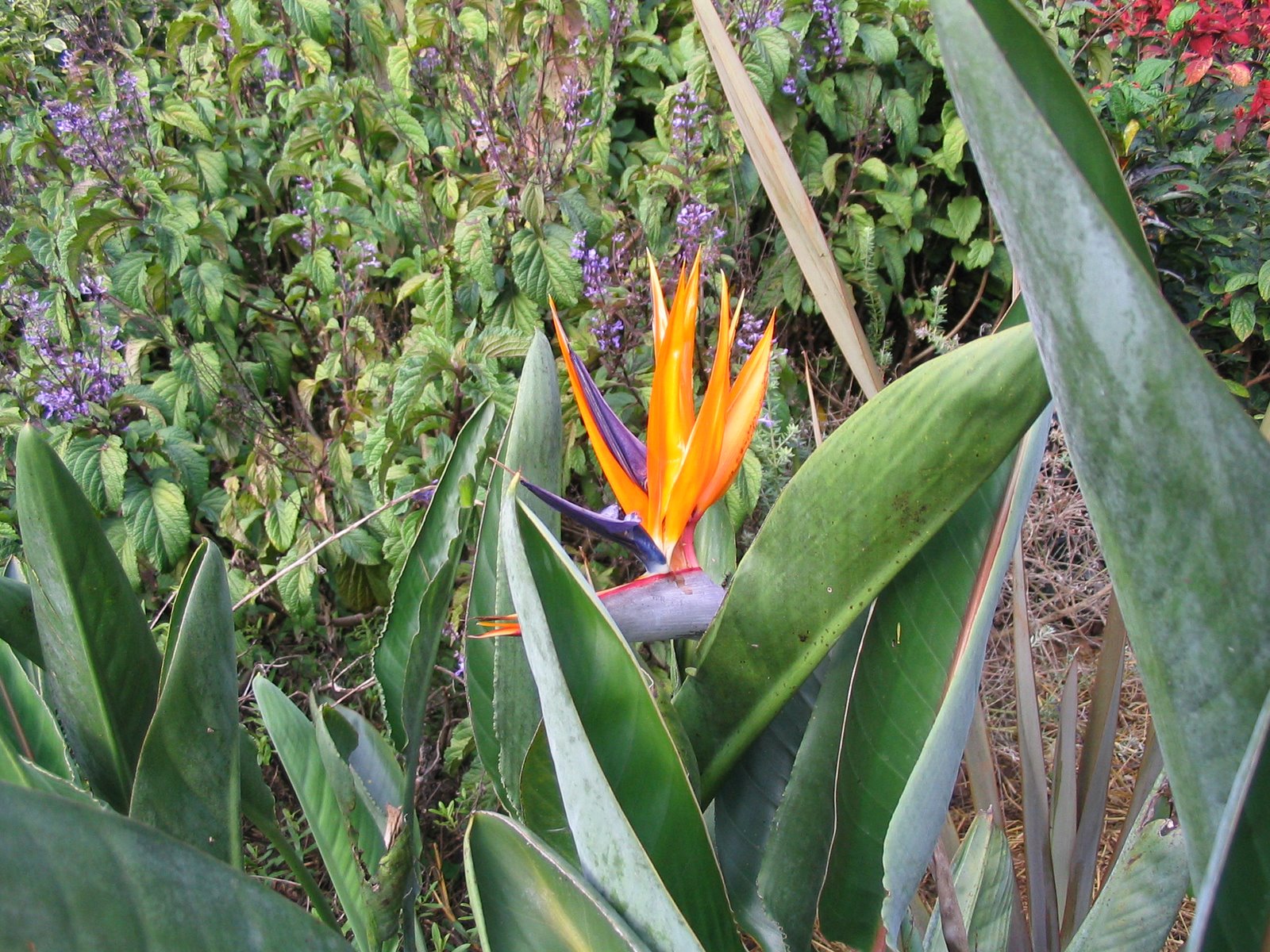
They also took us to a lovely garden area surrounding some restaurants and shops. Here are some of the flowers.


My week was filled with traveling to a village, Ntchisi, one hour away to do a MED training. It was intense as I found out that very few of the villagers spoke or understood English. That was a surprise to me as I thought most Malawians knew English as a second language. Apparently they do not teach English in the schools until the higher grades plus this village was isolated until they recently blacktopped the road.


Steve went out to Ntchisi a couple of days, one to help with the training and another to supervise construction of a chicken house along with a team from Minnesota. The rest of his week was spent in the office and consulting with the WR agriculture and trade people.


We lost track of how many coffin making shops we saw—at least 20 along the roads. Sad to say, it is a booming area for business.

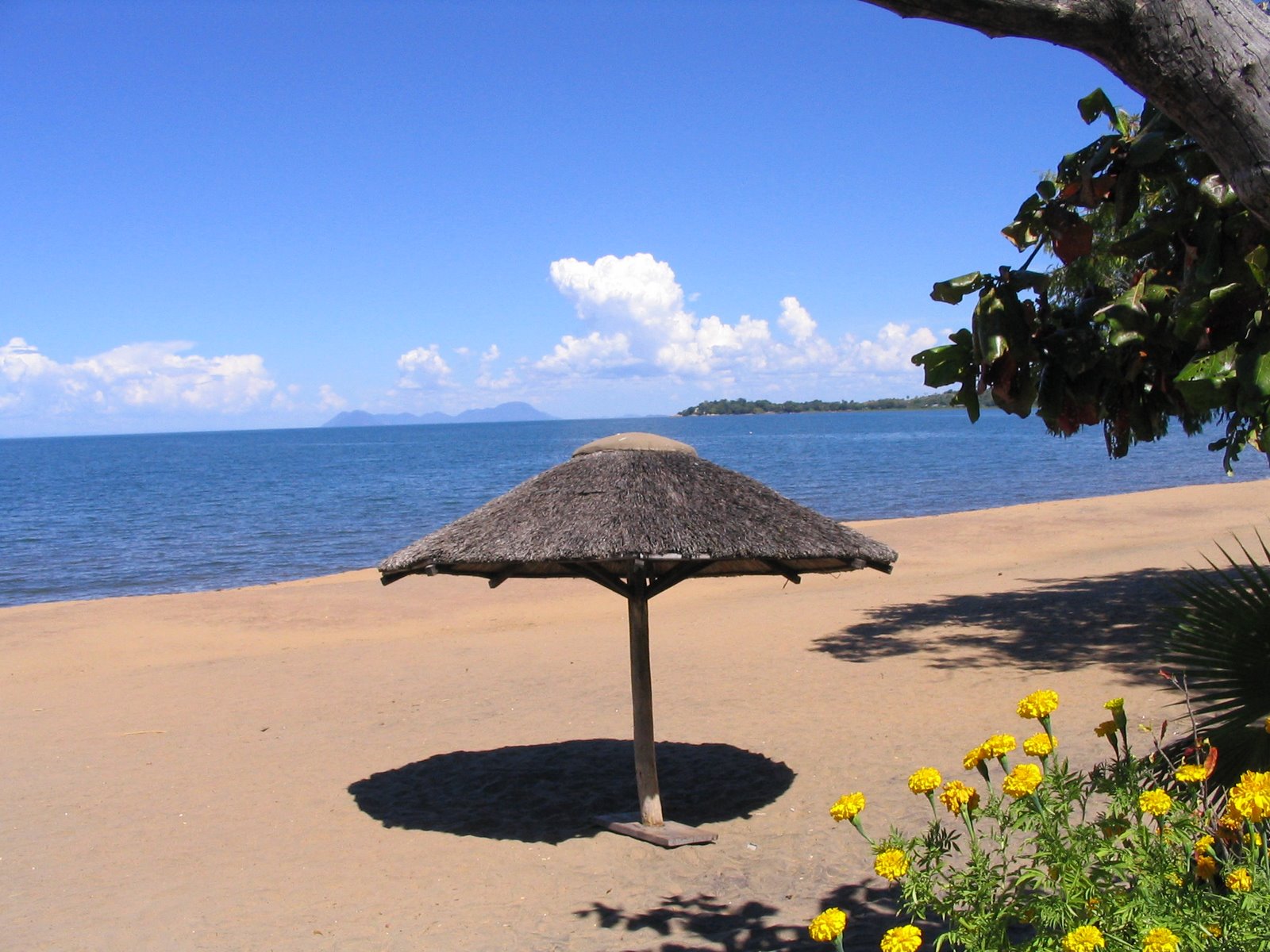
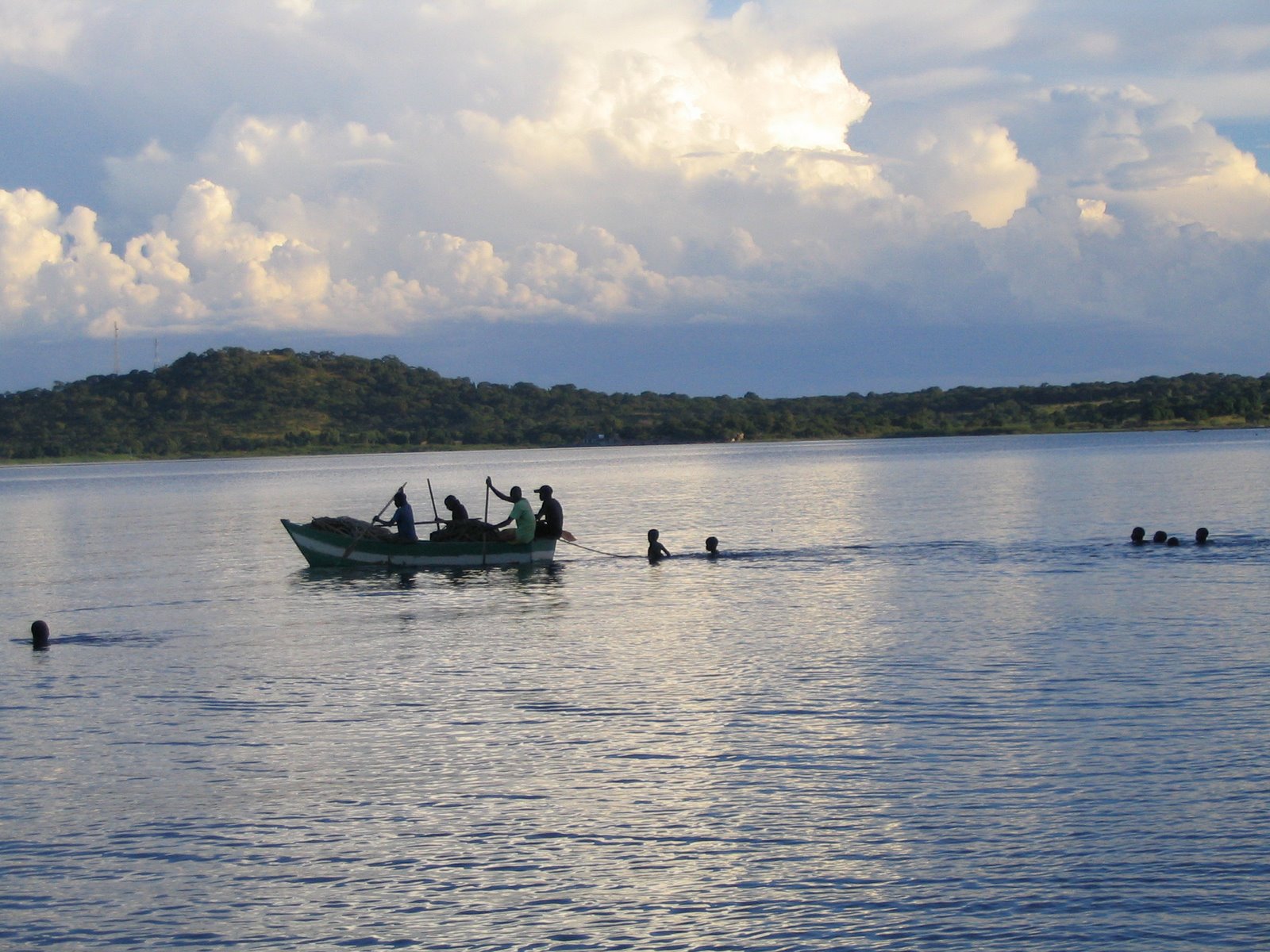
We spent our 30th anniversary at Lake Malawi which was basically deserted except for the locals. It is a beautiful place, although it is sad that the lake is so contaminated with bilharzias and other runoff. It doesn’t stop the locals from bathing, washing their clothes and swimming in the lake.


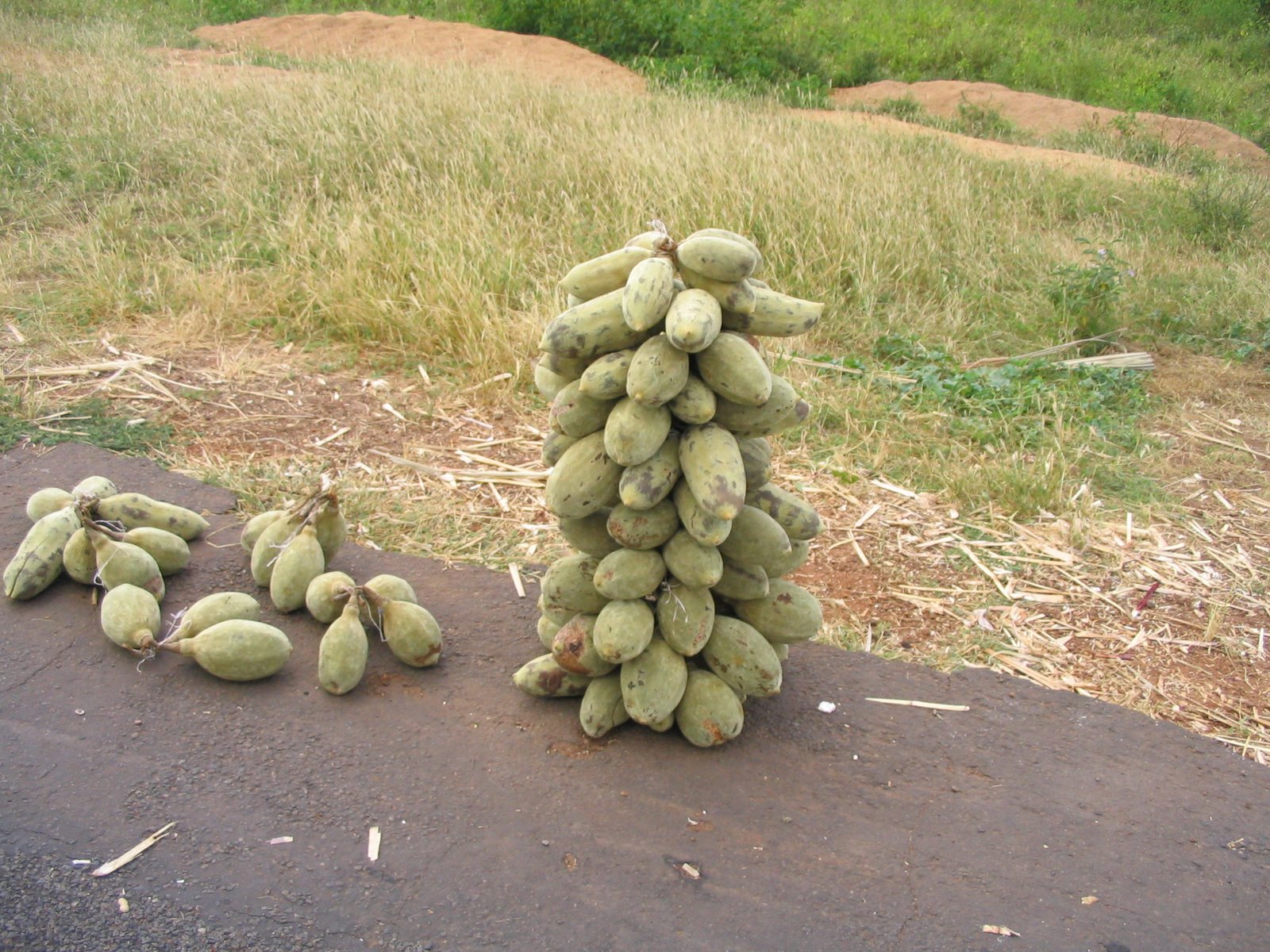
Baobob fruit sales

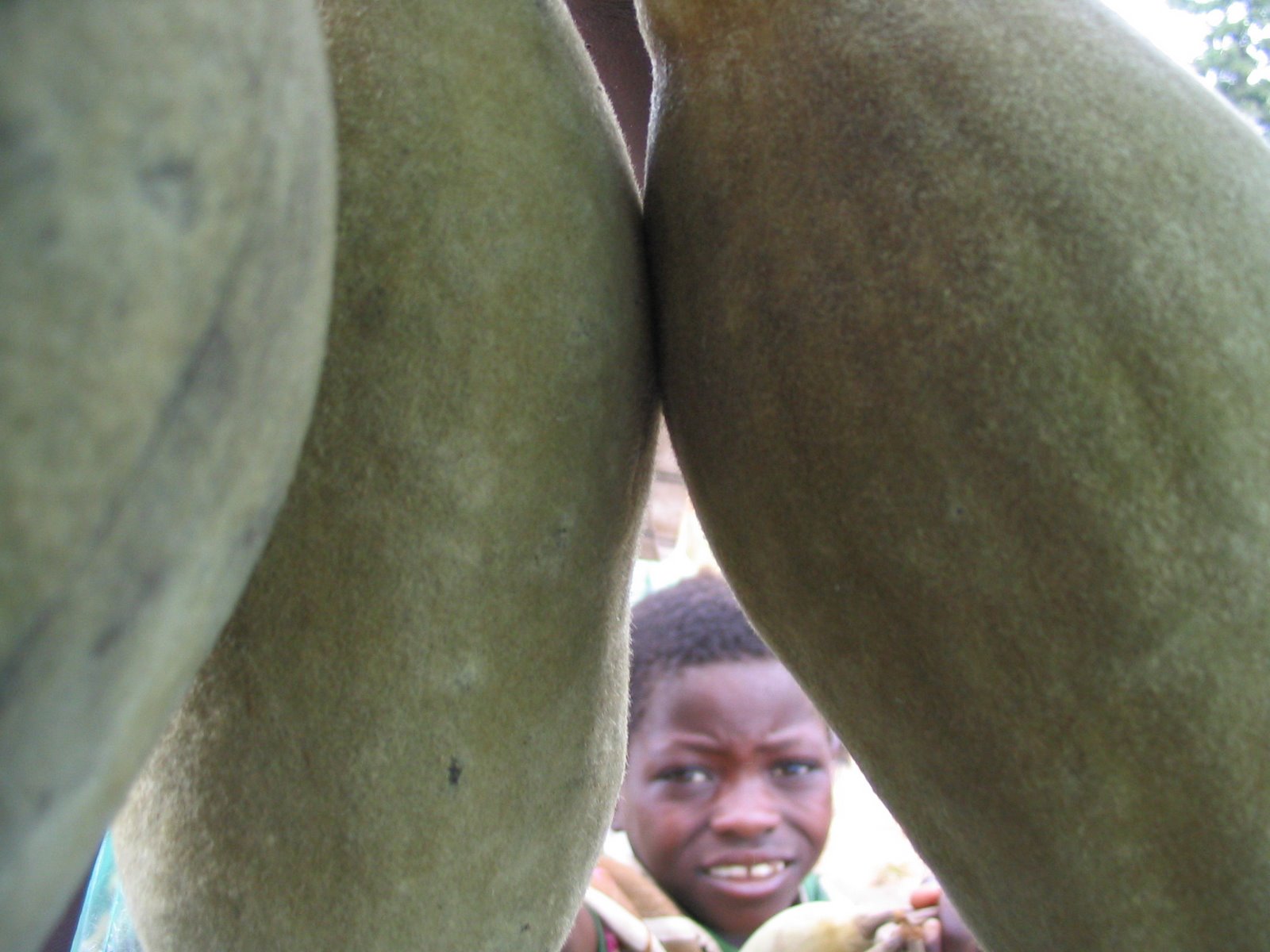
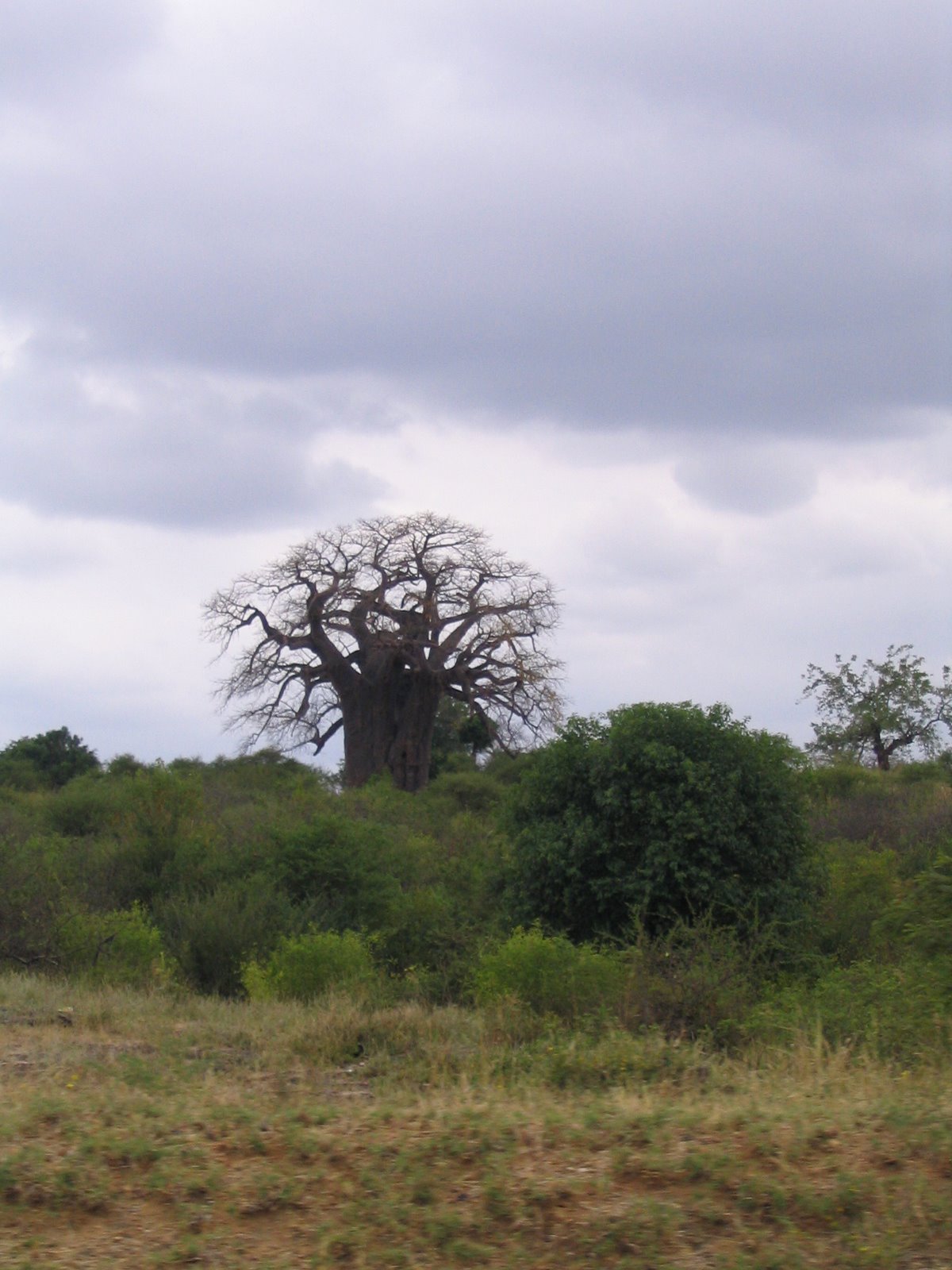
There were many baobab trees along the way and fruit alongside the road. This is what cream of tartar is made from but we’re not so fond of eating it as it is dry and powdery. I was trying to take a picture of some guys along the road selling the fruit, but they all jumped up and came to my window.


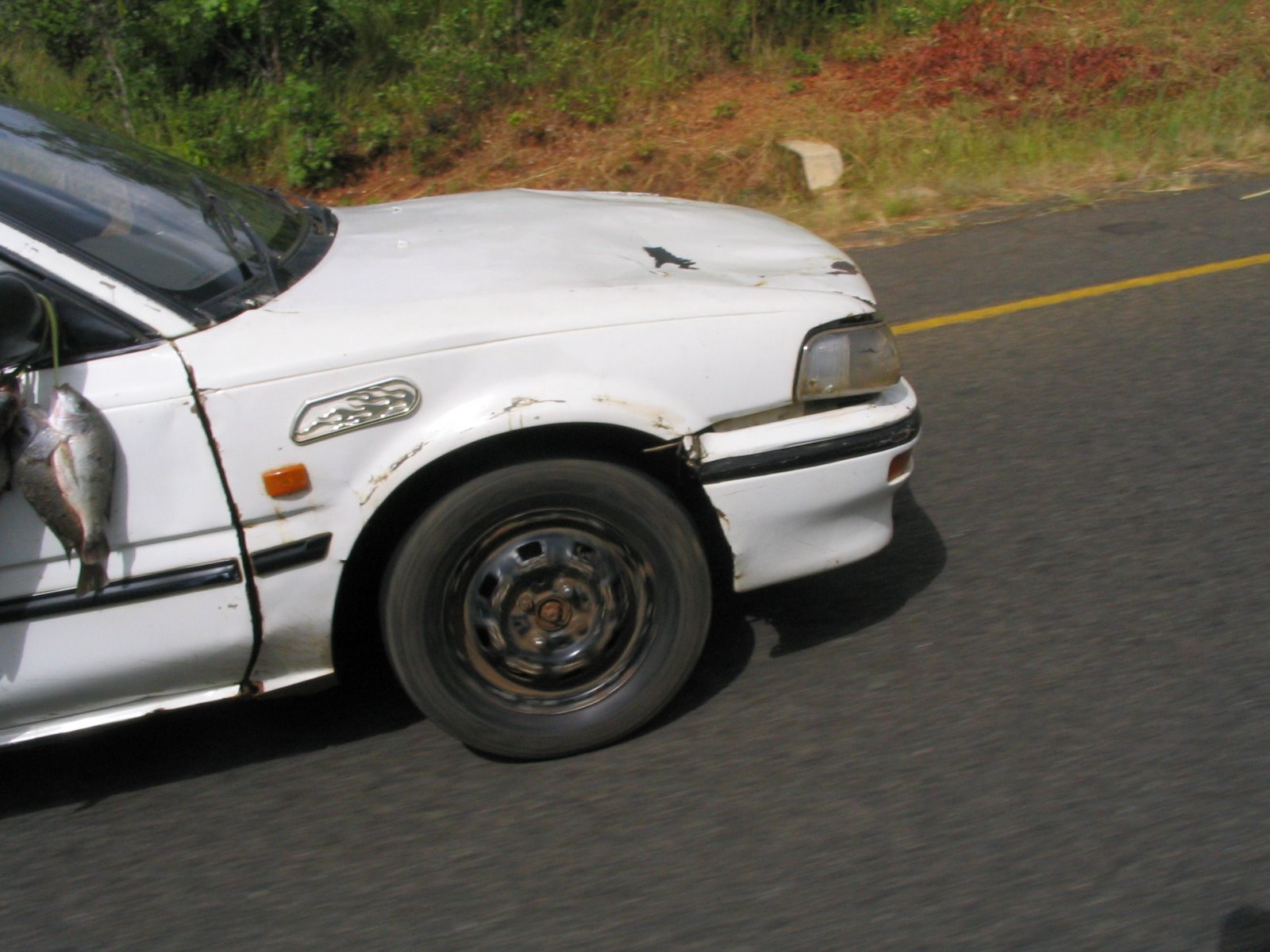
Here’s one man’s solution to getting his tilapia home from the lake—tie it to your mirrors (on both sides)! That way it stays cool and doesn’t stink up the car.


The mountains everywhere are beautiful and sometimes it felt as if we were in Puerto Rico. Then other times when we saw the women in their “capulanas” with their babies on their backs and the thatched roofs it seemed we were still in Mozambique.


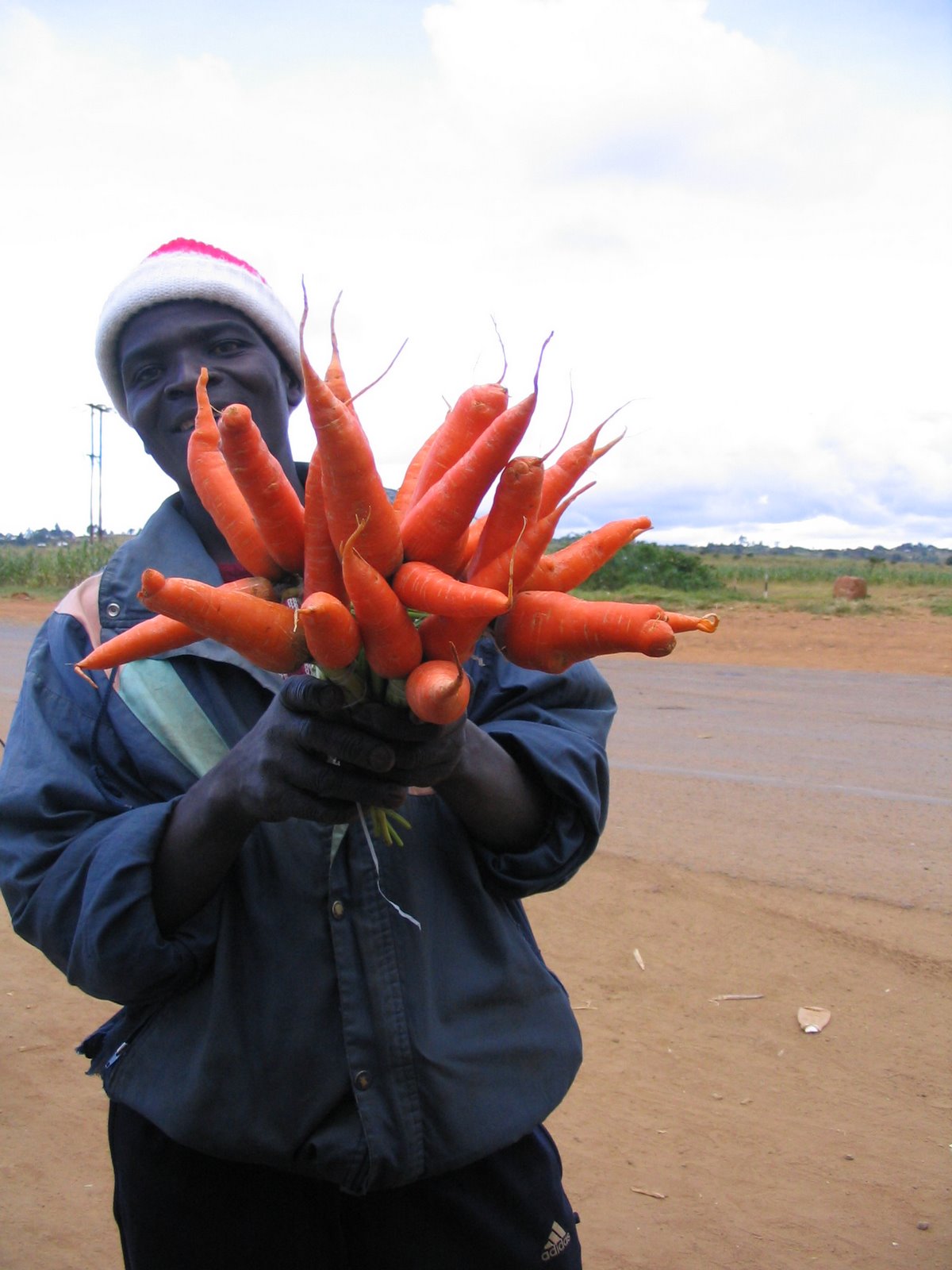
Back in Mozambique we saw this guy with his lovely bouquet of carrots.


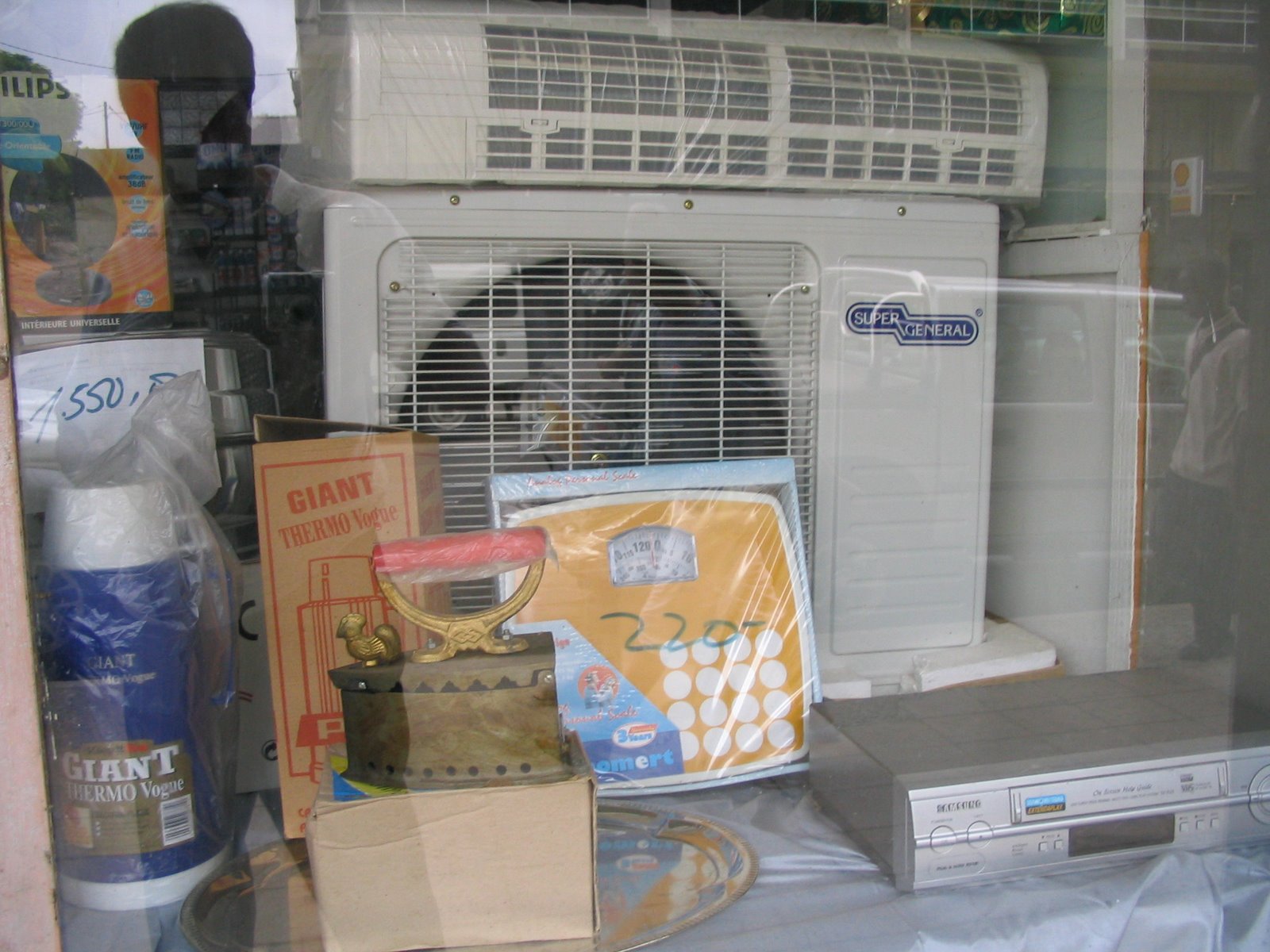
In a store window we saw contrasts between old technology and new—a charcoal heated iron with an air conditioner and DVD player.


With that we’ll end our travelogue of Malawi!

Wednesday, April 09, 2008

Doing Business in Africa

Talk about doing business and yes that is why we came to Mozambique, to help people start businesses that could economically sustain themselves and develop the country and region. So, let me tell you a story about a simple label that we wanted to use to sell the “great and innovative produce” from local resources, namely virgin coconut oil. My favorite subject, so don’t get me started on that one.

Well, we invested some significant money and bought two simple oil producing systems and built a building and started to produce oil (June of 07). We even enlisted the help of our artistic daughter and her graphic arts oriented boyfriend (now husband) and produced a great looking label. Then we started looking for a printer. The printers in Mozambique wanted 50 cents a label, (no, not the singer) and we said no way, that is ridiculous. We went to Nelspruit, (2.5 hours away if you can get through the border in a decent time) and found a local printer would print them for about 10 cents each and the promise of one could do it for even less. So we placed an order and went back a week later to pick up our order of about $100’s worth of labels (July 07).

Ready to sell great coconut oil, we approached our first customer in local store and they asked us if we had a letter that approved our label from the National Health department? To cut a very long and laborious story short we got that approval after about 15 trips to the health department and $600 in testing costs, in January of 08. That is right, 5 months later. Fortunately our product doesn’t spoil easily.

We had pre-identified a company to print our labels in South Africa, so the rest should go quickly right? Well, when you are paying $300 just to set up the plates for about 4 color printing, every detail has to be right and so, 4 weeks later they are ready to print. Now we have received the final invoice and I ask someone to transfer the money to the SA company. A week goes by and no money is transferred, so I offer to open an eventually needed bank account to expedite the process only to be told I needed one more document and a couple of weeks. Hence, the easiest solution was to get in the car and cross the border with cash to make a direct deposit. No problem, just another half day.

On that trip, I attempt to get recover some value added tax from previously purchased materials as allowed by South Africa. We did not do it before as the line was long and we were told we had 3 months to recover the funds. Well, I needed two papers, one a letter authorizing me to receive the VAT for the company. No problem, we could do that the next time we came through. We write a letter and get it authorized and stamped. When I submit the letter, the woman behind the glass tells me, this letter is not up to standard and needs to read exactly like she writes on a piece of paper for me. She makes a copy or two and sends me away to come back with the letter as she wants it. It also needs a recent date, as something two months old is too old and I could be stealing from a former employer. (But, I am the employer) Oh, I can even authorize myself, I don’t need anyone else’s signature.

Back to the labels. These are shipped to Nelspruit and I now get to make the trip and pick them up. I have learned some things from previous trips, so I go the VAT line on my way into SA and it is short with no waiting. However, one paper is missing a vital number and I will need to get it re-issued to submit it. I stop by the SA clearing agent office and give her my original invoice (printed off my computer and signed by me) to submit to the 3-4 hour clearing process and am on my way to Nelspruit. After looking for 1 hour, eventually going door to door as no building have numbers posted, I eventually find the place where my labels have been shipped and pick them up. It also seems there are east/west/north/south splits on building numbers, but no address ever reflects this information. This means there are 2 buildings with the same number, but no designation as to which end of the street they are on.

Now I go back to the border and thankfully the clearing agent process goes smoothly. I pick up my papers, pay the $10 and am out of there. The VAT line is now long as in 2 hours and 20 minutes of standing until I get to the window. In the meantime there is pushing and shoving, people shouting, and general chaos as the Mozambicans have their own system for keeping order and punishing those who don’t obey the “rules.” Overall it felt a lot like being in a cattle chute with 60 teenagers who could not stop talking or yelling at each other.

When I get to the window, I can’t hear the attendant who essentially tells me the letter is not right and I won’t get my money back is she submits it like this. She gives me a document that tells me what it should say and informs me that I really need three letters, one that allows me to submit the paperwork, one to collect the check and another to cash it. I am incredulous. I still have a month to collect my $300 in taxes. I can only wonder how real business people do it. Aha, the document says I can submit by mail. Since the rest of this has gone so poorly, I seriously doubt I can trust the system.

On the Mozambique side of the border. Ushered into a small office, I wait 45 minutes to get a document typed up. I have to pay $35 for the privilege as I am representing a business whereas if I were only an individual, I would only pay $16. Why, because businesses can charge the big bucks and recover their costs. (this hurts as everyone is already telling me the product is too expensive) After jumping through three more hoops at three more stations and paying the import duty and VAT for Mozambique ($160), I am on my way, half sick with a headache and needing to drive at night, not recommended in Mozambique due to high accident rate after dark.

In pondering the situation I realize that in the US, it would be the equivalent of having my labels printed in Iowa, shipped to Chicago, driving 2.5 hours to get them because they can’t cross the border due to tax reasons and at what cost? I have not calculated it yet, but all of this needs to be recovered as cost of goods sold in one of the poorest countries on earth. And, things at the border are better than they used to be as the borders are now considered open for business! It is no wonder the economy and industry are in such bad shape. Consider this NORMAL.

If I were not called to the task, I would have given up like most do long ago. I have been sorely tempted to go through the back door and get around the hassles of red tape. God help us.
Monday, March 03, 2008

Hands of Hope Team Travels

I, Steve, spent the last 9 days traveling with a Hands of Hope team from the U.S. They are based in and around Barrington, IL and are our partners in the Zambia agriculture program. If you want to learn more about HOH and what they do, please look them up on the web at www.handsofhopeonline.org. They have a unique way of raising funds, with lots of local volunteers putting on a garden fair program in the community.

Sam and I traveled to Lusaka on Saturday the 16th ahead of the team, going by car to Mongu with a member of the royal family named Aka Lewanika. His father was king of the Losi Tribe at one point and he may also be in line for the kingship in the coming years. He shared some very interesting insights into the Losi kingdom and how the kings are chosen. Most significant, was the concept that one becomes king by the choice of the people, not by conquest or self elevation. Rather, once you are king, you almost become a non-person with responsibility to care for the interests of the people. They in turn care for you by protecting you, feeding your family and providing for your needs.

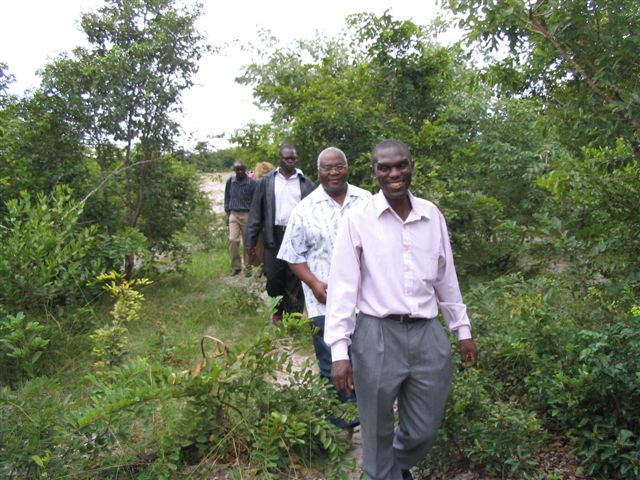
Wiggan and Aka walking through the unproductive bush that is being converted to jatropha and other crops.

As we talked, Sam and I began to see a very different leadership pattern than is seen in most of Africa. Aka believes that the pattern of control, oppression and stealing found in governments today was learned from the outsiders who ruled Africa in the same way for centuries. This discussion spawned a new term for me, "Steward Leadership." Maybe someone else has thought of it before, but in some ways it seems more realistic than the term servant leadership that is often used. Almost makes me want to write a book. Hmm, maybe Aka and I will.


Oh, the trip. The trip was great. Wiggan, the director, and team have inspired 100 farmers to clear 1 Hectare (2.5 acres) each and plant more than 1,000 Jatropha trees on each Ha. This translates to 100,000 trees in 3 months. This tree produces a seed on marginal soils that is 30-35% oil that can only be used for fuel. With the price of diesel at nearly $2/liter (translated $8 per gallon) these plantations have the potential to reduce the cost and dependence of the province on outside fuel sources. In addition, Jatropha improves the soil, the flowers make great honey and the fuel reduces pollution.

The HOH team was all ladies and they kept us occupied with lots of questions, explanations and discussions. They were pleased with the start of the work in Zambia. We also brought them to Mozambique and showed them the work with HIV, child survival and ag/trade. We finished off the time with an evening and overnight at Bilene, a lagoon just off the Indian Ocean. It was a good place to relax, debrief and plan. We started out the trip as partners and in the end, it felt very much like family.

Tuesday, February 19, 2008

Praying for chickens?

This week we went on a field trip to a chicken processing plant (I was glad they were done for the day). WR is partnering with Moz Farms who give all the inputs to WR volunteers to raise the chickens and then they take them all and pay them per chicken. While we were there we met the Muslim guy that slits their necks and says a prayer over each one. Now there's a unique job! This is a requirement for the Muslims so they can say it is “Hallal” (like kosher). We asked him what he prays, and he said he would pray whatever we wanted! I can’t say I’d have much to pray over a chicken about to be killed.

Later we visited with WR volunteers, and the highlight was seeing Reginaldo, one of our “kids” from Chokwe. He’s been building chicken houses in this community. He is getting a lot of pressure from his dad to have his fiancee move in and postpone the wedding until later. I couldn’t understand that until someone explained that young people help support their parents until they get married. Talk about a twisted system that works against marriage. I encouraged him to do things God’s way and he said others are saying the same. I’m sure it’s hard for him to buck the system plus his own family. Then there are the huge expectations of making it a real feast when you do get married and going broke to do so. You can pray for him.

It's been a busy week with lots of meetings and guests. Now Steve is off to Zambia where he is helping host a team from the U.S. and they are having board meetings. They will all come here the end of the week and go to a village.

The excitement over fare hikes has calmed down. Apparently the government is subsidizing the price of gas for the chapa drivers. Too bad they didn't lower it for all of us!

Friday, February 08, 2008

Unrest in Maputo

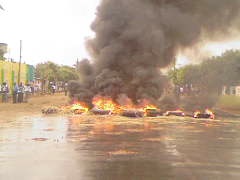
Things are calming down in Maputo after some serious trouble this past week. Tuesday was a scheduled rate hike for the "chapas" (mini buses). The people were very upset a lot of basic foods like bread and rice have gone up and if transportation costs are raised by 30-50% it becomes hard to make ends meet. Mainly young, unemployed people started blocking intersections and burning tires in the road and throwing rocks. The chapas stopped running and the shops closed because of some looting. Parts of the city were pretty deserted.


Picture by Sarah Olds of Iris Ministries

The next day the government made the chapas return to original fares for 3 days while they talked, but then the chapas went on strike because their profit has been cut in half by gas increases (we’re up to $6/gallon). The fuel trucks couldn’t get through on Tuesday when there were fires on the streets, so there was some panic yesterday about a scarcity of fuel and long lines at all gas stations that had any.

You can find lots of articles and details at : http://allafrica.com/mozambique/ if you want to know more.

We’ve continued life as normal. The roads were OK between our house and WR so we’ve been in the office every day. However, very few of our colleagues have been here because of the disturbances. Several people have walked 2-3 hours to get here. That’s dedication! Today some chapas seem to be running again so we may be getting back to normal. Things could flare up again depending on government decisions and there are many issues right under the surface that people get upset about.

It’s felt a bit like we’ve been in a boat on a lake and around us we could see a thunderstorm, but the rain and lightning didn’t get to us. However, it’s a bit disconcerting to see all the power of the storm so close by. Jesus says “be still and know that I am God. I am calming the storm and giving you peace.” He is so good. We appreciate your prayers for us and Mozambique.
Wednesday, January 30, 2008

Maputo Con Man

This morning I was doing some shopping and as I walked home I was approached by a man in a suit and tie.

"Hi, do you remember me?" he said.

I looked at him curiously and said "No, I don't believe I do."

"Oh, I'm the man from customs at the airport. I look a little different without my uniform."

Since I had just dealt with customs recently, I thought maybe I had seen him there.

"Are you traveling soon?" he asked.

"No, I don't have anything planned."

Then he said, "I was trying to get to work, but my car ran out of gas. Would you have some cash you could spare?"

I had a cautious feeling so I said, "No I really can't give you any."

"Just 50 MTs so I could get a couple of liters? Then next time you come through customs I'll be your friend!"

I declined again, he shook my hand and I left.

A few yards away I stopped at a sidewalk stand to make another purchase. A man was standing there and asked me if I knew that person. I said I didn't and asked if he was a good person or not. "Actually, he's a 'mafioso,'" he said.

Monday, January 28, 2008

Our "new" apartment

On Sunday the preacher had an interesting comment. He said "I never thought I'd see the day when Mozambique was in better shape than South Africa." This week it was true, as SA had many rolling power outages that created huge traffic jams, closed malls and restaurants and clinics, etc. And the amazing thing is that they are getting some of their energy from a hydroelectric dam in Mozambique. Apparently the government did not heed the warnings and now there is a shortage. New electric plants will not be finished until 2011 so it could be interesting for SA until then.

On the home front, we have moved. Here are a few pictures of our new place:
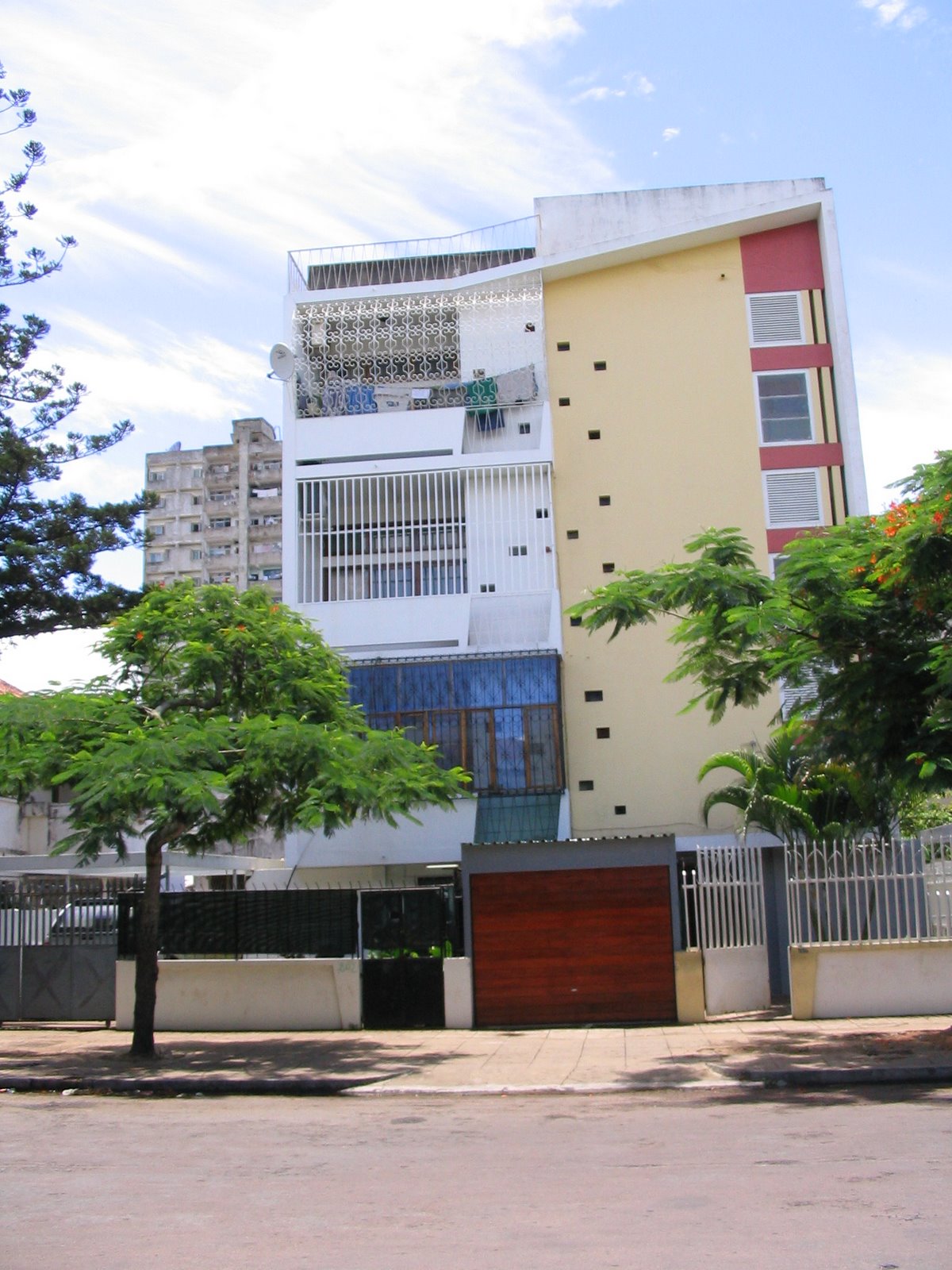
We live on the second floor (it looks blue here) although the door is on ground floor. The guard and his family live on the ground level which is built into a hill.


Steve with Wally the dog that came with the house.

Daniel, our first visitor and the guard's son. He has a baby sister.

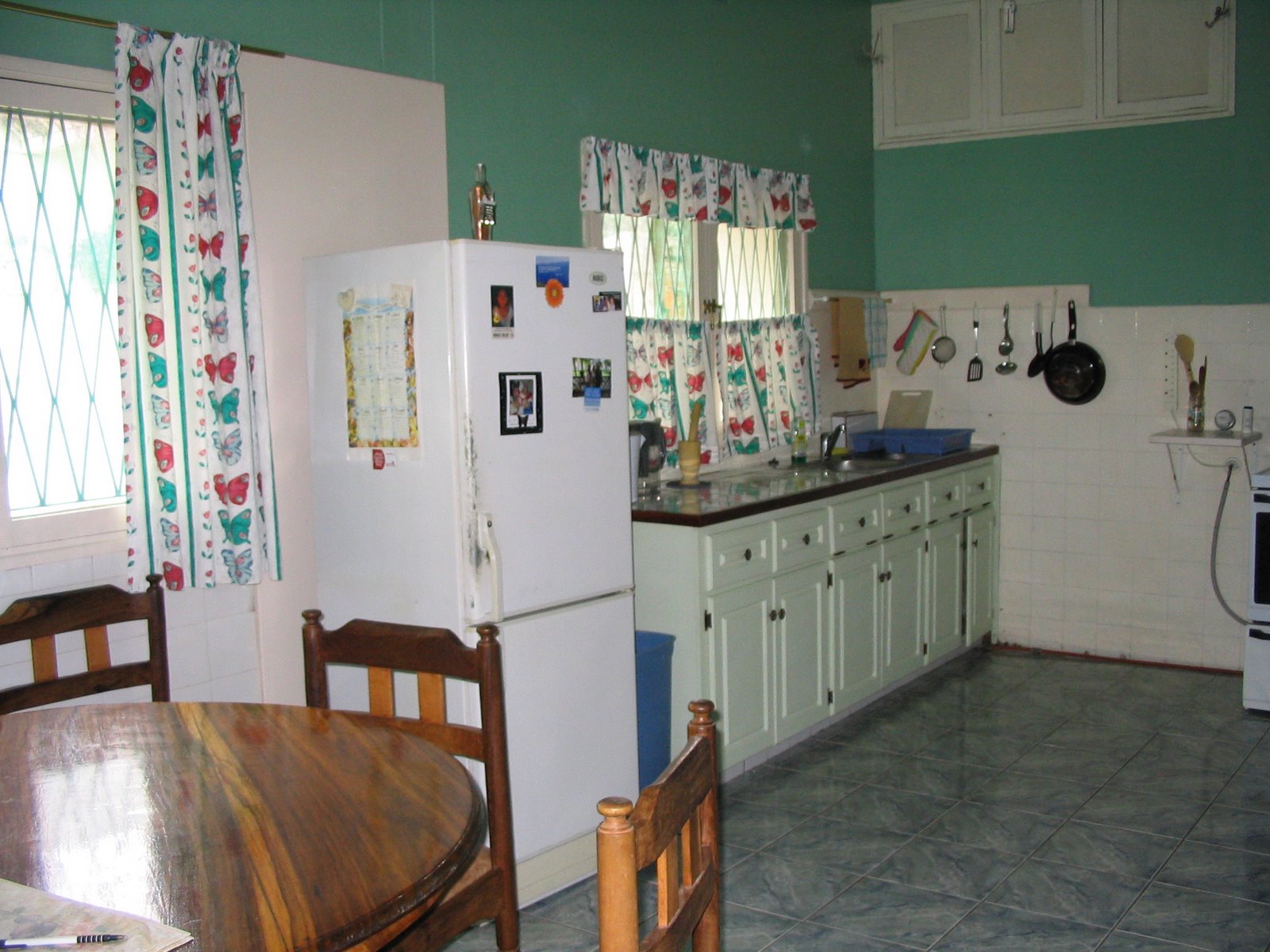
We have a nice big kitchen and living room, 3 bedrooms and plenty of beds. So just let us know when you're coming to visit!

Friday, January 11, 2008

Good news from Zambia

Here is part of a monthly report that came out of Zambia, where Rachel and I spent two weeks in November 07 working with the staff and teaching the micro enterprise development course:

"The Microenterprise training program conducted by Steve and Rachel has started bearing fruit in the community as demonstrated by two graduates (Pastors Matale and Mulyata) who started training traders from the market in entrepreneurship skills. The training program has been funded by SNV (a development agency of Netherlands). The first training workshop was for 5 days and 23 participants were trained who thereafter qualified to receive loans for their small trading businesses. This exemplified the versatility of the training program and its relevance in the lives of all those aspiring to succeed in their businesses be it agriculture or trading. Most important of all is that as a result of the spiritual component of the course,7 participants gave their lives to the Lord after the session 'The plan of salvation.'”

I was so touched when I read this. It made the work of training others (or packaging and sharing seeds, so they can sow) quite rewarding.

Tuesday, January 08, 2008

Swaziland R&R


We’ve just returned from a bit of R&R in Swaziland and South Africa. Swazi is a small country and we drove in a big loop and saw quite a bit of it. We stayed in Bulembu, up in the corner next to SA. It was an asbestos mining town that was abandoned when the mine was closed. It was given to a Christian organization that is working with abandoned children and orphans, HIV/AIDS programs, a school, a clinic, a church, Teen Challenge and more. They are trying to create jobs by running a timber project, a lodge and a honey project. You can read more about them at www.bulembu.org. It is surrounded by mountains and beautiful scenery. To get there we had to travel 18 kms on a dirt road but the reward was that it was very calm and quiet. There were no city noises outside our windows when we slept, just the sounds of nature. Another plus was that it was cooler than Maputo.

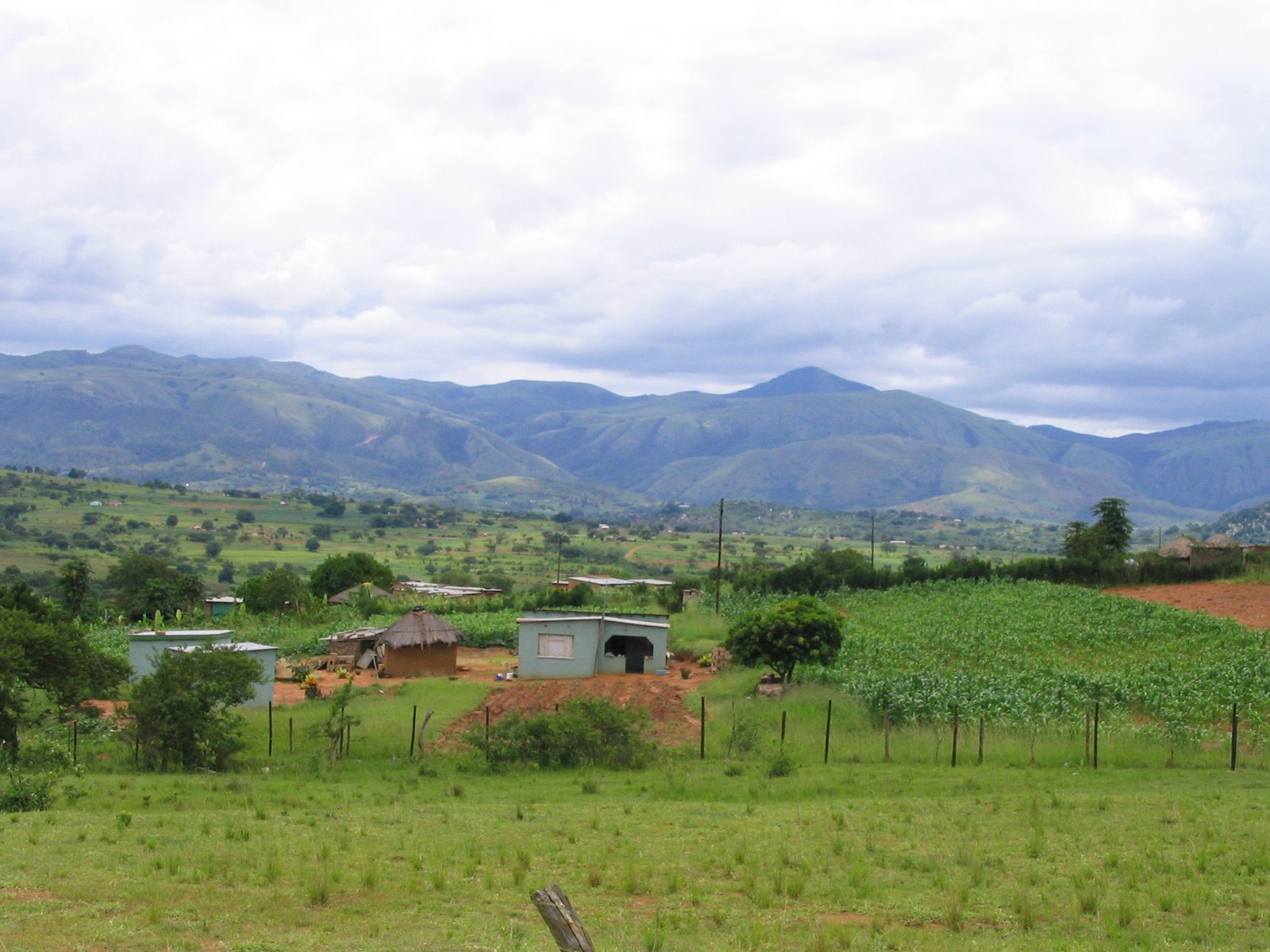
One day we went to SA for an appointment and wished we had taken our camera as the mountain scenery was amazing. We saw emerald mountains as well as blue and darker green. We did get a picture outside the lodge, although the colors aren’t quite as nice as they were in person.


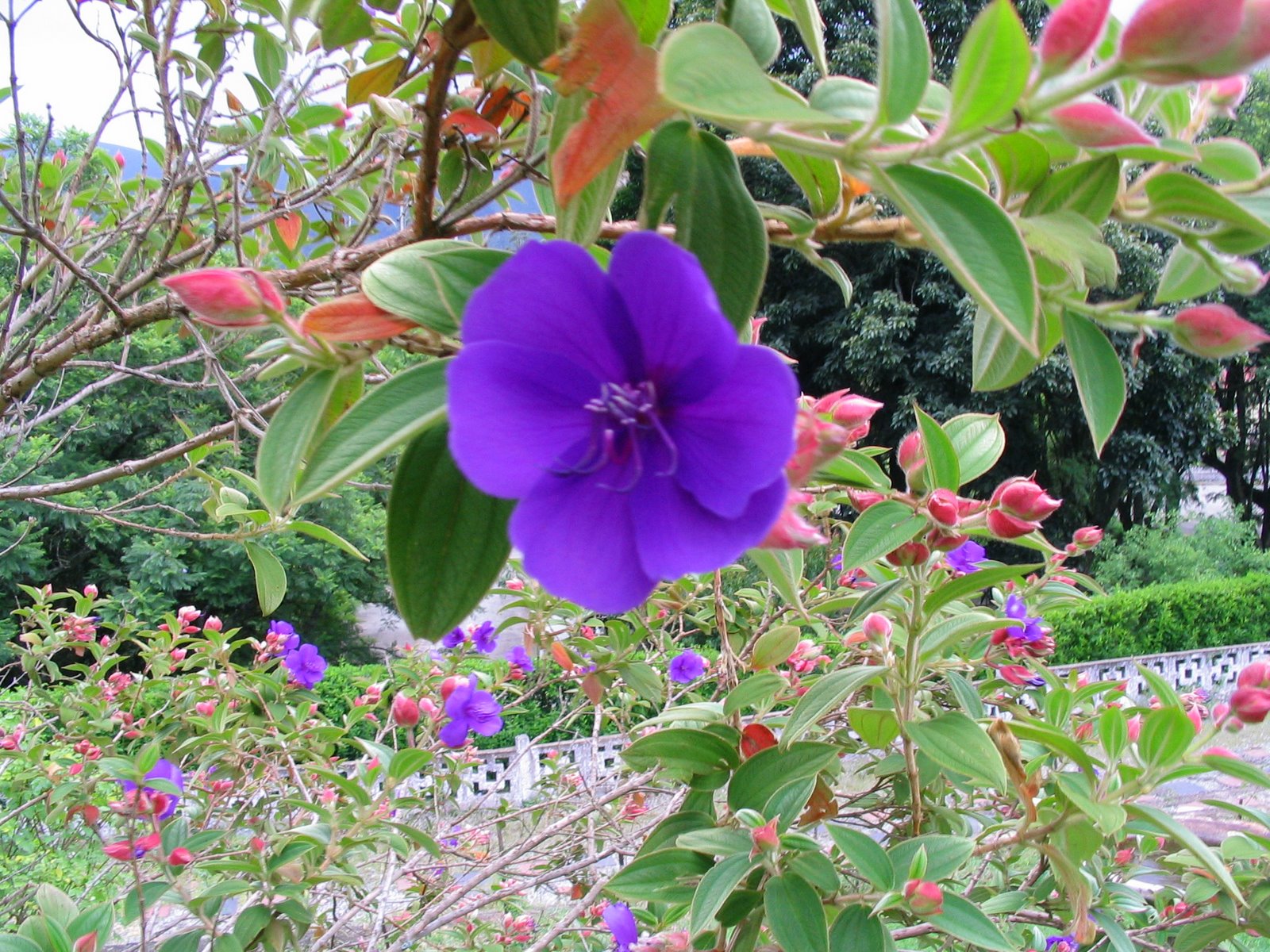
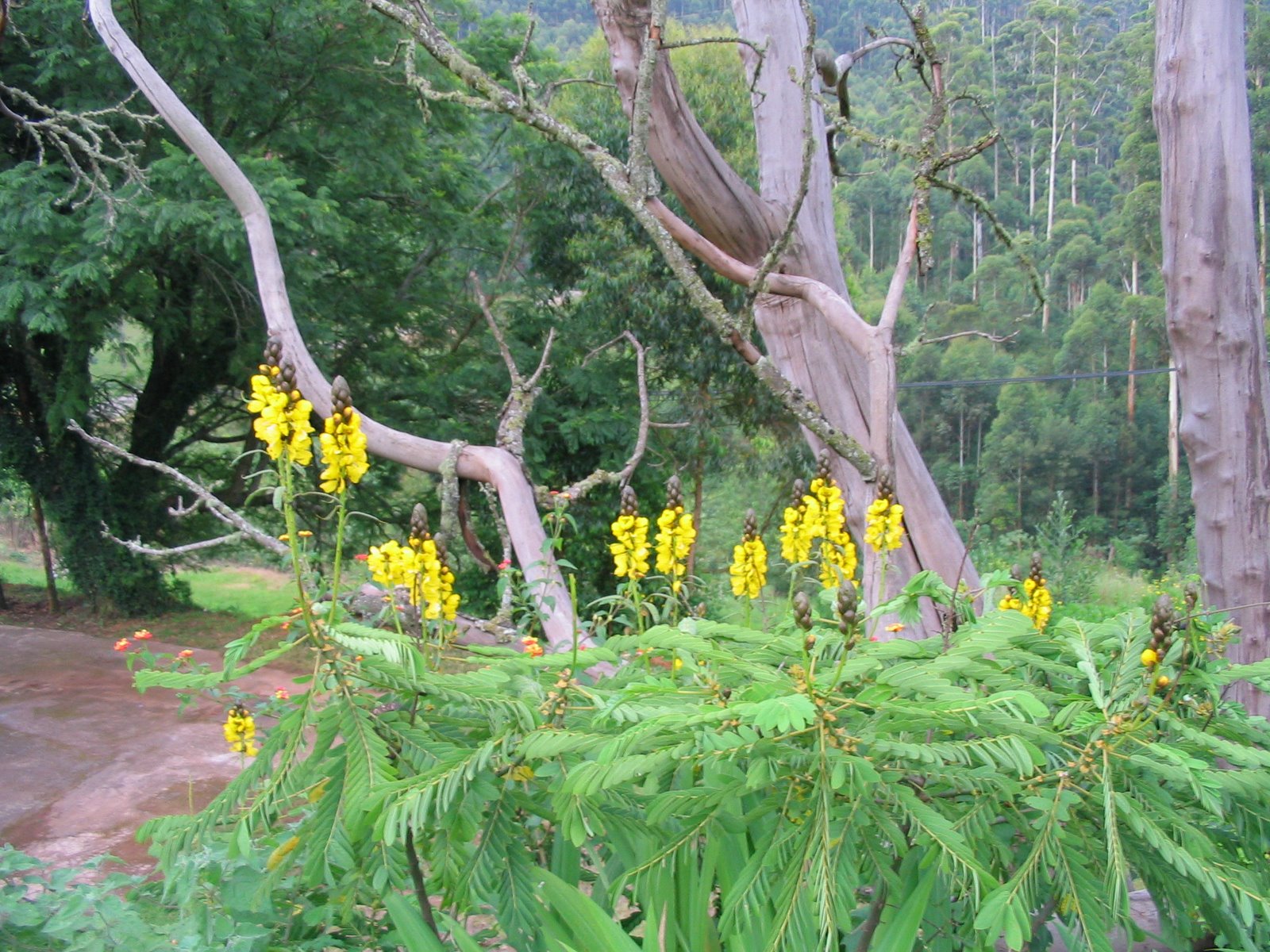
We also saw lots and lots of flowers. I was surprised to see so many flowers that we have at home: daisies, roses, hydrangeas, iris, coreopsis, butterfly bush growing everywhere wild, dahlias of many colors. These were mixed in with more tropical varieties like hibiscus and tulip trees plus many that I can't name and they were all beautiful. Here are just a few pictures so you get the idea.


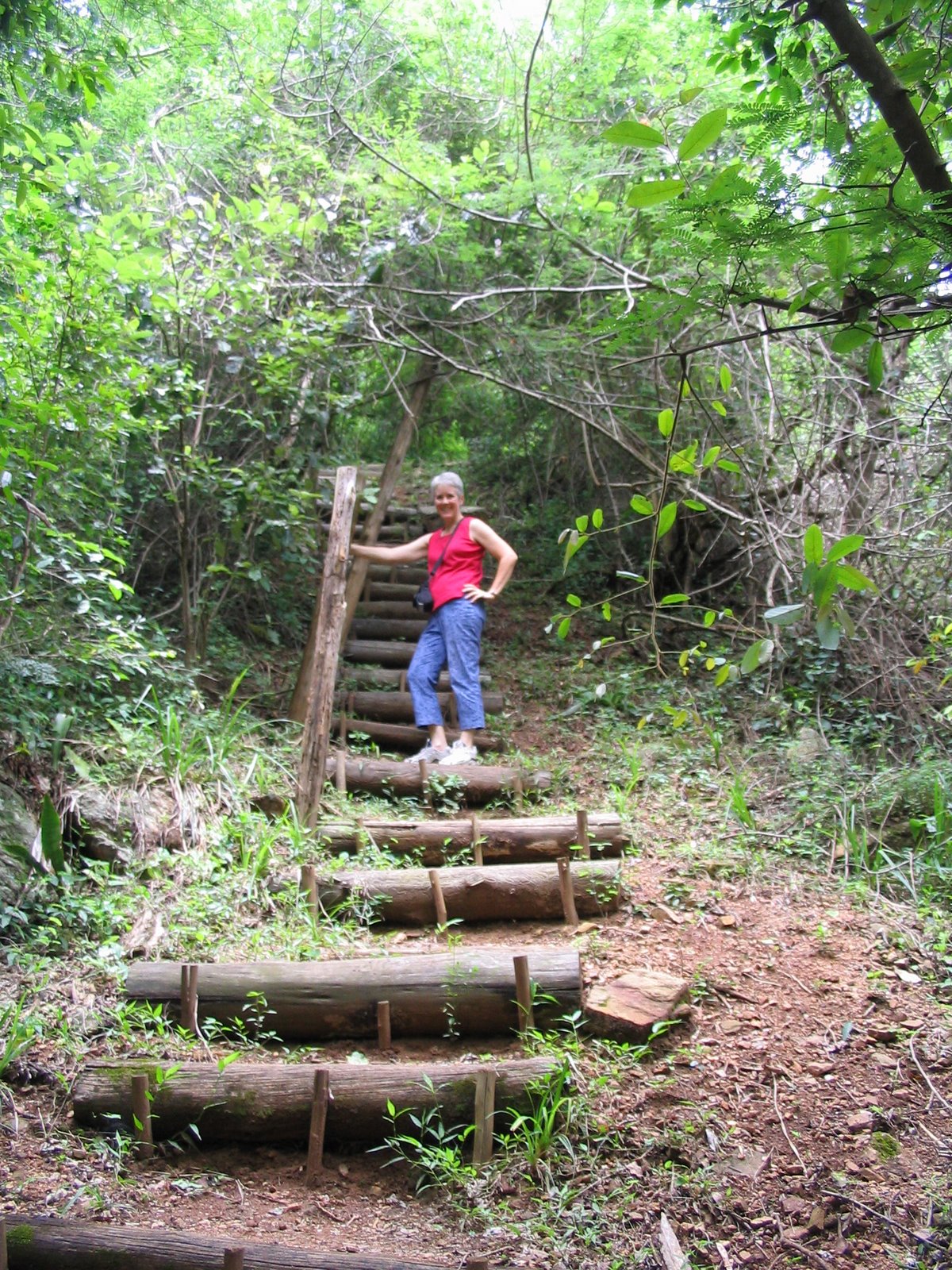
On the way back we stopped at a waterfall. We found out we could take a 20 min hike to see it or a 1-3 hr. hike. We went on the 20-min. and it’s probably a good thing. I’m not sure I could walk at all if we had done the longer one! I think I’m in pretty good shape, after all I climb 60 stairs every time I go out the door and do so without huffing and puffing too much. But the steps down to the falls were really steep. This picture doesn’t show how steep it really was. It was worth the sore muscles and we had a great time.


Now we’re back in our regular routine after the holidays. Sunday morning we said goodbye to Jamene, our friend who has been with us since the end of October. The house seems empty without him.

We’re getting ready to move this weekend to a semi-temporary place, hopefuly several months. It’s a house owned by the Wesleyans and our landlords are wonderful people. We may keep looking, but we’ve found that the prices in Maputo are getting ridiculous – many ask $1,000/month for an unfurnished not very nice apartment. That’s about twice what rent was in 2005. Apparently there is not enough housing and people (mostly foreigners) are willing to pay the prices so they keep increasing. We’re thankful to have a place for now.

Thursday, December 27, 2007

Mozambican Natal

Christmas Day we were invited to a Kenyan friend’s home. Her son just went through initiation into manhood and they traditionally have a big party to celebrate. Since it was close to Christmas, she combined the two events and invited lots of others Kenyans and some of us westerners.

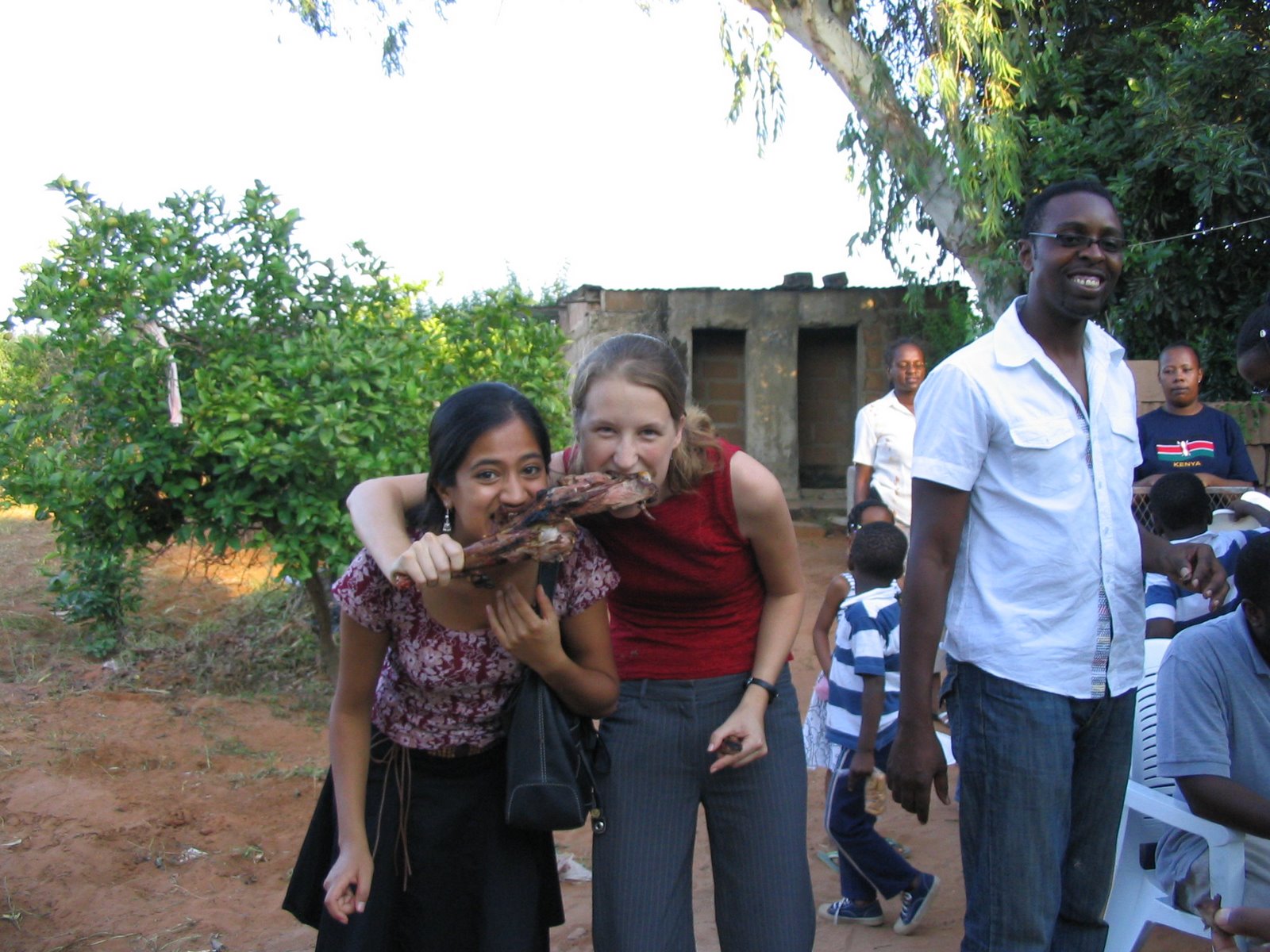
When we first arrived we found the kitchen full of women cooking and the men outside preparing a goat. This was quite a process and the source of much interest on the part of the young American women who were there. Steve gave us all a lesson in anatomy. Soon we were being called to dinner but we thought it a bit curious that there was no goat. There was chicken, rice, lots of salads, fruit cake, ice cream etc. We ate our fill and sat around talking for a bit. Then everyone went outside again and started grilling the goat. At that point we were told that what we just ate was only the beginning. Now the real feast began with lots of goat meat. They mentioned xima (corn meal) also but we never saw any. Probably because no one was hungry enough! We went for a walk in the neighborhood to make some room for meat and then returned to eat a bit of it. They were still grilling when we left at 6 p.m. It as quite a social event, and we made some new friends.

On the way home we saw this Mozambican skinny Santa!

Thursday, December 20, 2007

Christmas video

Here is a link to a Christmas video with footage of Mozambique taken last October. We hope you enjoy it and that you have a wonderful Christmas! http://christmas.15four.com

Tuesday, December 18, 2007

Crossing Cultures

This past weekend we attended a leaders' retreat for our church. Among many topics, we discussed schedules and some of the cold climate folks were keen to emphasize how important it is to start and end on time. "It is a matter of courtesy," they said, and "the kids can't take such long services," etc. The comment by the pastor was, "And what if the Holy Spirit is moving? Do we just cut Him off because it is time to end?" Another warm climate person said, "Nowhere in nature or science are things regulated down to the minute. It's just not natural or human!"

So there you have it, differing views with some truth in each depending on your perspective. These are the kinds of things we face regularly as we cross cultures.

Monday, November 26, 2007

Zambia in November

Steve and I both traveled to Zambia for two weeks this November. It was great for me, Rachel, to go along this time as it is becoming a regular visit for Steve. The first thing I learned is that greetings involve a clap, shake of hands and clap, clap while slightly bending the knees at the same time. In the past when greeting someone older they would actually get down on their knees although this isn’t as common now, especially in the cities.

Another fun thing was to speak English and be understood by most people, even in the villages! However, we did discover that our American accent wasn’t always understood. In the microenterprise training that we did I was talking about adults. One woman gave me a puzzled look and said, “Are you talking about a door or a dog?” That’s when I realized that they pronounce it adults! There are many words in which we emphasize different syllables than they do.

The training of trainers went really well with about 19 attending and people seemed to appreciate it. Steve was able to relax more than usual during the week as we put the trainers to work teaching the lessons themselves so they could get some experience. The participants really seemed to appreciate the training. One older gentleman said it awakened things in him that he had studied long ago, but many had never studied these topics. Another said, “I woke up this morning thinking how different I felt today than I did on Monday before I started the course.” At the end we found out that several had altered their plans for the week just to attend.


The town of Mongu where we were reminded us of the old West a bit. It’s built on a plateau next to a plain that runs 25 km on each side of the Zambezi River. Four months of the year this plain is flooded and people who live there have to move. This includes the king of the region (it used to be a kingdom). He makes his entrance into Mongu in March and people flock from all over for the festivities of the king coming to town. There is a guesthouse on every corner because of this.


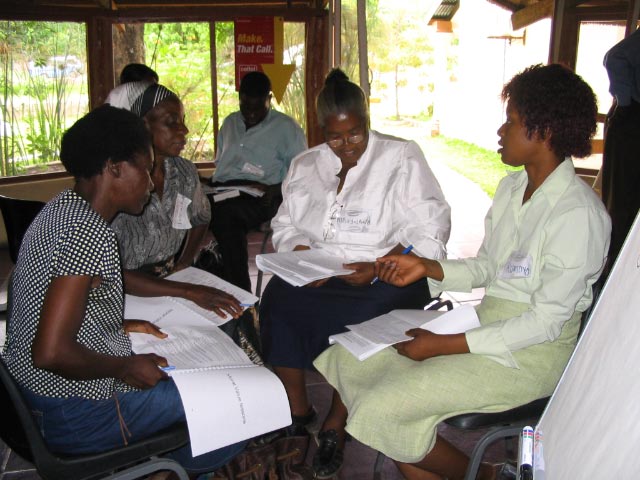
The king’s cousin was part of the training and occasionally someone would call her “princess” (in the white blouse in the center of picture). Her sister is the Zambian ambassador to the U.S. and they are a well educated, influential family.


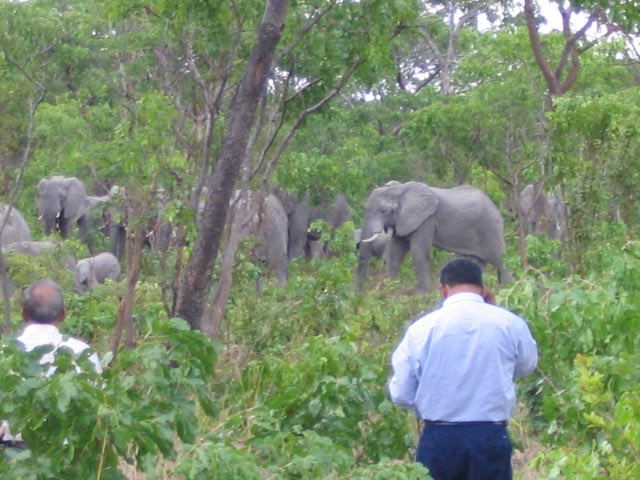
To get to Mongu we drove through a game park and saw these elephants along with some foolish people who had gotten out of their car to see them better. They seemed to forget that these are wild and powerful animals. We’ve heard more than one story about grouchy elephants. We also saw herds of various kinds of antelopes.


In some ways Zambia is different than Mozambique and in other ways it is very similar. There are some African customs that transcend country borders. Colonial powers have influenced the countries but many times I saw scenes that reminded me of Moz. I do appreciate Maputo’s shoreline and ocean views. Landlocked cities just aren’t the same. There is lots of room for improvement in Maputo but I am thankful that we live here for now. Speaking of living here, we found out that we need to move in December so we’d appreciate your prayers for locating our next apartment. We have had a roomy, furnished place for lower than average price and it may be hard to find something similar.

Hope you had a Happy Thanksgiving.

Saturday, November 10, 2007

Moz Wedding

When we first started working with chickens we needed to find a source for chicken feeders and waterers. We saw people selling them along the road and stopped and talked to a couple of them. We weren't very impressed with the guys that wanted to charge an extravagant amount even though we told them we would be buying these regularly. Then we met Nato. He gave us a fair price, had a great attitude and was willing to work with us.

We've related to him over the years and gave him enough business for him to take a driving course and hire a relative to help him. We heard his dad tell someone that we gave his business "força" or strength.

A couple of months ago he invited us to his wedding and even had us over to his house ahead of time so we would know where to come. Saturday was the big day.

The invitation said the civil ceremony at the wedding palace would be at 9:30 and the church service at 12. We were quite sure it wouldn't start on time because things get backed up at the palace, so we left home at 12. We were too optimistic. We should have left home at 2. But we're learning that when we attend an event like this it's best to just leave the watches at home.

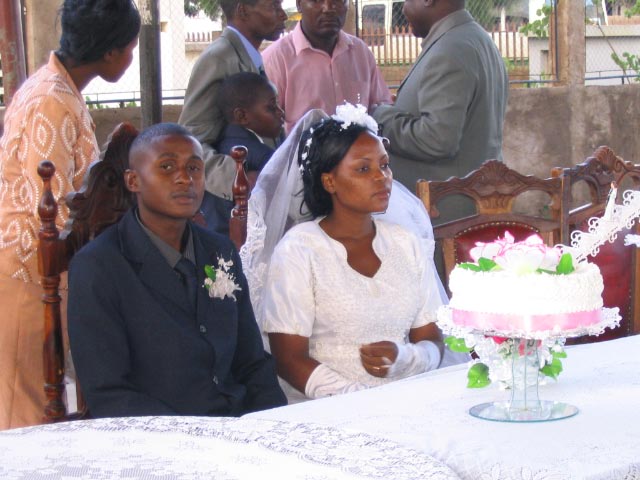
The junior bridesmaid and groomsman were at the head of the procession followed by the bride and groom who walked in with their godparents. Then came the four bridesmaids and groomsmen. They all sat in the front rows and it was good they sat because the Brazilian pastor talked for at least one hour (but who's watching the time!). After the vows and rings they went to the platform and signed the license along with the godparents and parents.
They didn't have a western recessional, but stood up front and some folks greeted them. The rest of the people just walked out. But you should have seen the wedding party earlier when they sang and danced/stomped. They really got into it! I had a glimpse of what Mozambican weddings were like before western ideas were introduced. I'll bet they didn't walk in to the "Wedding March!"

The reception was held in a different place, a large court at a high school with a roof. Sides would have been nice too as the winds picked up and it got chilly. It took awhile for people to collect. The wedding car arrived and then left and then returned. We just sat and wondered if people visiting the U.S. are as curious about our traditions as we are about these.


There was a table up front and we noticed that the chairs beside the bride and groom were for family, not the wedding party. And then first thing we knew, the groom's father was escorting us up there! We felt a bit strange, but he introduced us to an uncle as very important people to Nato who have helped him in his business. We enjoyed the rice and chicken, beef and shrimp and eventually the cake.


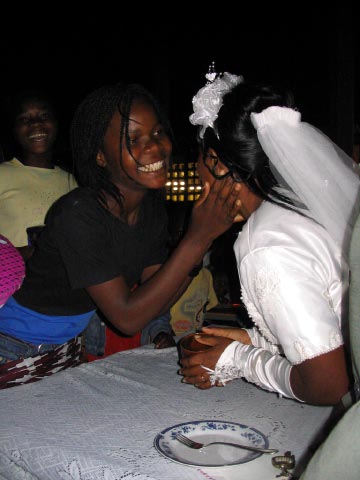
I had heard that people in Moz like to dance their presents up and it was fun to watch firsthand. It was usually a group that would sing and do a little dance/march to the bride and groom and hand the present to them along with kisses or handshakes. It was really nice and made it very personal and special. Some gifts were wrapped, some were not. The wrapped ones were not opened there.

To complete this picture you must imagine a couple dozen neighborhood kids doing cartwheels, running around, squealing during the whole reception. No one seemed to mind and they even got some food.

On Sunday, the festivities continued. The couple attended church in their wedding clothes and then there was another feast at his family's home. We didn't think we'd attend, but they are quite insistent, so we went. Once again we were escorted right up front. There was even more food and Nato told us he raised 100 chickens for the event. He also disclosed that he is pretty much penniless after paying for all the wedding, but he will start saving again. His friends can't understand why he would go to all this expense, but he shared that he wants to do things God's way and be responsible.

Nato gives us hope for Mozambique. He and his family are quite industrious and find things to do or go out and get someone to teach them a skill. Nato said he learned how to do sheet metal work from a relative during a vacation. He has a good heart and we believe God is raising up many more like him. It was an honor to spend such a time with him and his extended families.

Monday, October 29, 2007

October come and gone

Wow, October has gone like a flash and we have both flown the Atlantic Ocean twice in 30 days.

Rachel headed home in Sept to help Joanna prepare for her wedding to Keith Lowe. Our exchange student from the 99-00 school year, Christine, came from Norway with her baby about the same time as Rachel. It was great to reconnect with her. We also found out what it’s like to be around a baby again! Sofie really is precious.

Steve traveled 10 days later and with much less success on flights excepting that he eventually made it both directions. Of the 8 planes he took, only one was on time or the scheduled flight he was supposed to take adding 8 hours coming to the States and 24 returning. (At least he got to sleep in a bed twice during the 78 hour stretch.) The good thing in all of this was meeting some amazing people working in Zambia and Swaziland. Who knows, maybe someday we will cross paths again.

The wedding was outside and we were most thankful for sunny weather and 60 degrees, after all it was the middle of October. It was a bit chilly during the ceremony as a stiff breeze picked up and the clouds came out but we all survived, even Joanna with her sleeveless gown. As soon as the ceremony was over, Keith gave her his coat. It was great to celebrate with friends and family that have had an important part in our lives. Many people commented that now all our children are married. It’s true and we’re happy for all of them.

We both went to Baltimore for the WR Congregate meetings October 17-20. It was a good time of connecting with new people, reconnecting with people we have met since being with WR, planning for the future and learning from others who have done development more than we have. We had the wonderful opportunity of staying with Rick and Sandy plus family, getting to know them and feeling like long lost relatives. Steve met them during an earlier trip to Baltimore. We didn’t get to spend enough time with them as the meetings kept us out until nearly 10 each night. Our favorite quote from Sandy after giving her some coconut oil: “I have a problem with this coconut oil. I like it too much!” She is one of three people we met who would love to distribute the oil for us in the U.S. Maybe in the future, but for now we will concentrate on selling in Mozambique and S Africa.

Saturday after the conference we caught a ride with one of the speakers to DC where he dropped us off at the doorstep of David and Janelle’s apartment. We slept on the futon and ate their food, including lunch in the park just across from the White House where Janelle sometimes eats as it is close to her work. We saw some new sites such as the WWII memorial and walked way too far on Monday trying to see all that we could in the shortest time possible.

It’s good to be back in Moz. The first week or so always involves some readjustments and getting back into the swing of things. Rachel is working in the new area (for her) of church development. The first thing to do is to hire a national director which will hopefully happen in the next month or so.

Thursday, September 06, 2007

Thoughts on Poverty

What is the best way to help the poor? I (Rachel) have been thinking a lot about this lately. First of all, what exactly is poverty? It is more than a lack of money. I read this week that a person can be broke but not poor. There is a difference. Spiritual, emotional, physical poverty are all involved in a poverty mindset and worldview.

In the U.S. we can be cushioned from having to deal with the poor if we choose to. We can go about our daily routines without having anyone ask us for money, or food, or seeing any street people. Living in Mozambique is a different story. At many stoplights there are old women, or street kids, or the maimed coming up to our windows. And there are the con artists. One woman has an obvious abdominal tumor and says she needs money for surgery. However, she never gets the surgery because the money she collects goes for drugs. Others have figured out that people like to give food more than money. So they tell you what kind of food they want you to buy them as you go into the grocery store. Sadly, most of this is resold and the money used for drugs. And there are those who would rather beg on the street than work, because they make more on the street.

And then there are the people we are getting to know. A couple with three children moved here from another province to find jobs. But they have found nothing. He is South African so it is even more difficult. He has dreams of selling items on E-Bay but does not have a computer and internet café time is too expensive. They found a place to live rent-free in an unfinished house with no electricity or running water or furniture. It is better than the reed hut they had before. I’ve tried to encourage her to crochet small items that people need and can afford and have given her yarn and hooks and ideas. She hasn’t really taken my advice but made some handbags that she’s having trouble selling. So she is asking me for help with marketing. How can I really help her in a sustainable way? I could bring in lots of yarn from outside the country (the varieties are very limited here and expensive) and then buy everything she makes, but is that the best thing for her? What happens when I leave? She was a star student in the microenterprise course and is a trainer. So I encouraged her to hold a course with her neighbors and charge something for it. But the answer was that people think she is too young and doesn’t have the authority to teach them anything.

It’s hard to think about them when I go to bed with a full stomach and wonder if their children are crying themselves to sleep because they haven’t eaten for two eays. Then I had an idea—why don’t they at least grow some of their food? They have a large yard in front of their house and even though it is sandy, they can mulch and water and have something to eat. So I sent books on gardening and composting but then got the word that the owner does not want them growing anything in the yard. Hmm, can you find another plot of land? Or grow tomatoes in containers? Or …?

I’ve found that many Mozambicans will just accept these obstacles as their fate. So then they sit and wait for something to get better. I cannot really put myself in their shoes because I’ve never been in a place where I can’t find a job or a market for things that I make. I haven’t been part of a system that feels hopeless and weak. When I’ve had a need, I’ve had family with resources to fall back on. So I can’t really relate, but I can imagine what it must be like. I can pray that I will have compassion on the poor as Isaiah says. I can reach out and give with discernment. Jesus gave regularly to the poor and had a special fund set aside just for that. Never mind that he didn’t even own a pillow or a bed. So I know it is important to God for us to be generous and share. And I will continue to do that even though I know I will be conned sometimes and people will take advantage of me. I cannot write everyone else off because of them.

It is some consolation to know that our work is providing jobs for people who had none before. Granted, they don’t make a lot of money but it is a place to start. But we can’t give jobs to everyone and so I keep coming back to the questions of how I can really help my friends climb out of poverty. I’m learning that there are no easy answers. But I will continue to do what I know is truly helpful and trust God to guide me.

Monday, August 20, 2007

Zambia, here we come

I (Steve) arrived in Zambia August 13 to the welcome of Wiggan, our agriculture director. He took me to a hotel on the outskirts of town as the ones in the city center were filling up with delegates to the SADAC conference held in Lusaka. It was a quiet more out of the way place. My suspicion is that only thing that keeps it afloat is the outdoor small bar. The room was clean and outside of the usual, (you have to turn on the water heater before using it), the only real surprise was that there was only a bottom sheet on the bed. With no top sheet what do you do? Sleep under the blanket I guess. Well it was a wool one, doubled over. It felt good since it was cool, but during the night I warmed up considerably and ended up sleeping just under the top spread. I couldn’t help but wonder, is that what everyone else does too?

For supper we ordered the T-bone steak for $5. Wiggan asked if it was tender and the guy said yes. As we waited, we heard someone in the kitchen really whacking at something with a wooden hammer. We looked at each other and I asked, is that what makes the meat tender? Apparently it was supposed to, plus it was cut about as thin as you can cut meat to cook quickly and make it less of a glob to chew. I still had to mince it up to get it anywhere near chewable.

Travel to Mongu is along the only tarred road heading west out of Lusaka. Roughly 200 Km out of the city, the road enters a national forest/animal reserve that is one of the largest in Zambia. We passed though another 200 Km of reserve land seeing lots of varieties of deer, a few impala, monkeys, multiple groups of warthogs with this year’s litters, (little guys in batches of 4-6 and about 10 pounds), a couple of elephants, and new to me were ibex, a black Onyx and something that looked like a shaggy cow with a donkey-like head, plus one more long-haired shaggy thing.

For breakfast the next day they brought me a hot dog, 2 eggs, baked beans, cabbage and two pieces of bread somehow pre-moistened and scorch-pressed together. I don’t know if they have a device to make it or what, but it was unique.

We spent our day discussing the potential income generating projects that the team here might be involved in and got to about number 10 on our list of a potential 16. We took a lunch break and the pepper steak sounded tempting. Well, no fancy pepper here, they just loaded the gravy up with black pepper and that was it. Tough too, so lots of little pieces again. One plus was that I got plenty of vegetables for the first time since Sunday. It will be chicken from now on. At least the chickens weren’t out pulling a cart last week.

It really felt like it was time for a change of dietary scenery so I asked to go to ShopRite thinking I could find something with cereal or even dairy. Was it ever out of the way. The town store owners protested that ShopRite would cause them to lose business, so the council gave them a piece of scrub land at the edge of town. The sad part is that the many people who want to go there have to pay extra for transport, so it hurts the small consumer, who could probably benefit the most. People go there and buy up all the eggs that are brought in from Lusaka, 6 hours away and resell to the public by the piece (business opportunity with egg laying hens here!).

On Thursday we did some community visits and met the ambassador’s sister who is organizing the school for orphans in her community. Our donor/partner has asked that we see what we can do to help the teachers with some kind of support, either through helping them start a business or having profits of a business we start help sustain them. It looks possible, so we will see. The school itself is a house that was never finished as a house and is in very poor condition. They rotate 500 kids through every day. There is a new one under construction, but the American designer has taken a western contractor view of construction and this has added to the cost, complexity and time to achieve the desired results. It will be nice when it is finished.

Overall the visit met my goals and expectations and we are planning a trip for November when we get back to Southern Afica.

Monday, August 13, 2007

Pictures of Maputo

Recently we met a couple from Malaysia. A cell phone company recruited the wife to set up their billing process on a short-term assignment. The husband is freelancing and volunteering. He may help us market coconut oil. Here is a blog he set up with pictures of Mozambique I thought you'd enjoy. Keep in mind he has only been here a couple of weeks and has not seen all the sides of Maputo. www.beautifulmozambique.blogspot.com (Sorry, the link feature does not want to cooperate.)

Wednesday, August 08, 2007

Life moves on

Life moves on and the blog has been ignored for awhile. We just wrote a newsletter so that should be posted here soon or coming to your mailbox so you can catch up with us that way as well.

Some big news that you may or may not have heard is that we have another wedding coming up soon. Joanna and Keith announced their engagement and will be married in Oct. at Winona Lake. We are excited for them as they make plans for their future together. Our exchange student from Norway will come to the wedding and we are really looking forward to seeing her and her new baby.

Steve has been working really hard at marketing coconut oil. We got jars and labels (thanks to Keith and Joanna who designed them). The woman we got jars from wanted to know what product we had so Steve gave her a short spiel and she was sold! She wants to be our distributor in South Africa. Now we need to find out what the process is for taking it to SA and what taxes need to be paid etc. Steve is working with a Mozambican young man, Ricardo, who is doing the bottling and some marketing. They took a sample to a grocery store run by Indians and you should have seen them all passing it around, smelling it and smiling. But then they asked, "Has this been tested by the Health Dept? Has the label been approved?" Well, no because in our earlier research we had not been told that this was a requirement. Yesterday Ricardo and Steve went to the Health Dept with a letter and a sample but after much time and bureaucracy they were told to come back with a different letter that has to be stamped. Eventually we will jump through all the hoops but the process can be frustrating and we need the income from sales to keep the plant in operation in Maxixe.

We have enjoyed several visitors the last couple of weeks. I'm getting pretty good at stripping the bed just in time for the next person to fall in (usually exhausted from traveling). I've been reminded that visitors bring gifts, not just material, but spiritual and emotional as well. One of them has offered us his beach house in North Carolina if we are ever in the area! We have met some very interesting, beautiful people the last few years.

Steve will travel to Zambia next week to work with the agriculture project that is just starting there. Please pray for safety, stamina, good health to keep going and do all that needs doing. Thanks, we appreciate your support and communications.

Tuesday, July 10, 2007

Coconut oil production in Mozambique - first fruits in fulfillment of a 5 year dream

 
Last week I, Steve, made a three day trip to Maxixe (Masheshe) Inhambane about 300 miles north of Maputo to see the virgin, cold pressed, coconut oil plant that has been built and where operations started in June.  I could tell you of the packed bus ride on the way up that was uneventful except for the 7 year old two seats away who threw up the bread he had eaten all over his lap, and the guy that seemed intoxicated enough to sleep 3 of the 6 hours or the "express" bus back that took 2 hours longer than the non-express because it was not full and the driver stopped 50 times if he stopped once to pick up passengers or no one at all!  But that is another story.


Our vision for a coconut oil plant that would produce this high quality product started on August 20, 2002 (memorable since it was my birthday and the 30th anniversary celebration of Zion Chapel, our home church).  During that meeting, a comment was made that we were praying about working in Mozambique.  Afterwards a first time, visiting family came up to us and said, "Have you thought about working with the coconut as a way to promote business in the country?"  Well no, we don't know anything about it.  So David and Kathy Hagen started to share. (Those of you who know them might imagine we were some of the last ones out of the building that day.)  However, we have no regrets as that "chance'" statement and encounter has led to a friendship and interest that will be lifelong if not eternal.


The next March we traveled to Mozambique for the first time and met Sam Grottis of WR and as I told him what I had learned over the last 8 months he said, "We could use someone like you to come and give us these kind of ideas so we can put them to work."  I think he meant "put you to work."  These two things are two of the key ingredients that started us on a path to serve in Mozambique with WR.  The rest is history and now for the rest of the story!


Our project manager, Romeu took me out to the factory to meet the staff and show me the product.  It was exciting to see the 60 liter (15 gal) containers full of oil in the warehouse and the 70 pound sacks of coconut press cake (what is left after extracting the oil).  In fact, they were running out of space to store things as the building is small.  The small size was intentional to keep costs down and move the product out so it can be sold. 


We went back into town with some press cake samples to see if we could find a place to sell it so we could get it out of the factory and get some money back too.  The ideal place to sell would be a bakery as when it is finely ground, it can be substituted for wheat and other flours, adding protein, carbohydrates and fiber to bread.  Since the bakery owner had gone home for the night, we went to an Indian owned store where they sell things in bulk.  The owners were quite skeptical at first since they had never, literally never seen such a product.  The closest their imaginations could come was the coconut you buy in the stores to put on top of cakes and pastries, "but you need a highly sophisticated and hygienic factory to do that don't you?"  They were selling "copra" press cake that looked like dirt or dried manure and smelled like well, worse  (hope no one has a queasy stomach today).  They agreed to take one bag as a trial.  When we put them side by side, the difference in appearance was like night and day.


The next day we had some ground in a fine sieve hammermill and took it to one of the bakery owners.  He and his wife were both impressed with the quality and saw the potential for making fortified bread pretty much right away and agreed to take a 40 pound sample for a trial run.  He was even willing to pay the same price for it as wheat flour, (8 cents more than we had budgeted in our plan) but it may actually be worth more nutritionally.  We would offer it on a fresh, daily basis for use overnight to make into bread for local consumption.  It should make softer, more nutritious bread than the water and wheat based product they have now (equivalent to pan de agua for those who know it).


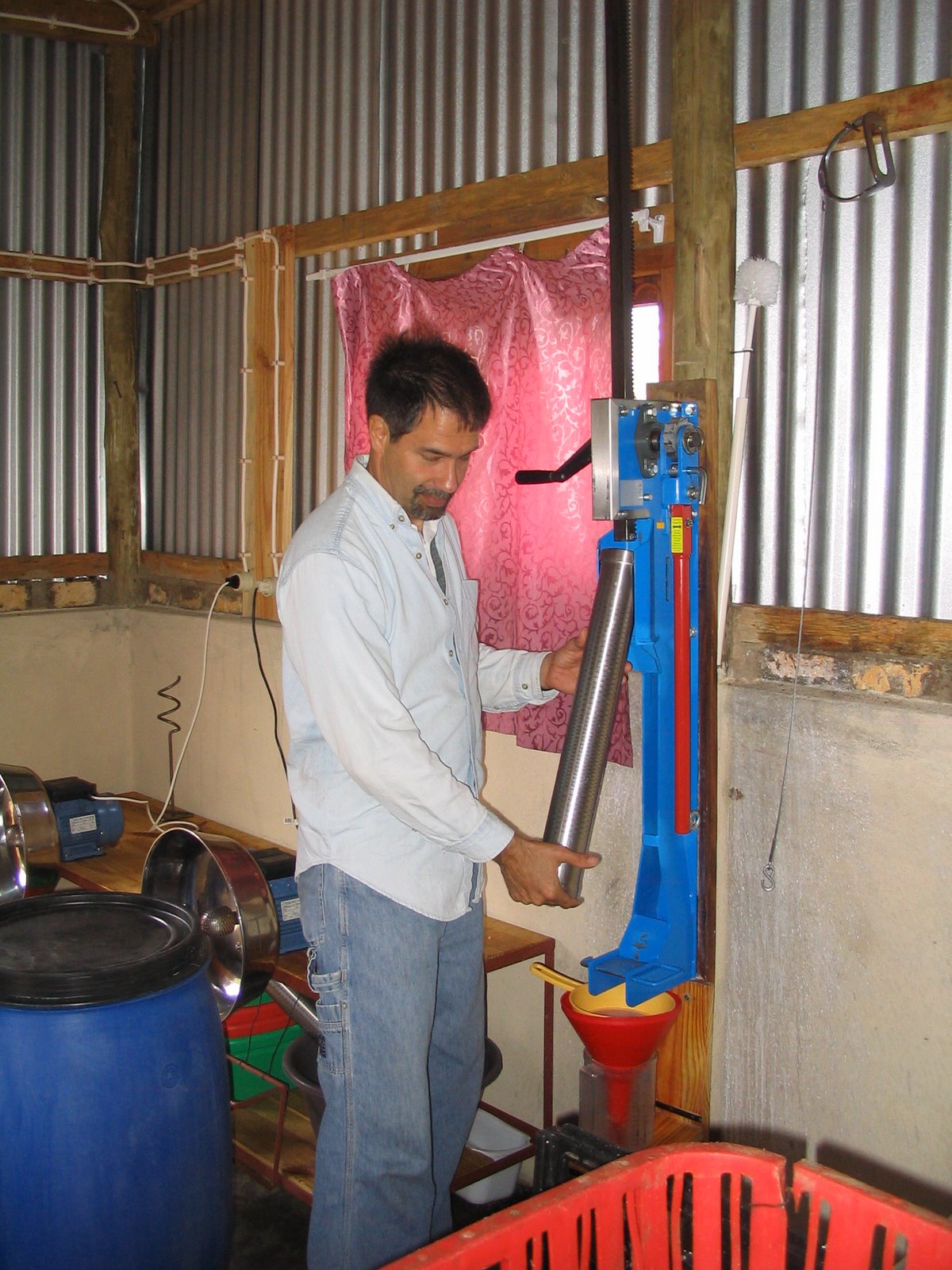
It was so neat to watch as the coconuts were ground into a finely grated pulp, then put on the large stove top heated by the empty husks and shells.  After an hour of being turned continuously and drying to about 10% moisture, it is put into a cylinder and pressed, producing crystal clear oil worth at least $4 per liter on the spot, $10 a liter in a South African supermarket and more in Europe.  All this from about 60 cents worth of coconut.  Who said money doesn't grow on trees?  This could be Mozambique's equivalent of diamond mines only this is liquid, until it gets below 76 degrees.  That is what makes this so exciting for me as Mozambique has the potential to be one of the top 5 leading coconut oil producers again, to say nothing of making it high value, but there is tons of work to do before that will ever happen.


We are going back again this weekend with Janelle and David and hope to bring several large containers back to Maputo to start the bottling and marketing process here. 


Saturday, July 07, 2007

Wedding Pictures

If you'd like to see Janelle and David's wedding pictures you can go to:
http://goodmiller.smugmug.com I will try to post some here later.

Monday, July 02, 2007

Return to our 2nd Home


We have returned to Maputo after our time in the U.S. The wedding was beautiful. I commented to Steve that it went off without a hitch and he said, “No, there was a hitch, just no glitch.” So true. They are properly hitched and in the process of moving to Washington D.C. In two weeks they will come see us and we can’t wait to show them around and be with them.

The glitch in our return was the airline forgetting to tell one of the crew they were on duty that day and we ended up missing our plane to Johannesburg. Three days of travel turned into four, but we got two nights of sleep in a bed, instead of one out of it.

Coming back felt like coming home in some ways. There were not many surprises and we’re back in our routines. Things at WR are shifting some so there are adjustments in the work we’ll do. But God has always been faithful to show us the way and I’m sure He will this time as well. Some greatly encouraging news is that a significant amount of project funding has started coming in from the team of potential donors we hosted in April. We had been asking God to provide them, and here they are, right on time.

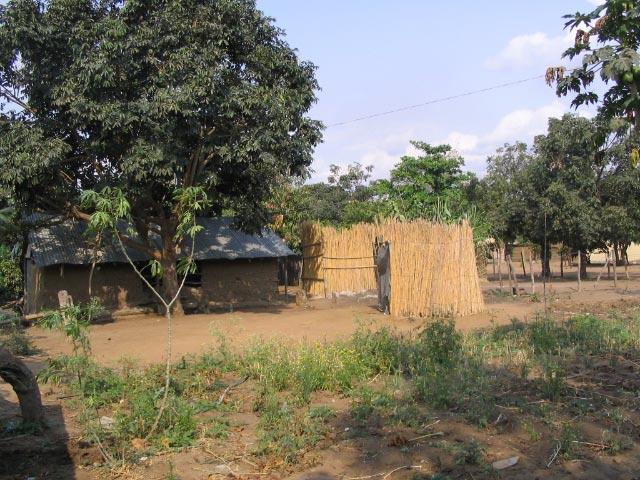
We could tell of the bathroom saga-—of holes in the concrete floor and tile walls where they repaired some leaks, of dust everywhere, of plumbers and workers parading through the apartment, of workers who say they will be here at 7:30 amanha and never show, of getting to know our neighbor Abdul better as he organizes the work because it was leaking in his apartment below us. But I’ll spare you the details because I’m thankful we have an indoor bathroom with running water. Many people in Moz have “bathrooms” (more like privacy screens and not very relaxing) that look like this:

I’m (Rachel) in the middle of a challenging book that Janelle and David gave us—The Irresistible Revolution, living as an ordinary radical by Shane Claiborne. It reminds me of some reading I did in the 70’s on living in community, reaching out to the poor, being willing to leave our safe, comfortable lifestyles to follow Jesus, being committed to the Kingdom of God and not just having a narrow view and allegiance to the earthly kingdoms we happen to be born into, loving our enemies. Jesus really was quite radical. He was even killed for it! Am I willing to follow and obey his example?

Here are a couple of quotes by Mother Teresa that are thought-provoking:

“In the poor we meet Jesus in his most distressing disguises.”
“We can not do great things, only small things with great love. It is not how much you do but how much love you put into doing it.”

Steve here; it is Sunday afternoon and I am reminded that we are returning to a part of the world where soccer is king. There are very few sports here except soccer, unless you count seeing the highlights of Wimbledon and the occasional golf tournament as sports. Sometimes during the NBA season, they do show the occasionally game on Saturday. Right now they are showing a rerun from the World Cup last summer, Brazil vs. Australia. They sure like to feature the Portuguese speaking teams.

People sometimes ask us what do you miss the most when you are in Africa? Well, besides being able to sit down and spend time with family and friends, my list would be some of the things we take for granted like, soft water, water pressure, and the opportunity to work hard physically. It must be the farm boy still in me that finds physical work to be therapeutic. I just don’t have those kind of outlets over here and if other people see you working hard, they want to come relieve you of your burdens as soon as possible. After all, the boss/white guy/maybe old guy shouldn’t be doing the work.

Até a proxima (until the next one or next time)