Sunday, June 07, 2009

Kid's Day

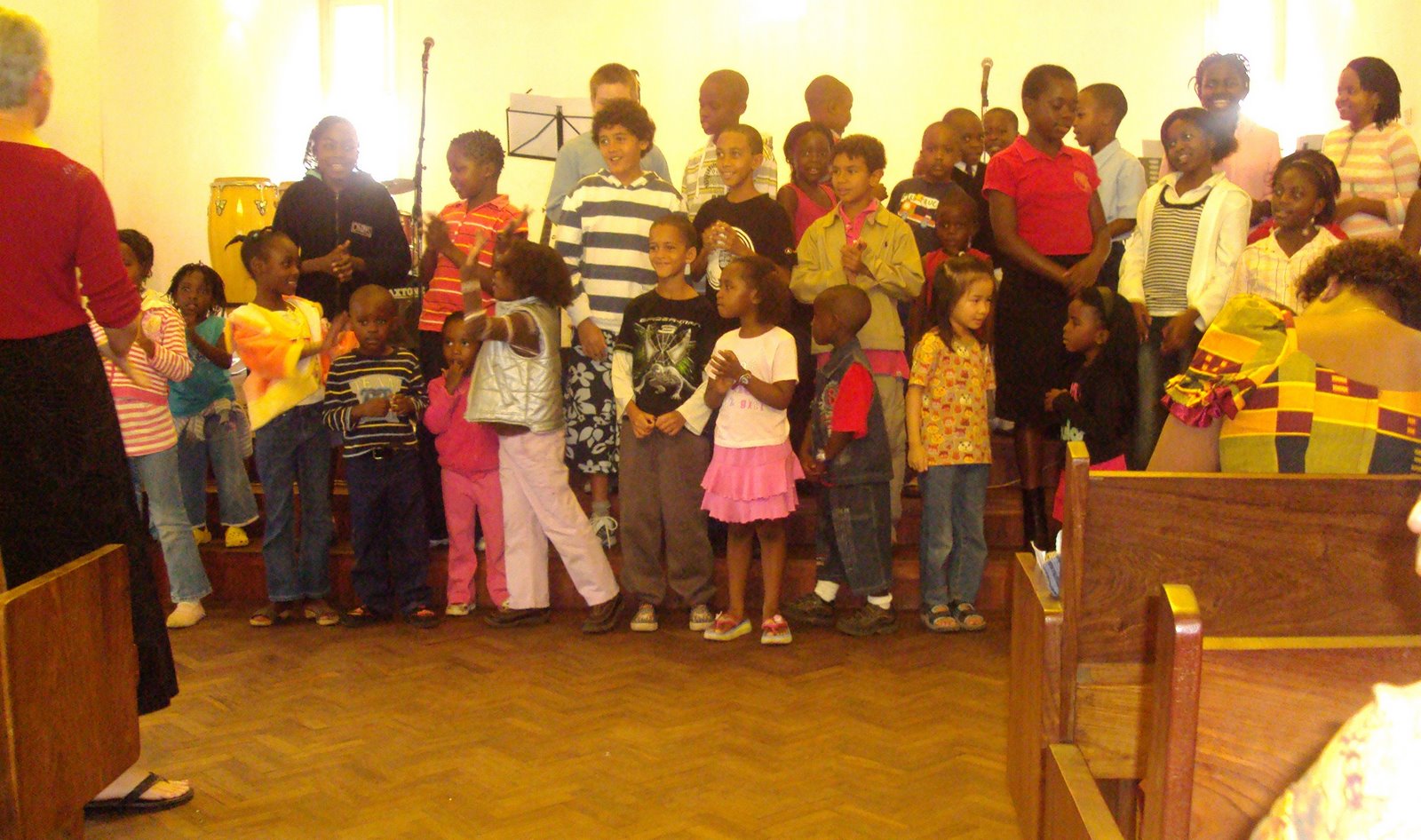
Children's Day is a big thing in Maputo, we're finding out. Last Monday the schools (at least the private ones) were having parents bring food and gifts for their children. Today we celebrated at our church. The children sang two animated songs and it was fun to see them get into it, as in the past sometimes it has been "oh ho hum, I gotta sing."

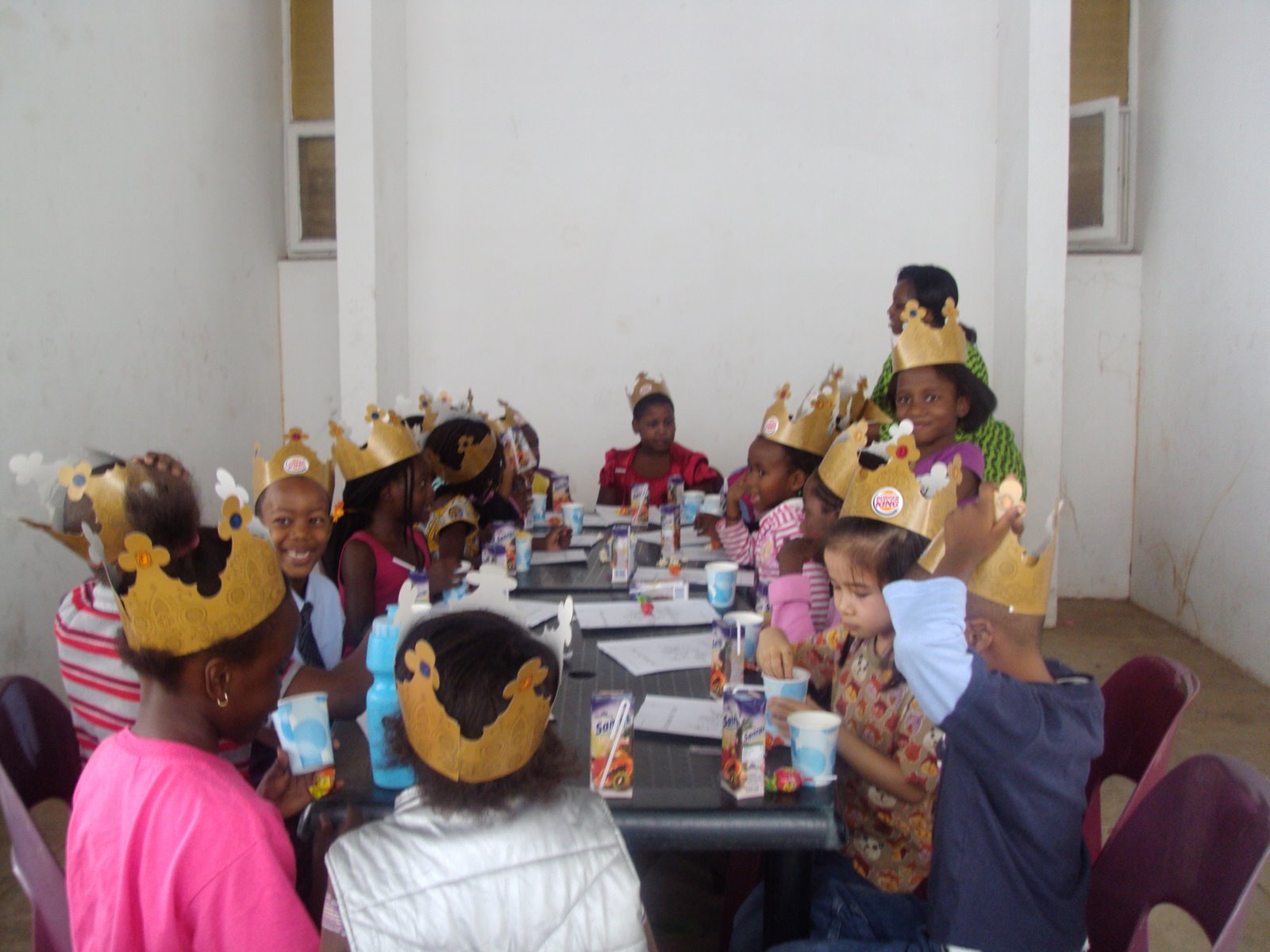
In Sunday school they got crowns to show they are princes and princesses in God's Kingdom, snacks and parachutes (made with plastic bags, a string and a little man made out of pipe cleaners). Thanks, The Chapel for giving us the extras from your recent trip.

At the end of the day one of the teachers said "Well done." My response was, "I'm glad it's done!" It took some work to pull it together but I think the kids had a great time and with everyone pitching in it was not hard.

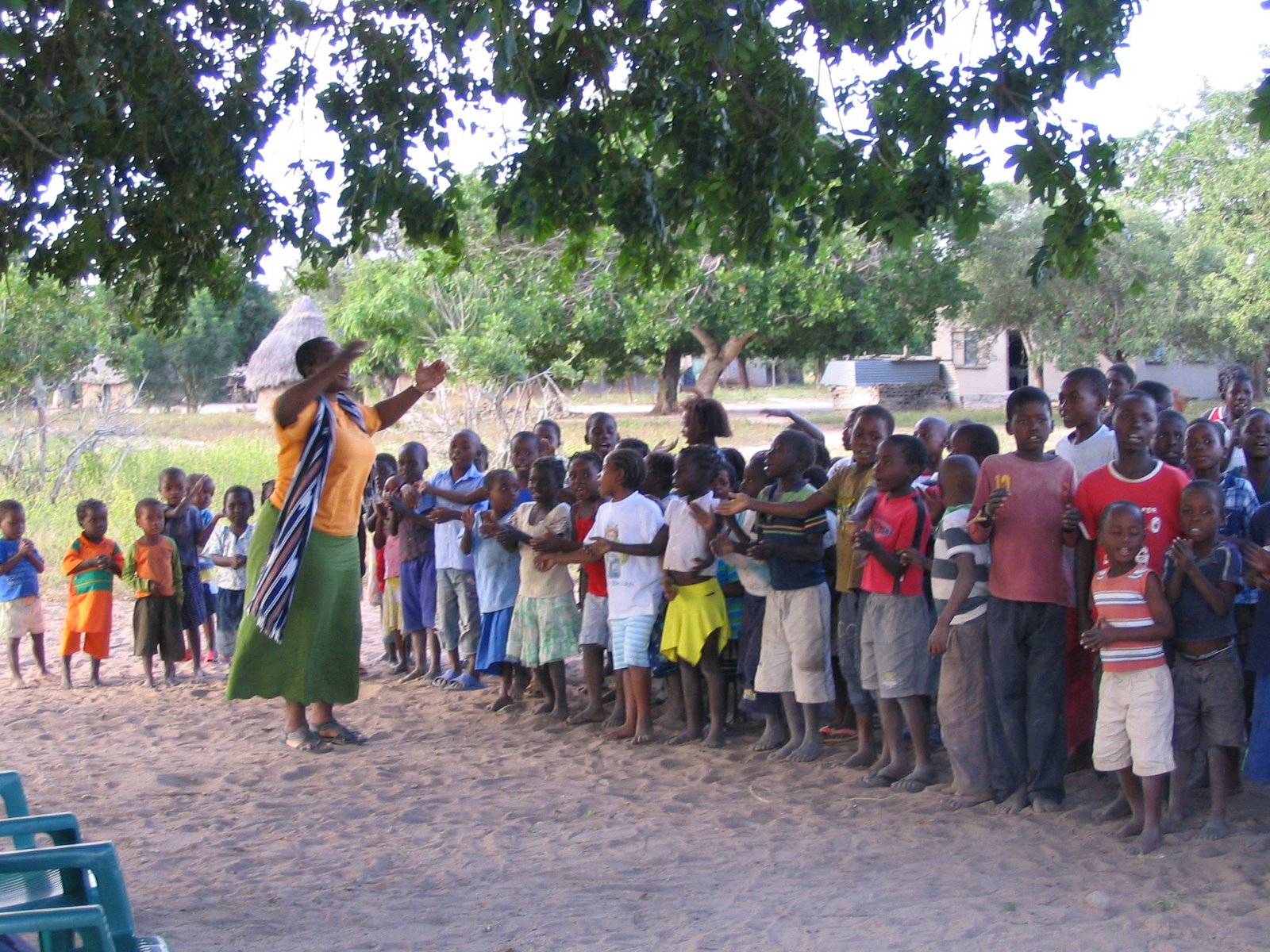
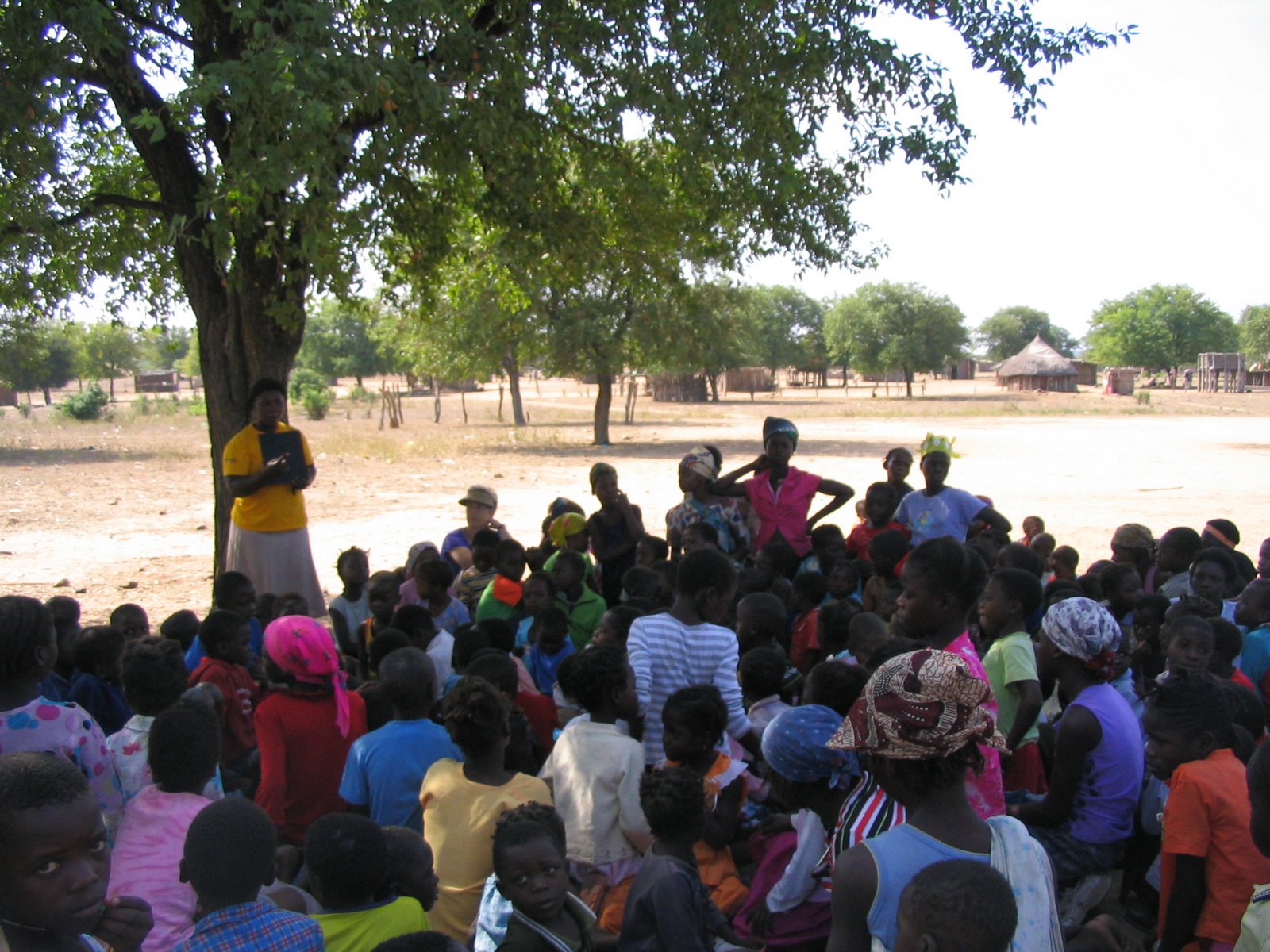
Here are a few pictures from the last church team that came in May. Here's Sybil working the crowd at Kid's Club. There were oodles of kids! Oh, I've got to tell you about one of the moms at Kid's Club. When a kid was acting up, she jumped up and started yelling at him. Sybil told us later she as saying "These old people came all the way from America and you're not listening!" Hmm, wonder who she was referring to?


Parachute fun!

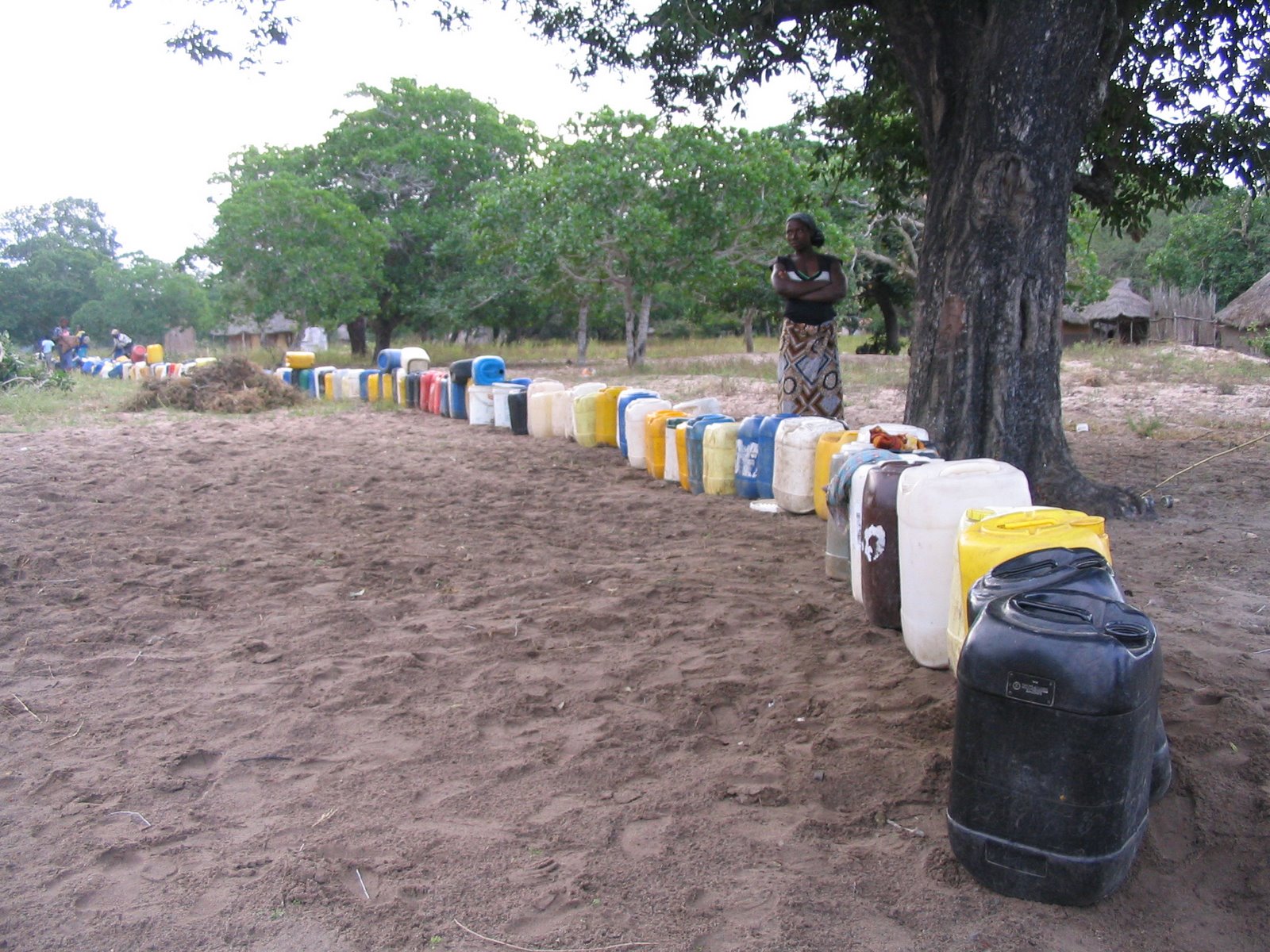
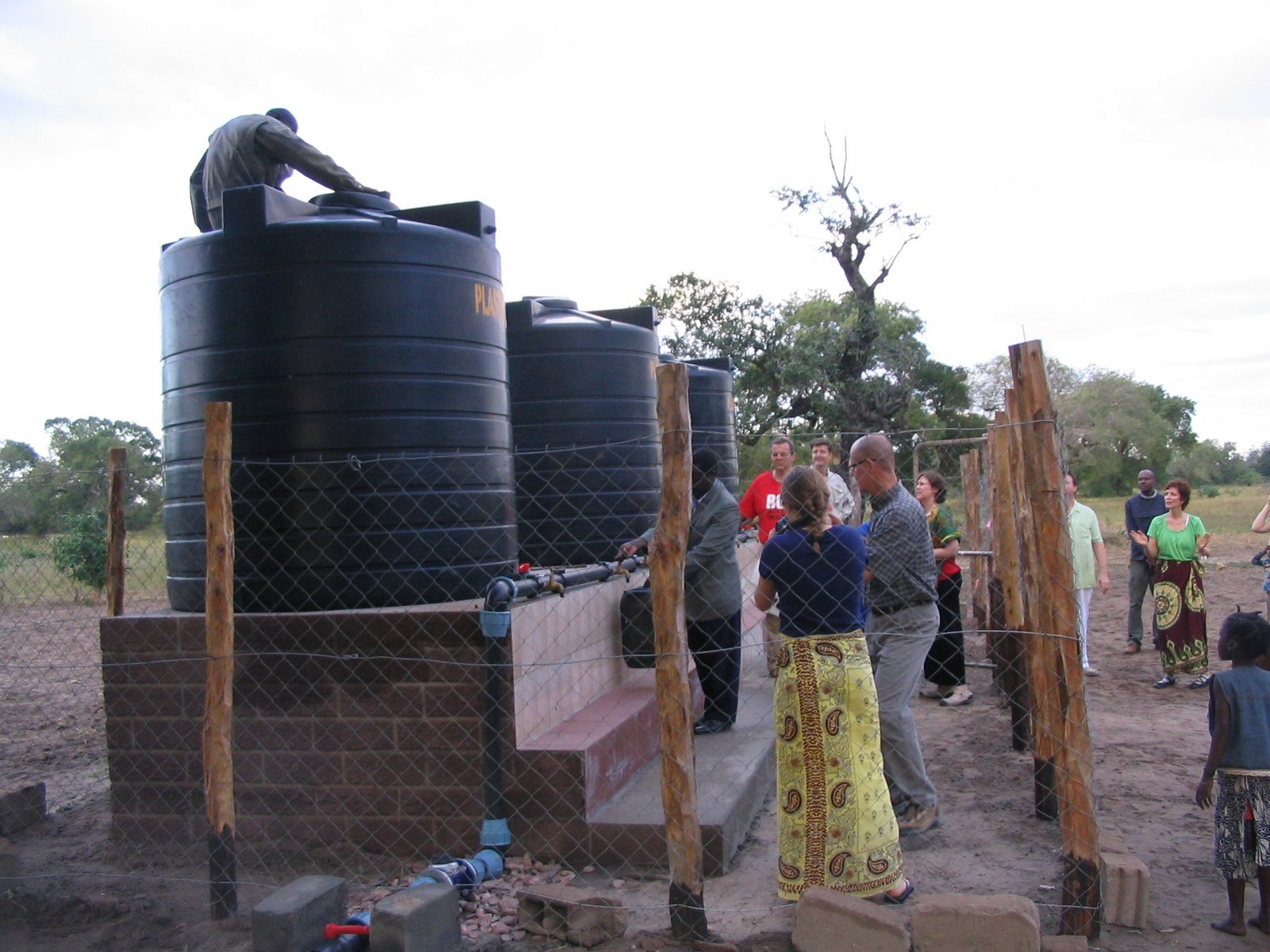
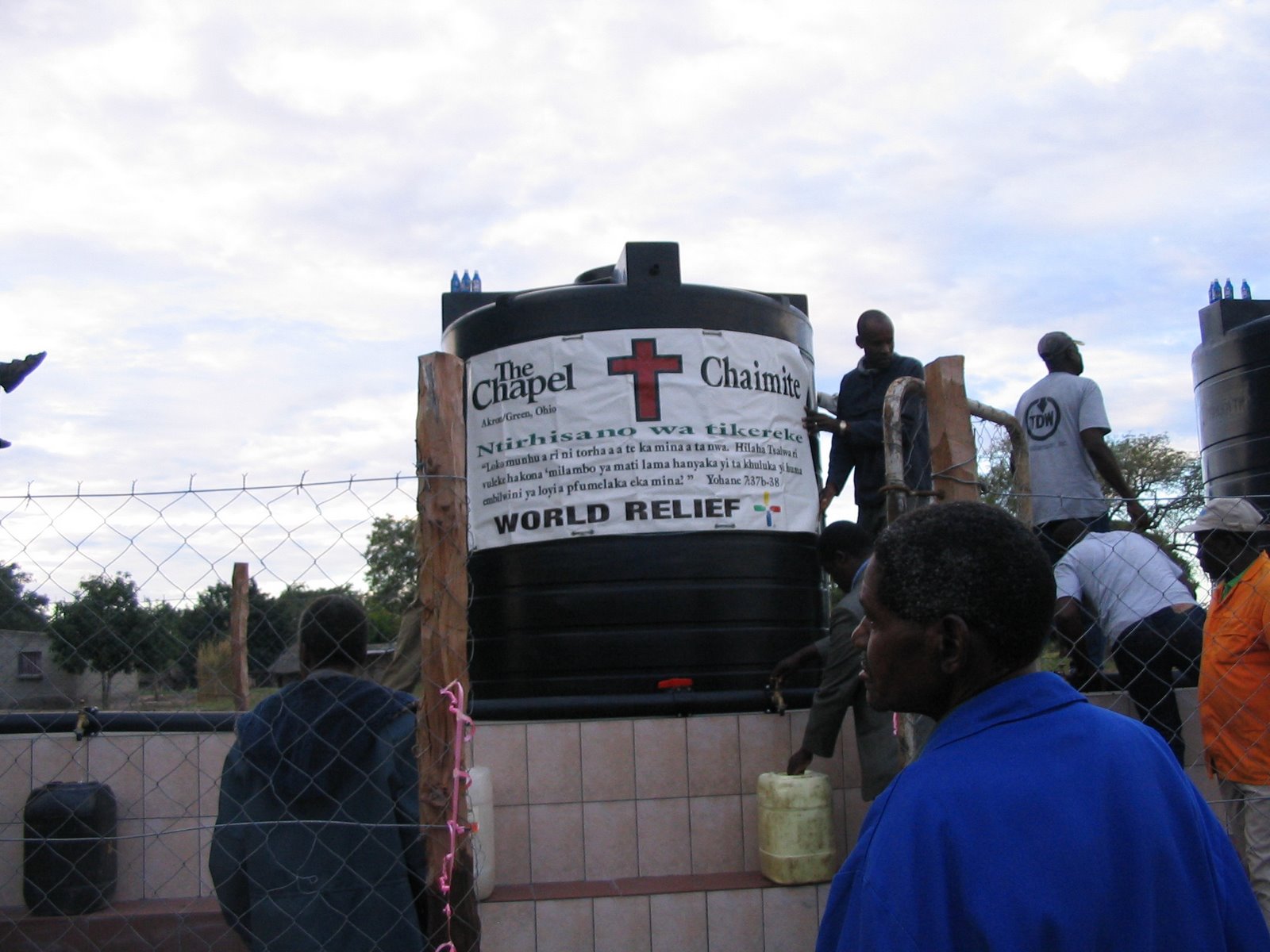
Here's the row of containers waiting for the dedication of the new water point in Chaimite. This is the third one and they have made a huge difference for the villagers. Now they do not need to fear being eaten by crocodiles in the river (it happened many times) and they can get to their fields to work earlier because they do not have to carry water as far.


For more pictures of the trip taken by Mike and Shelise Boso you can go to http://www.youtube.com/watch?v=HwXyDzGDpg0

Monday, June 01, 2009

Safari Park in Maputo

Yesterday we visited the Mucapana Safari Park just outside Maputo that we read about. They have giraffe, buffalo, 6 zebras, some impala and ostrich. It is a nice outing if you want to see some animals but can’t go to Kruger. It takes about 1 hr from downtown Maputo if the traffic is not too heavy. It is quite brushy and hard to see, but giraffe are not too hard to spot! We did not find the zebra. It is not a huge area to drive around – about 40 hectares. Here are some pictures we took.

The reason we went now was because the Nicaraguan who is staying with us for awhile could not get a visa to go into South Africa with the rest of the visiting team. Our Cuban friends have also not seen any wild animals since they've been there. It was great seeing and hearing their excitement to see giraffes up close. They even walked up fairly close to them. You can do that when there aren't lions and other predators around. In Kruger you cannot get out of the car unless you're in a fenced area.



Here's what we read in an online travel magazine.
“Maputo is one of the places in the world where anything is possible. A
city with a rare beauty, it is the entrance to tourists from all over
the world to enjoy the beaches,wild life parks and other places and
things this mystic country called Mozambique hides within its land.
By arriving in this town also known as “acacia” city, tourists don’t need
anymore to wear boots as if they were going to climb Everest, carry
heavy bags with camping supplies,cover the body with mosquito repellant
and get on the road with potent 4x4 engines because the wild life they look for outside Maputo has come to them. That place of adventure tourists want to reach can be found 35 km from the city centre in an amazing and paradisiacal open area called
Mucapana Safari Park. An idea of Philippe Gagnaux based on examples of big parks like Gorongosa,Mucapana is a sanctuary to appreciate wild life. It has emerging fauna, fruit trees such as Marula and is populated with giraffes, buffalos, zebras and impalas. On venturing further into the park, it is possible to see ostriches
in a cold bath in small lakes below the vibrant and beating sun. To complement this fascinating landscape and wild life environment one can enjoy by visiting Mucapana,
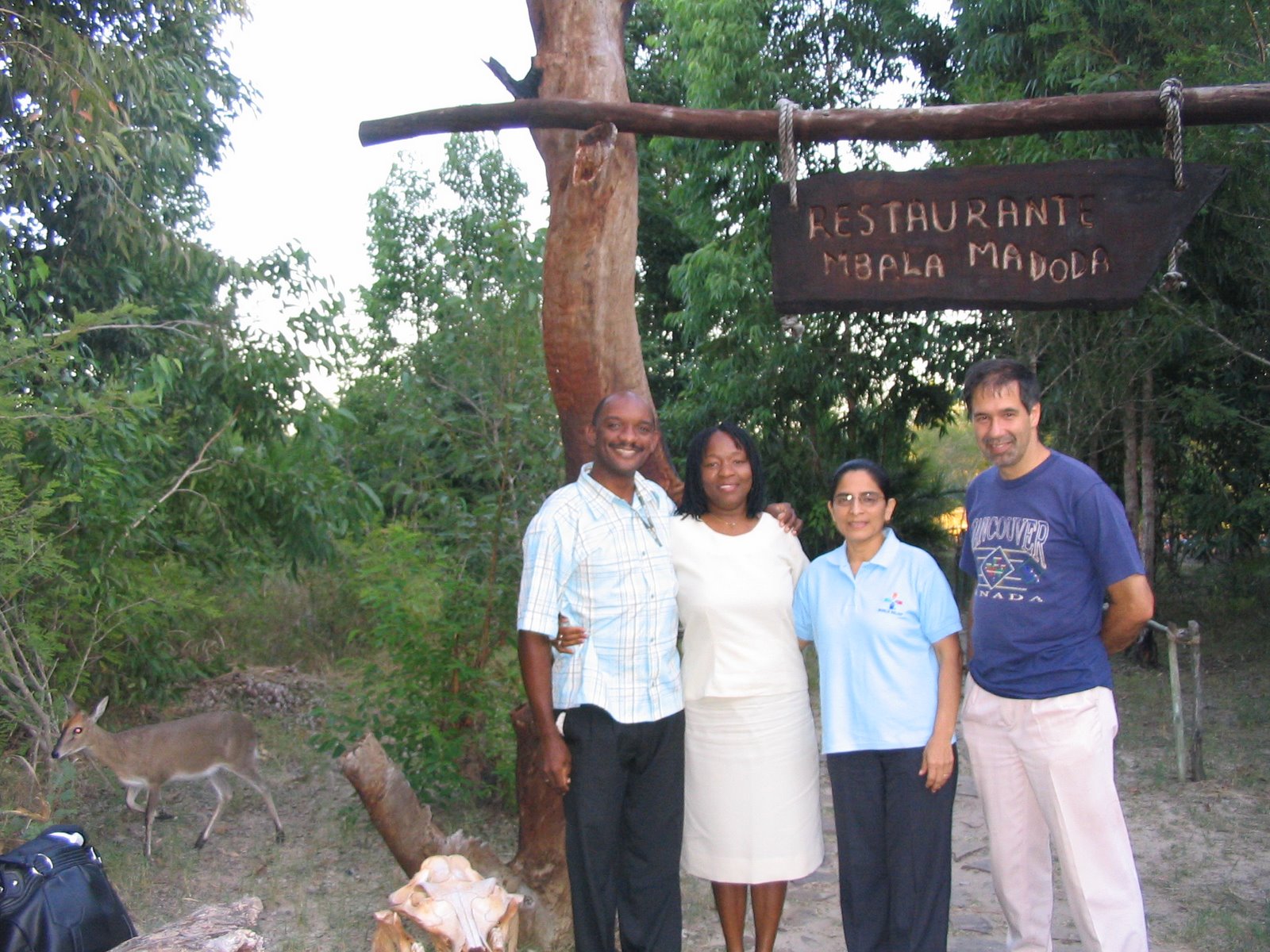
there is a restaurant called Mbala Madoda that serves traditional dishes from Maputo and all of Mozambique.

How to get there?
It is very easy to reach Mucapana Safari Park. The only thing you have to do is
drive to the police checkpoint of Zimpeto on the Xai-Xai road. Upon leaving the
police checkpoint, drive for another 3.8km and then turn left at the green & white
“Safari Park” sign. It is a well maintained dirt road – normal cars are fine. Drive
along this road for 12.8km until you see a sharp right turn in the road. At this point,ahead of you is a large white house and a sign, “Florique”. Turn off to the left before the road bends to the right, drive 4 km (approx) and park your
car in the white-painted house compound. YOU HAVE ARRIVED! From the police check point, it takes about 25 minutes if you drive at a reasonable speed.
Tuesday, May 05, 2009

Herminia

Herminia is a young woman we met shortly after we arrived in Mozambique four years ago. She was one of the 10 young people who took our microenterprise course and then taught it directly in Shangaan to different groups. Shortly after that she was asked to live in Chinhangane and lead Bible clubs with children and youth. This week I had the privilege to be with her and she shared her story with us.

Herminia was born into a family that worships the ancestors. When she was young she started going to the children's clubs close to her home and became a Christian. At that point she told her father that she didn't want to continue with ancestor worship. He became very angry and was threatening her. But her grandmother said not to worry - she would get sick or die if she didn't worship them. Herminia told them that even if she died she would not give up her faith because she knew where she would go. She told them, "This is not a stage I will grow out of. I will live this way for life."

As a teenager she became a volunteer helping with other kid's clubs in Chokwe. She worked with us for about six months and was then asked to start clubs in Chinhangane. At first it was an uphill battle because the pastors thought she had come to start another church and did not accept her. She eventually convinced them that she wanted to support their ministries by the kid's clubs. She works with 107 children and youth in Chinhangane and 34 in another village where she has started working. It is a challenge and she is praying for more Christian volunteers to help her run the clubs. Please pray for her.

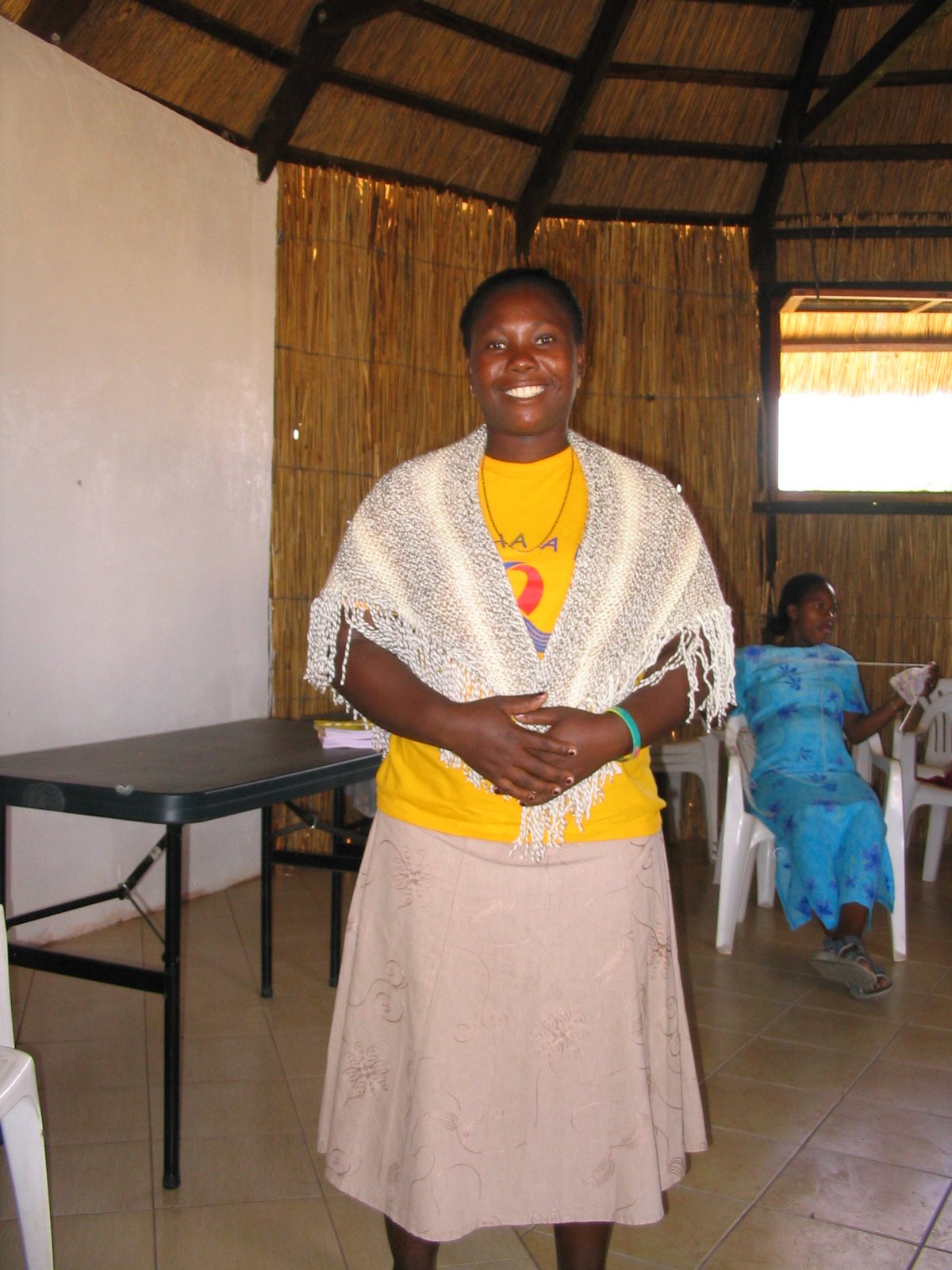
Here she is with a shawl that she knit. She is one of the fastest knitters and crocheters I know and does beautiful work.

A week in Chinhangane

I, Rachel, just returned from a village almost at the ends of the earth. My duties with WR now include accompanying some of the church teams that visit Mozambique. Most of them come during the "winter" here when it is cooler so between April and October it can be a busy time.

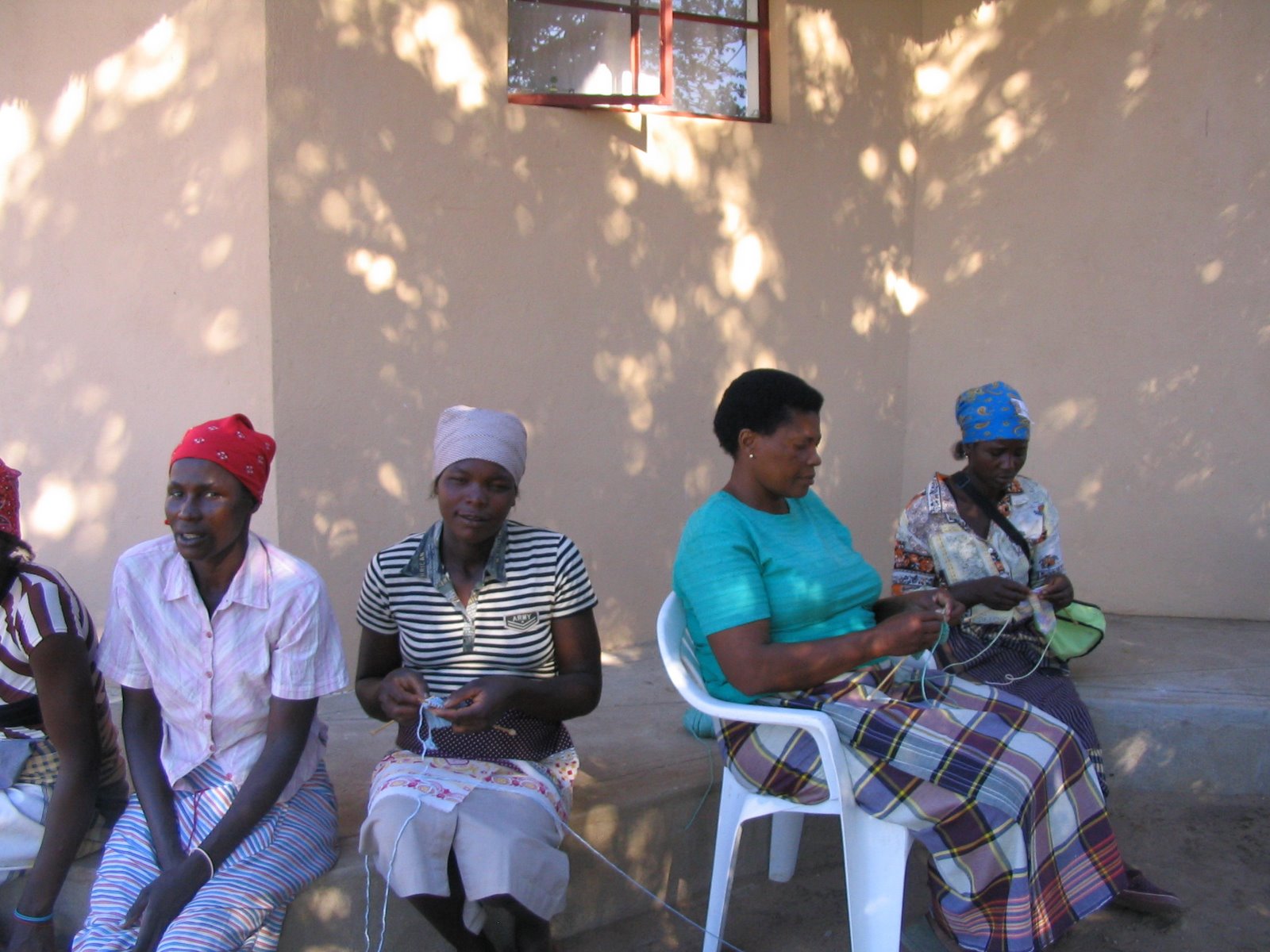
The group from Grand Rapids was involved with children's clubs, Bible teaching, knitting with the women, looking into a new agricultural site and project, thinking about a nutrition bar or supplement, and a kid's day.

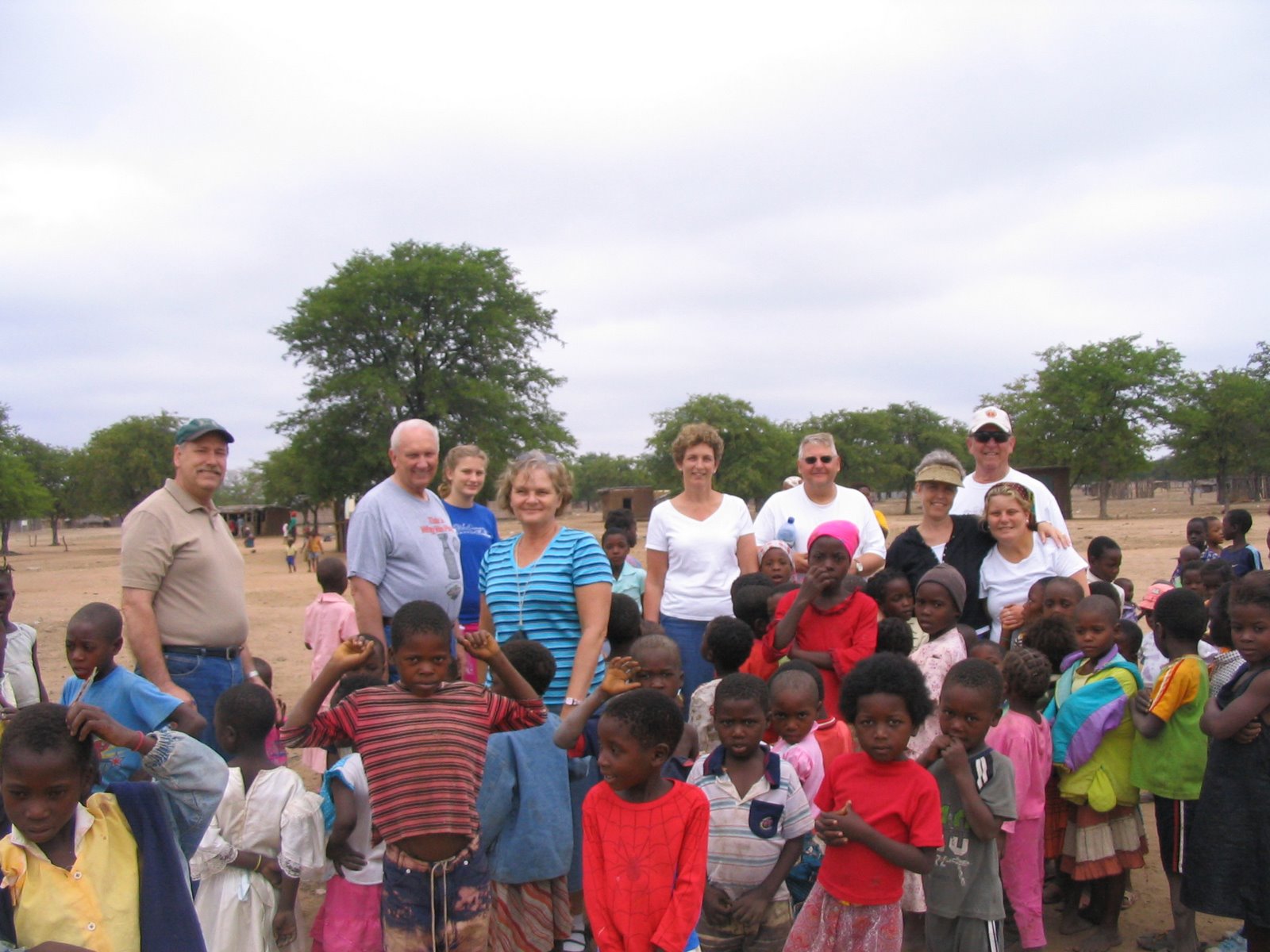
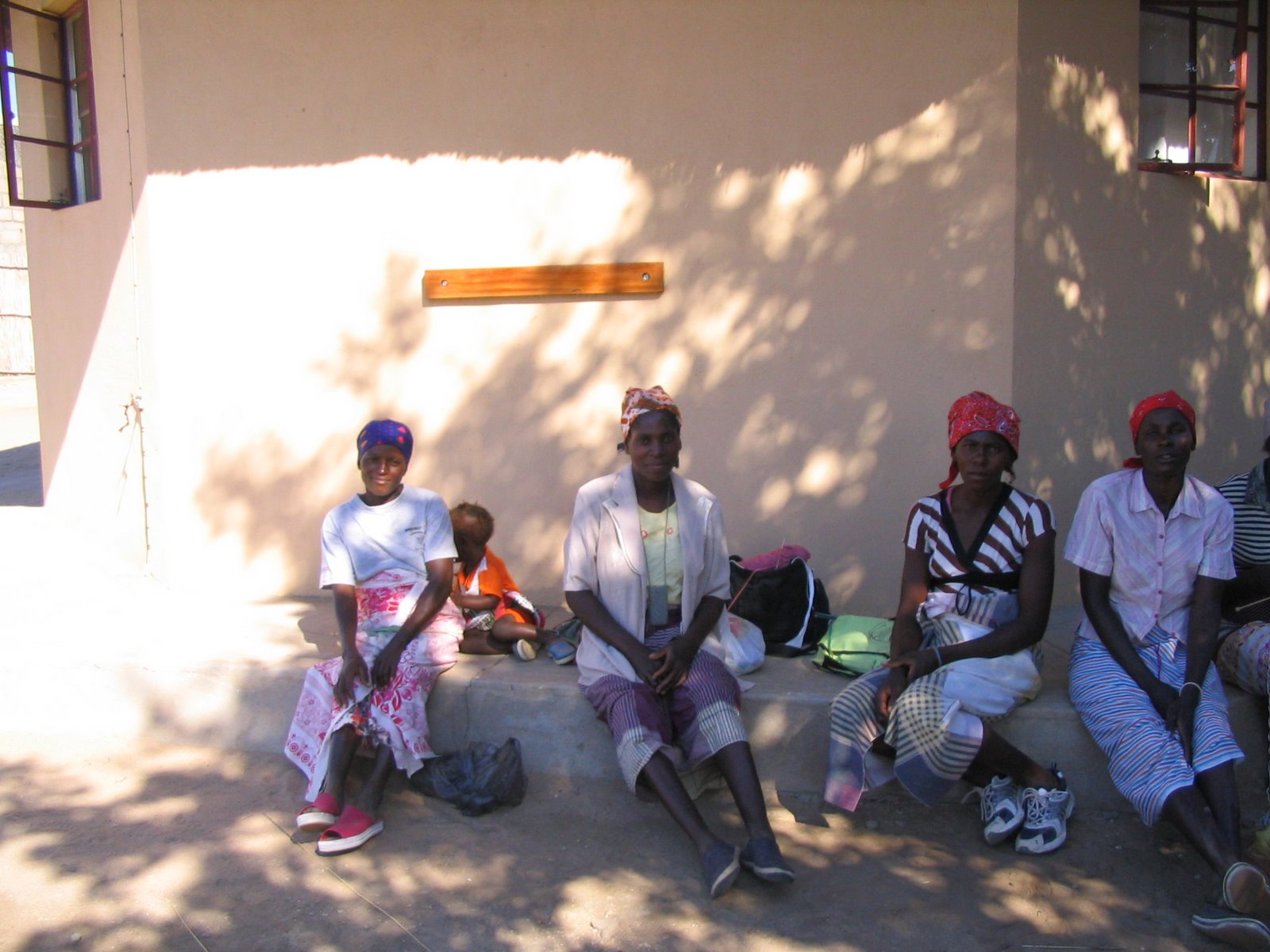
Here are some of the 220 kids that came for games, snack and the wordless book.


The women learned how to knit some new items. The best part was seeing them come to sell items they had made previously and then use some of their cash to buy more yarn. They were excited!


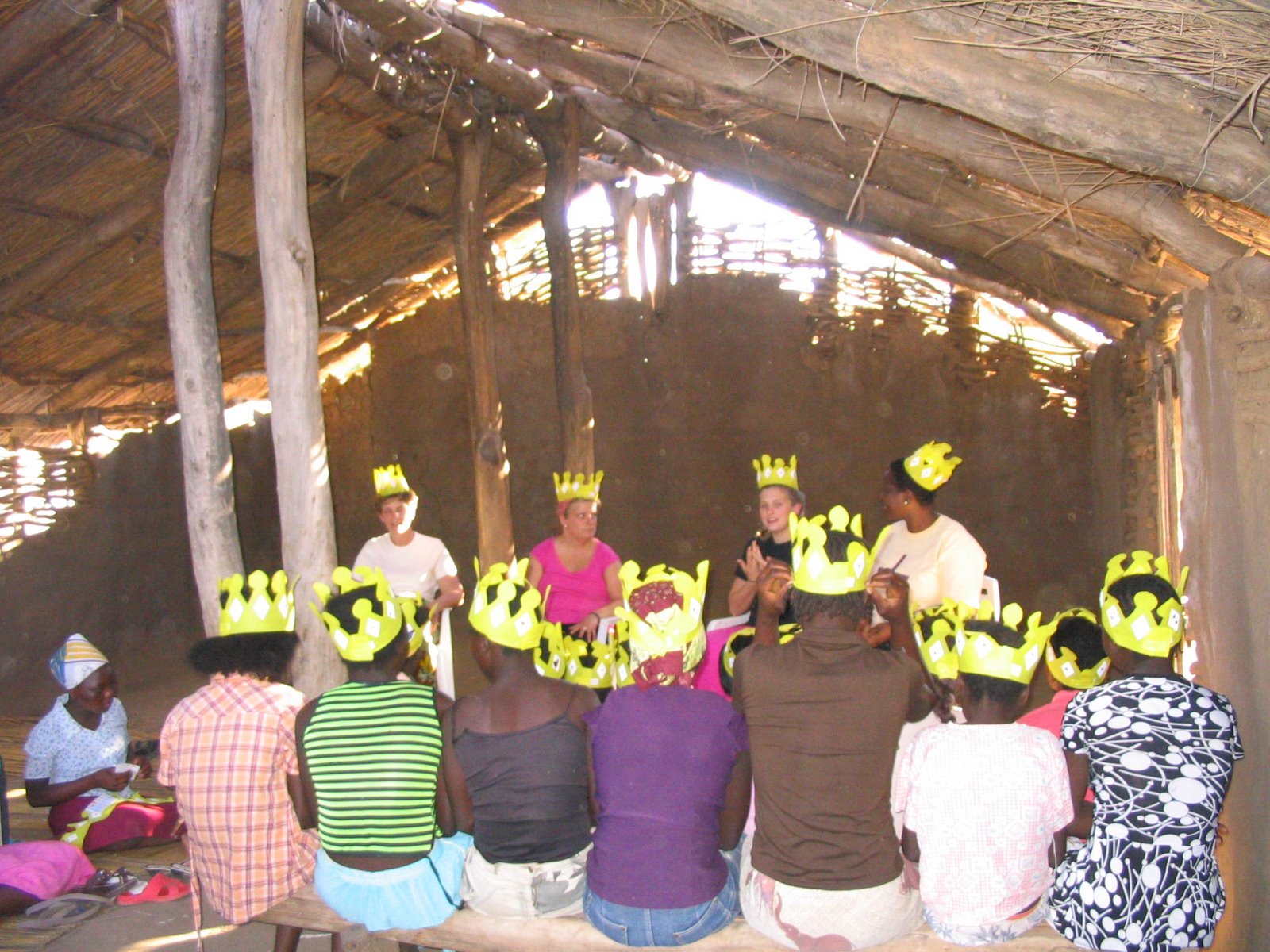
The teenage girls were given crowns to remind them that they are princesses in God's eyes. It was sad to hear how many of them have dropped out of school. The local school only goes through 7th grade and it is very difficult for them to study longer.


It was really difficult when someone told us of the 18 yr. old that was admitted to the hospital in the next town because she was so severely beaten by her boyfriend. We learned that wife beatings (and I'm sure child abuse as well) is a daily occurrence. Some of the young men we talked to indicated that when they grew up they would have four wives, and of course they would beat them. To not do so means that you are being controlled by your wife or that she has put a love potion in your food. The teachings to the group included topics such as Christian marriage and learning to walk as children of the light every day of the week, not just Sundays in church. At the farewell, people said that they appreciated hearing this.

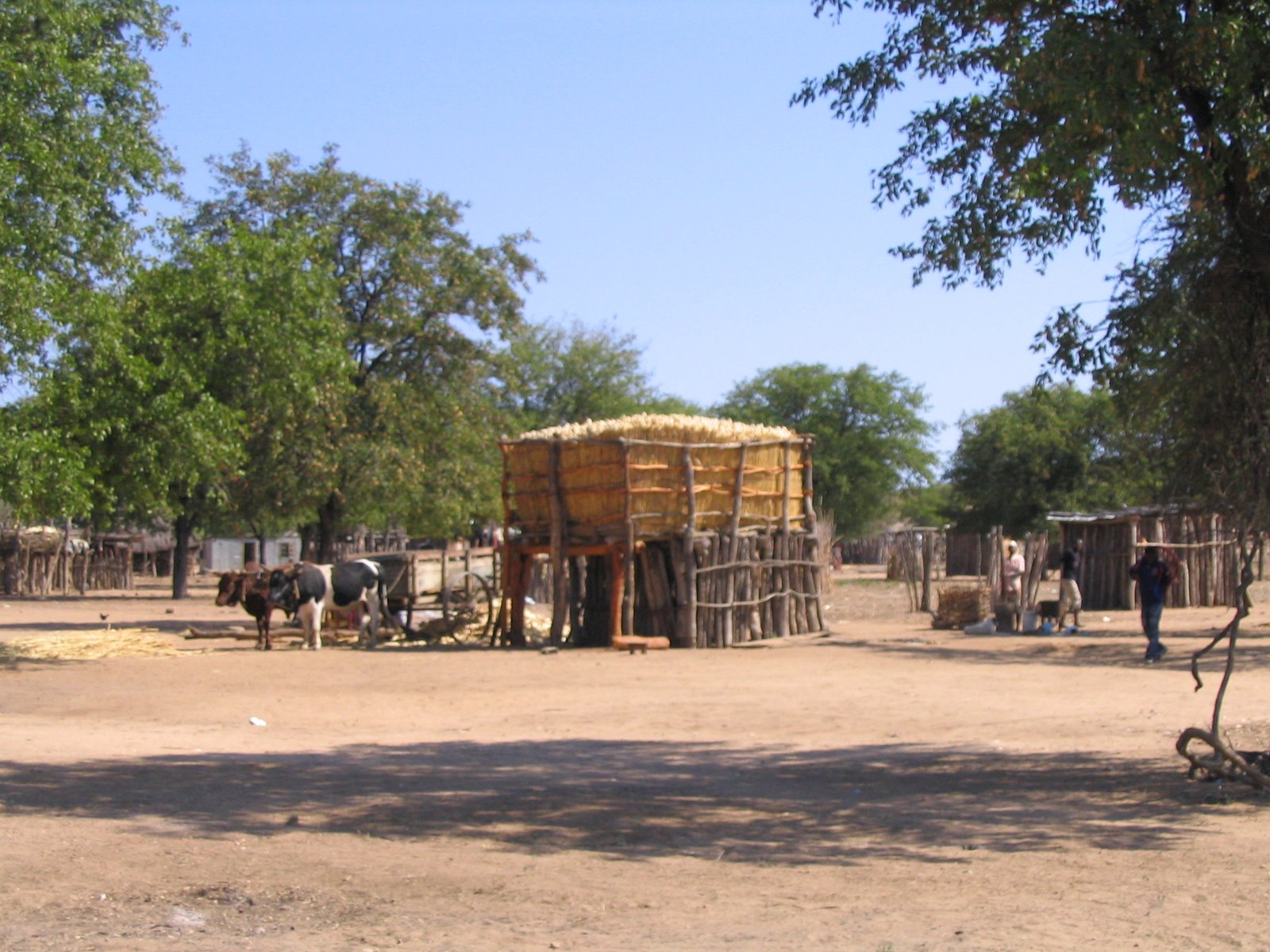
One of the bright spots in Chinhangane is the fact that they have enough food this year and will not be hungry. A door of a dam nearby was accidentally opened last year and the water flooded the surrounding areas. It was so dry that most of the water soaked in and they were able to plant corn. Later it rained and they had a second planting and harvest. It's amazing to see the bins full of corn and more bins being constructed. They are also selling to other villages. They attribute this to God answering the prayers of the group from Michigan. The group encouraged them by telling them that God hears their prayers as well!
Wednesday, April 08, 2009

Bees, Bees, Bees

Having kept bees back in Indiana, enjoying honey, thinking about income generation projects and being somewhat fascinated by insect colonies, I thought I should tell you about the bees in Africa. First, some Africans have this thing about them where the only good bee is a burnt one. When they think of bees they think of fire. I guess it might protect them from getting stung, but it sure is hard on the population and the quality of honey.

For some time I have enjoyed watching the bees that have colonized our office neighborhood. The first batch is in our neighbor’s roof and they will probably stay there until the world ends because you would have to tear the cement roof sheets off to get them. The second batch had found an upside down garbage can and moved in. It was a big group because when they flew in the afternoon light, there were hundreds in the air at any one time. Well, we got a new tenant next door and they lit a fire and “burned out” the bees.

Next thing we knew, there were bees colonizing our small back yard shed behind the office. Nothing big, but a regular flight pattern in and out. So, I suggested we should move them before the colony gets too big. Good idea, we will call the exterminator. Well, what if the local bee keepers will move them for free? When I went to check it out, I found out what a “western” idea that was. No, the bee keeper technical person wanted $180 to move the bees and of course, we did not want to pay that much. Not that I would blame them. (Never mind they get the bees and the honey.)

So now what to do? As we are discussing informally, we get a visit from a co-worker who says, "ah, just start a fire, burn them out and they will leave." (I was not a part of this conversation.) Never mind they are behind a 4 inch solid concrete wall. When we arrive at the office Monday morning we see this blackened wall and burned bushes with boxes and pallets spread all over the back yard and two clusters of bees, one eating honey and the other clinging to the side of the shed. We say WHAT? "Oh, we dug the bees out and will just wait until they leave."

Later that afternoon one of the guards starts to explain why they had done this. His father had apparently raised bees and he knew what to do. We could not keep them because apparently African bees don’t like the smell of anything that is “fresh” cut like grass. When he would try to cut the grass in the back yard, the bees would attack. So you can imagine the tall grass we had there. Apparently this stems from the practice of mashing up cassava leaves and putting them in front of a bee colony and the cyanide that comes off the fresh leaves kills the bees. That was his explanation anyway. Hmm, no wonder between the fire and the cyanide that African bees have not had much chance to become domesticated.

With all the bees around I am seriously thinking about putting up swarm boxes that I saw in Zambia and helping people start bee and honey projects. Honey is quite expensive here, even if bees have no monetary value.

John in Zambia

Here is an excerpt from a report Steve wrote on his recent Zambia trip.

Let me tell you a little about John Enright. He was born in 1950 to American parents serving as Methodist missionaries in the Congo. He grew up in a village, understands the village culture and worldview. He was educated in Zambia, with university studies in Indiana (of all places) and seminary at Asbury and Anderson.

He has become disillusioned by the US gov’t and missionary policy and practices as he saw both creating a system of oppression that says if you are a poor African, you can never be any more than that. Poverty was promoted as a virtue while rich missionaries drove their 4wd’s, wrote fiction in their missionary letters and sat at the top of the social pecking order, only to leave and go home to a long and wealthy retirement. He was forced by war, atrocity and personal threat to his life to leave the Congo. He brought with him the pastor who wrote “A Letter to Africans from an African,” one of his close personal friends and colleagues, whom he personally mentored.

He started 30 years ago trying to figure out how to change the poverty situation as a missionary. He has done/initiated a multitude of projects and business startups. He has created a Kingdom of God based philosophy and practice that might put most theologians to shame. He believes that Africa should be developed by Africans, for Africans, benefiting Africans, without greed, high salaries and corruption we see in many of the government and NGO systems today. He personally takes home $1,500 per month and uses that as the standard he wants every small farmer and worker to achieve as a level of income. (He also knows that too much money too quickly can damage people.)

He had been courted, wined and dined by presidents, knows many high level educators and professionals worldwide, constantly receives visitors from all over the world who want to see what he is doing and he wants to franchise his ideas, partner with NGO’s, local people and businesses. He is extremely knowledgeable, perceptive, opinionated and by his own admission a bit hyperactive. He is a broad visionary and sees the need to focus on the details of a project to see it through to success.

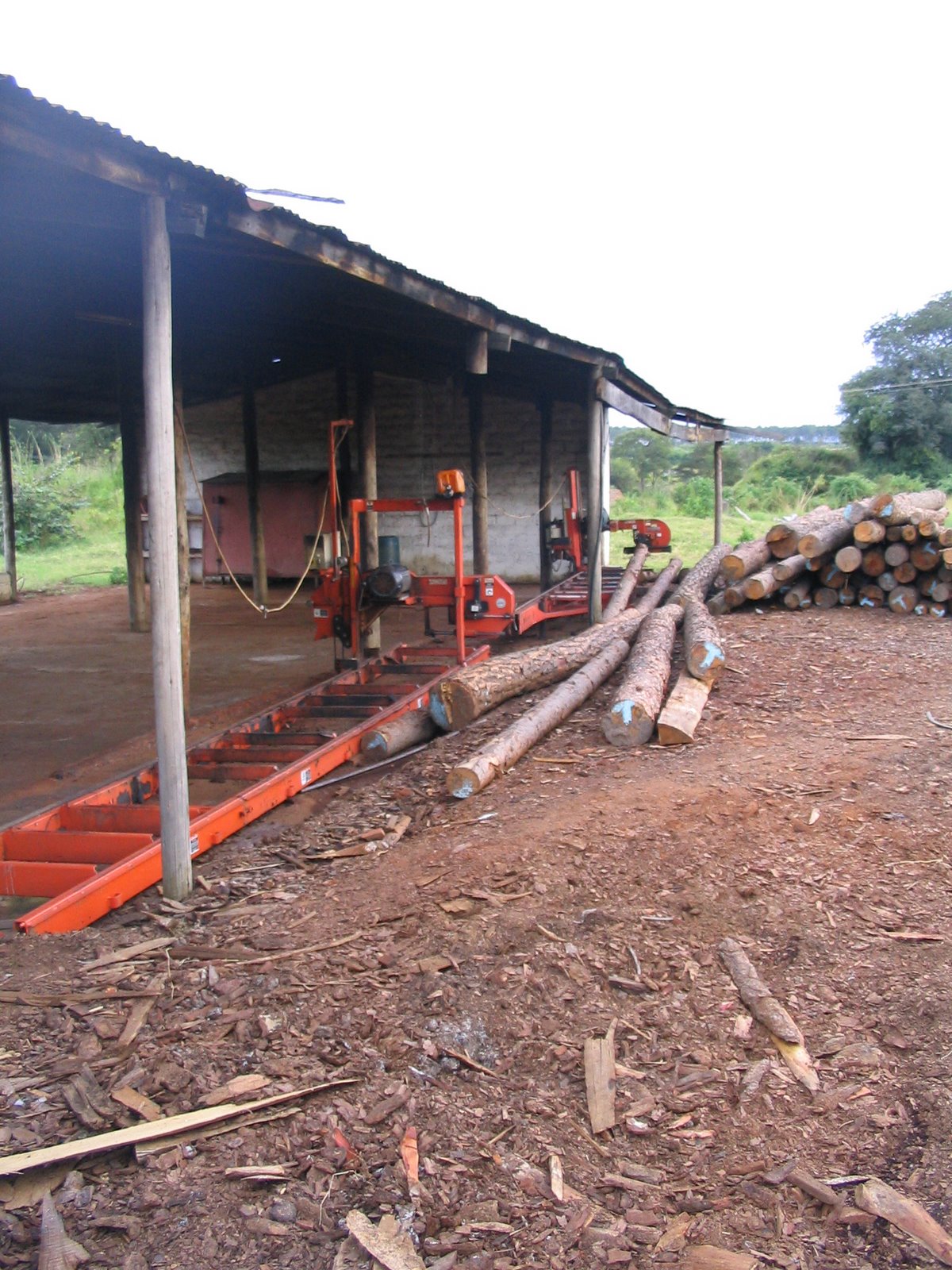
He has just acquired a third farm, each in excess of 1000 hectares, where he is running multiple operations. He understands the power of value chains and wealth creation. For example, he has just put 10 woodmizer saw mills into the bush, each expected to generated 2-3 cubes of wood per day with a value of $400 per cube. This wood comes to his work centers for processing into furniture, windows and doors, flooring, export, etc.


He is into bananas, fish ponds, wood, honey, aloe and cattle (1000 employees) with his non-profit proceeds supporting more development, orphanages, etc. The wood working companies currently generate $10,000 per month excess income that he uses to support a learning center. He is expecting this will increase with the new mills to $25,000. He offers this center free of charge, dorms and meals included to anyone who wants to do training. His goal is to be able to serve (help develop) 500 people per week.

He doesn’t do anything small and understands the biblical concept of creative vision. He wants large margins, on par salaries and top quality work. He is willing to pay a factory manager for the value he creates. He feels that 50% ownership is win-win as it empowers the owner-operator and gives him (John) the leverage to reinvest in whatever he sees fit, including social programs. He personally does the project numbers and understands the options as well as risks.

Wednesday, March 18, 2009

It's not "all about Me"

Recently I watched a DVD of Craig Hill talking about the differences between employees and self-employed people, business owners and investors. Each category thinks differently. There was a lot said and I'm not going to go into it all. One thing that struck me is that employees think about their hourly wage or salary, their benefits, how many hours they will be asked to work, etc. It is a contract - I'll do my part and will receive the recompense. If we're not careful, the attitude can be like the name of a store we saw in S.A.: "It's all about Me."

When a person is self-employed the thinking has to change to what do I need to do for this business in order for it to not only survive, but flourish. This will likely involve long hours, little money and much sacrifice until the business is up and running well. At this point we have to "ask not what your country (business, church, family, organization) can do for you--ask what you can do for your country" (etc.).

As business owners the thinking gets stretched to creating systems and learning how to manage them. Investors think even more broadly and manage multiple businesses and systems.

We are studying Philippians in our small group and Phil 2:3-4 comes to mind for whatever stage we are in: "Let nothing be done through selfish ambition or conceit, but in lowliness of mind let each esteem others better than himself. Let each of you look out not only for his own interests, but also for the interests of others." This is contrary to our Adamic nature but Jesus gives us the grace to do this because He did it Himself.

Monday, February 23, 2009

Weekend in KwaZulu Natal

Well it was a wild and wonderful weekend February 20-22 as we made the long drive to the middle of nowhere in the midlands of KwaZulu-Natal outside of Durban SA. We went primarily to take another couple to be trained as coordinators in the Ancient Paths process, and completed one hopefully significant errand along the way just outside of Durban.

We left Friday morning at 8 and headed for Swaziland (a shortcut to Durban).It took us four hours just to get through Swazi and then we hit the expressway and tried to get to Durban before 4:30 when the head office for Spar, a large food chain in the region, closed. I had spoken to them and wanted to drop some virgin coconut oil samples for them to see. It was only supposed to take 6-7 hours to get there, but it took us 8.5, with me running into the lobby at 4:35, just hoping there would be someone there to give the samples to. Yikes!

We then took off for the hill country to attend the seminar. Supper was to start at 6, but we were still in Pietermaritzburg and at 60+ kilometers from our destination. To make it worse, we drove into rain and fog and missed our first exit. We found the road to the hills and then things got interesting. We did have a map with km marked on it, so marked our starting position and off we went. The fog was so thick we had to drive about 25 mph and the road was twisty, wet and basically unmarked. The couple that were with us were good for us as they sat in the back and sang and laughed like they didn’t have a care in the world. Why worry when you can praise instead? And wonder of wonders, right at around 33km a side road appeared. We turned off and sure enough, there was a y in the road at the designated distance. We arrived at a farm gate several km later and drove through a pasture, found a house and the place we were supposed to be by about 7.

The weekend seminar was very good and a great encouragement to us personally. The view was beautiful once the fog wore off and it was great getting to know our hosts Leon and Marietjie better. Imagine rolling hills, virgin forests, lakes, many flowers and birds, cool weather. It was like a different world!


We had taken a liter of oil as a hostess gift and everyone got excited about it. I think we could have sold alot of it. One woman said she could forgive me for not bringing some, but as the weekend went on and she liked it more and more, it was harder to keep that attitude.

By Sunday afternoon the fog had come back so we couldn’t take a shorter way home, not knowing the roads or conditions. We did make good time back to the Swazi border, but then things went awry. We needed to get to the border exiting Swazi before 8 pm when it closed. To make a long story short, we missed a turn off as it was getting dark and drove much farther and longer than we would have needed to, arriving 6 minutes late, thus needing to spend the night in a hotel.

As I woke up during the night some thoughts came to me that might be worth sharing.
1. It doesn’t matter how fast you drive, if you are going the wrong direction, you won’t get there.
2. We had been given a road map to the farm that we followed carefully and arrived. We did not do the same going home and did not arrive without much more effort, frustration and cost.
3. Teamwork would have helped to prevent these mistakes as each of us does the things we are gifted in doing.
4. Most Swazi’s don't read maps and the country doesn't have enough road signs (ok, maybe not worth sharing)

So all is well that ends well. We do have a choice. We got lost, so we can be grouchy and lost or keep a good attitude even if we are still lost!

Thursday, February 19, 2009

Customer Service

Customer service in Mozambique cannot be taken for granted. Once we drove ½ hour through terrible traffic to pay a bill. When we arrived, they worked at getting the invoice around, hummed and hawed and finally said, “Why don’t you come back tomorrow?” Now this is a common phrase we hear a lot. But we were there to give them money and were not about to spend another hour in awful traffic plus fuel at $6/gallon to come back. So we politely declined and said we could wait until they figured it out and then pay them that day. Well, thankfully we didn’t have to wait too long and paid the bill.

We could tell you lots of other stories, but we try not to remember them or be too negative about things that are counter to our culture.

It’s come to the place where we are actually surprised when we come to the Midwest and are greeted politely and thanked after the transaction. We just don’t expect it anymore.

But today I was pleasantly surprised. Yesterday when I got my glasses out of their case, one lens had popped out. Apparently the case got bumped somewhere. There is an optical place not too far from our house, so I took the glasses there. When I walked in, one person was sitting in a waiting area so I went up to the counter and waited. Another person came in and I showed her what I needed. She told me to go to the other counter and the person waiting got up and helped me. She never said a word to me, but she took the glasses and fixed them in about 3 min. Then she cleaned them and handed them back to me and that was that! I thought maybe they’d ask for some payment but since she never said anything I walked out of the store. So you never know. Just when you start to always expect inefficiency and bad service, someone changes your mind and you realize there is hope.

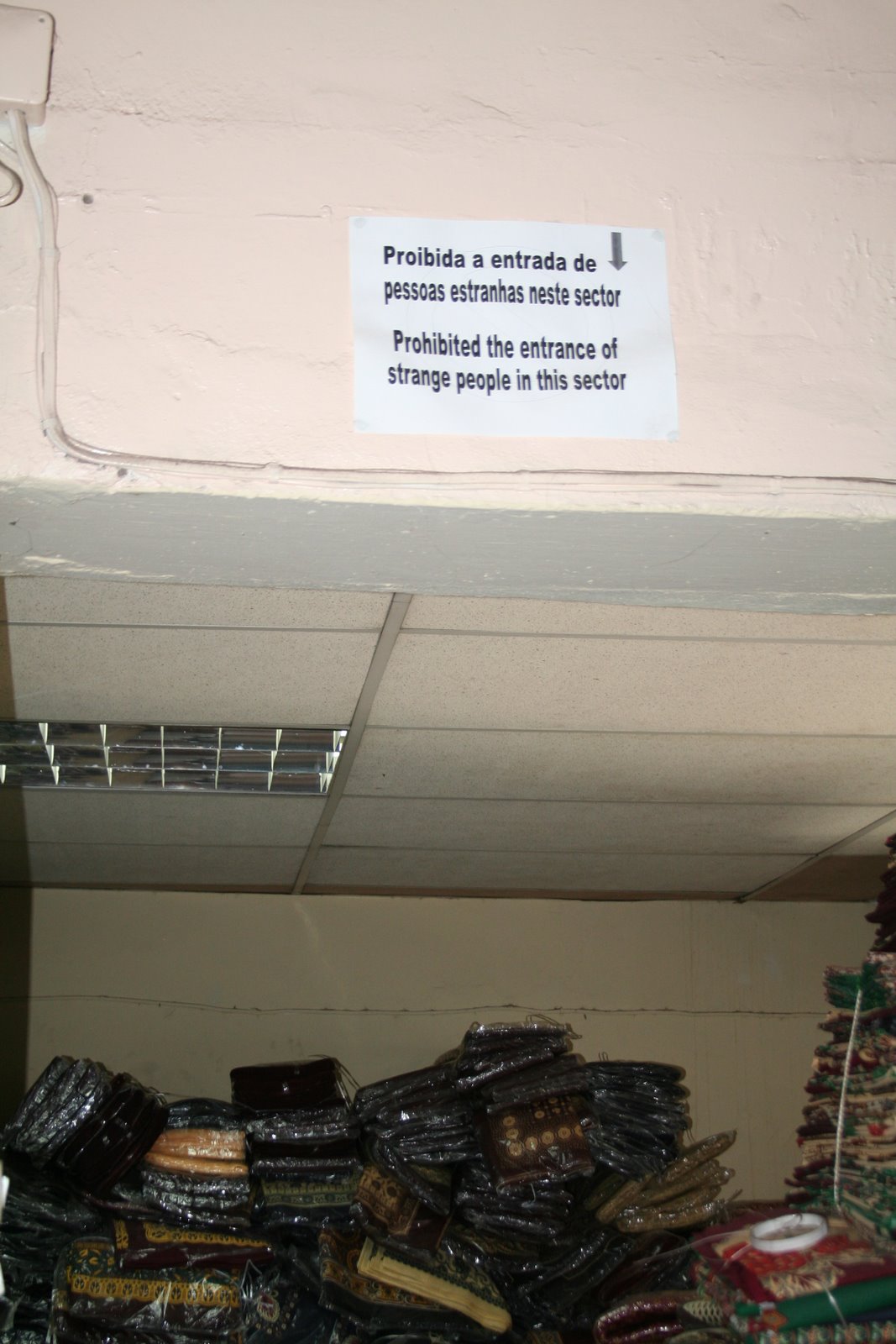
Here's a funny sign at the capulana store storage room. It says "Prohibited the entrance of strange people to this sector." I'm sure there are people laughing at my Portuguese translations also!

Monday, February 09, 2009

Judit

Our daughter Joanna first met Judit when she came to Mozambique in 2006. They immediately hit it off in spite of the language barriers and became friends. We slowly came to know parts of Judit’s story.

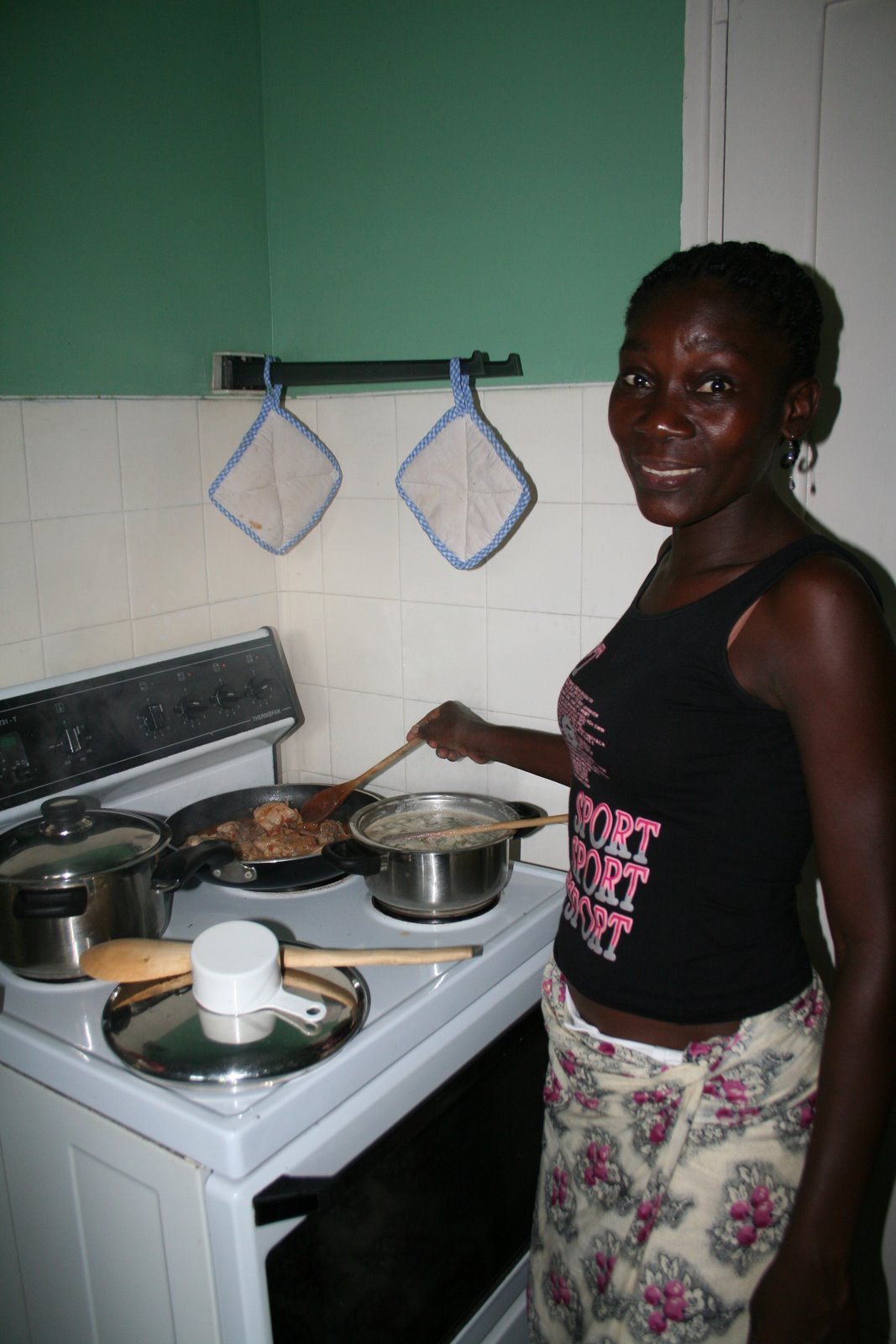
Judit was orphaned at a young age and her extended family declined to take her in. She lived with some nuns for awhile and this is where she learned to cook. Now it is her passion and she does a good job of it!

In 2000 Judit was in a very bad vehicle accident. She was in a “chapa” which is a van that is used for public transportation here. The chapa and a semi were in a head-on collision and the chapa ended up under the truck. Ten people died and of the survivors Judit was the most critical. She had injuries to her back, stomach, hip, and abdomen.

She spent one full year at the Central Hospital in Maputo. The surgeries and physical suffering she endured would be enough for anyone but she also suffered a lot from the lack of care that we take for granted in a U.S. hospital. Having a bed pan or a bath requires an extra tip to the nurse and if you have nothing, you are just stuck. Having friends or family to come assist you also requires extra money. I can only imagine what Judit went through that year. She came out of the hospital with a severe limp and has had numerous therapies and procedures since then. She was able to get a corrective shoe with a large platform to help her walk. However, during the explosions of the bomb arsenal in 2007 she had to run for her life and left her shoes behind. Thieves came into the house where she was staying and among other things, took her special shoes.

She was a cook in a home for awhile until others in the household became jealous of her and accused her of stealing. She felt she could no longer stay there and moved back to Maputo.

She has been living with a woman that she met in the hospital. This woman is willing to have her, but asks that she help with household expenses. This is impossible for Judit until she finds a job. This past week a job opportunity came up and Judit spent a couple of days with us while she pursued it. It was to work as a cook at a bakery that also sells hamburgers, chicken, fries, etc. She would be the only cook and dish washer. She would not be allowed to sit all day or take any breaks. The owner also required that she work for 7 days without pay and at the end of that time she would be notified whether she would be hired or not and what her salary would be. It could be as low as $40 a month or a bit higher. The owner does not trust any of the employees and tends to fly off the handle and scream at them. Judit went to work for a day and did her best. Her feet started to swell and she could no longer wear her flip flops so she went barefoot. At the end of the day she was exhausted but willing to try it again. But as we processed it together, she decided that this would not work for her. Although she is willing in her spirit to give it a try because it is a job that she desperately needs, her body just can’t take the stress.

It looks like she will go to Beira again to finish high school. She will live with some relatives who don’t really want her there and barely feed her. Last year the local priest helped her out by buying food for her when he saw how thin she had become. Judit is an optimist in spite of all the struggles and willing to suffer whatever it takes to finish school.

I am impressed with Judit’s generous spirit. Whenever she comes to visit, she brings mangoes, or other food. When Joanna came this year, she brought her a capulana (a meter of cloth used as a wrap around skirt and many other things). She never comes empty handed even though she has so little.

Please pray for Judit. When I shared Jer. 29:11 one day when she was discouraged she was touched to think that God does have a future and a hope for her. Judit is one of the thousands of people in Mozambique who have had very hard lives and who sometimes find it difficult to go on. I believe God brought her into our lives for a reason. It is easy to let these sad stories burden me too much. But I believe my part is to encourage in different ways, to pray for and believe God to intervene and really fulfill His promises of a future and hope for Judit.

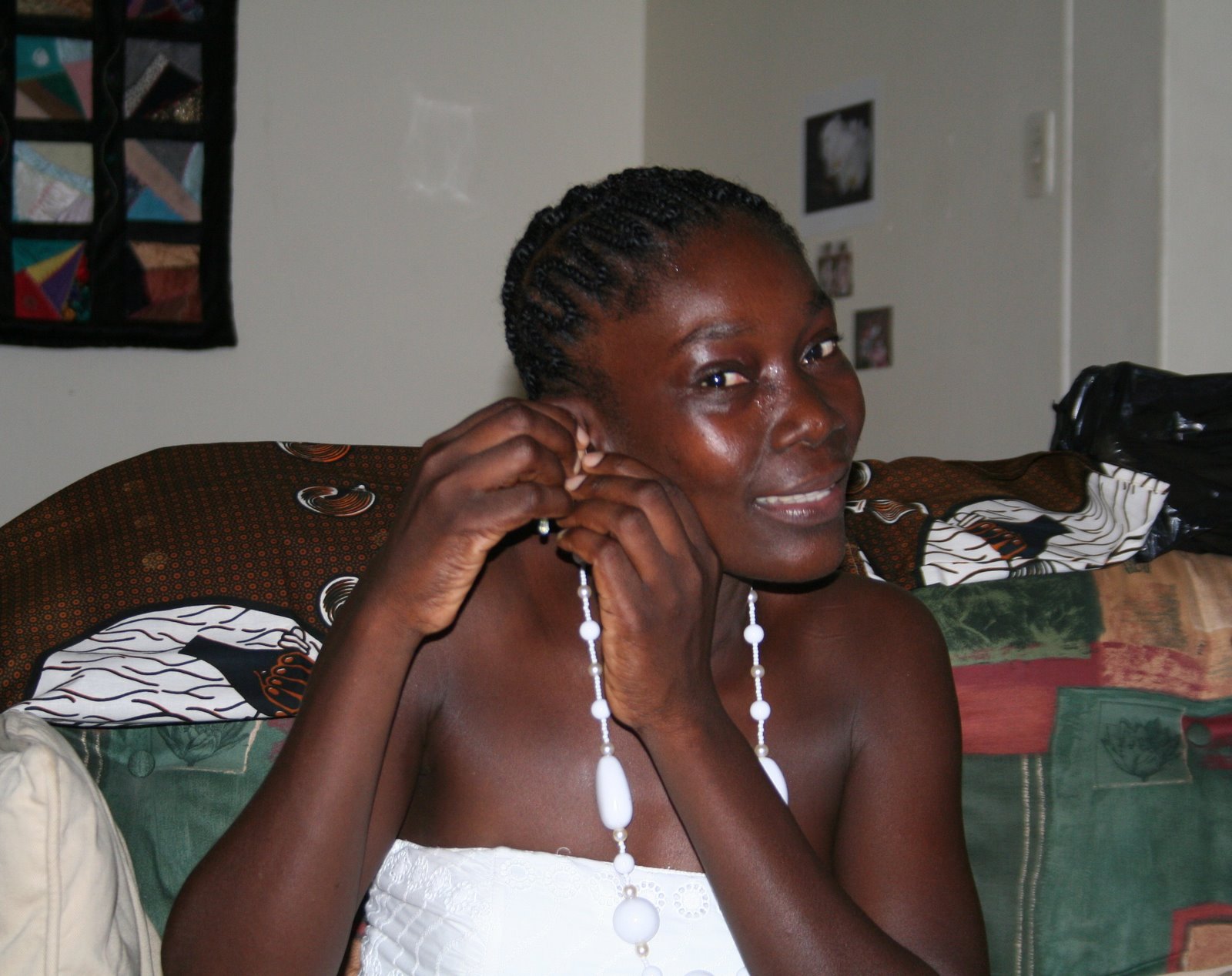
Trying on the earrings Joanna made. She loved them!


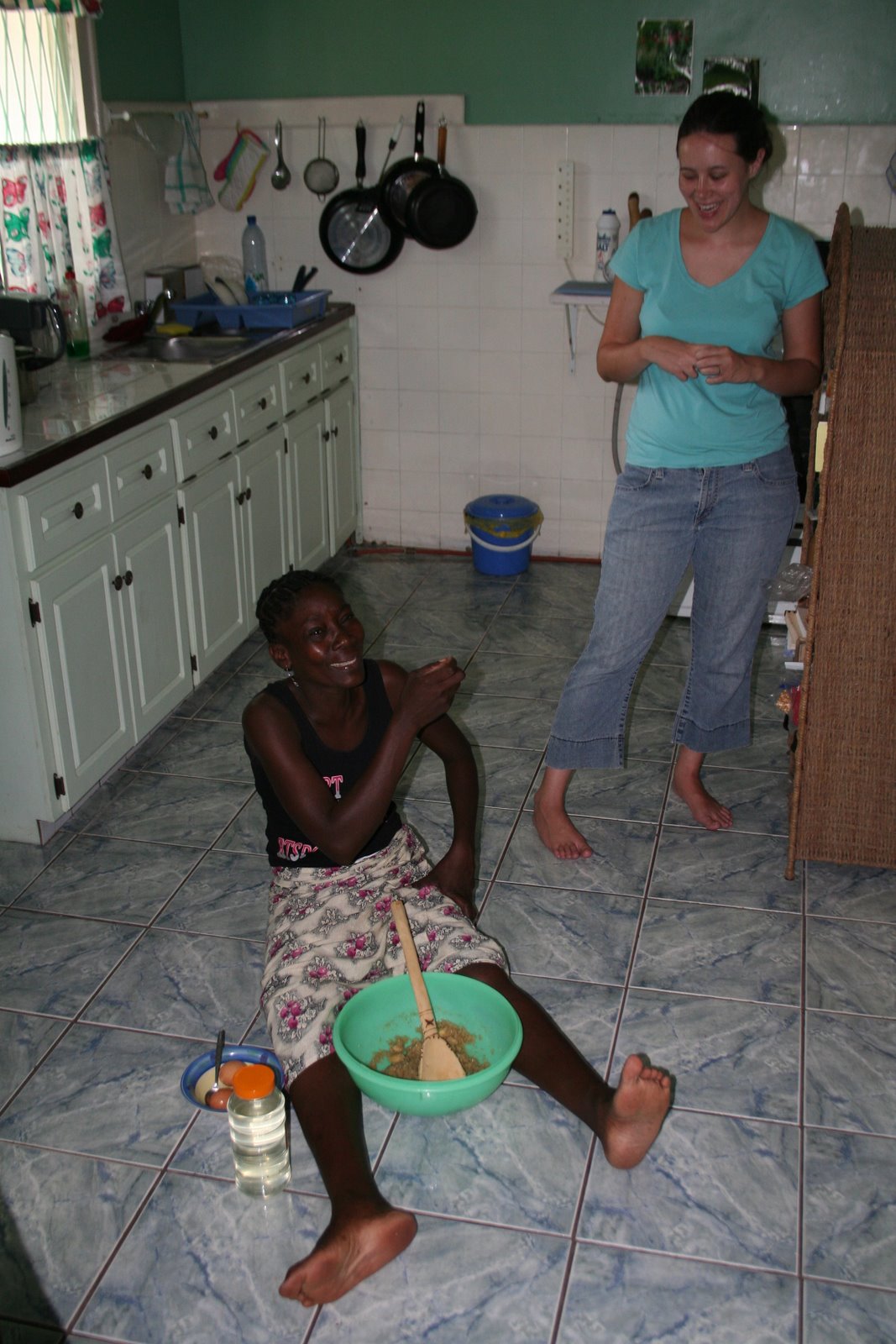
Sitting on our kitchen floor mixing up cookies because it hurt to stand and for some reason she didn't want a chair. She baked them on a 100 degree day too.

Pictures of South Africa

We'll let the pictures do most of the communicating in this entry. We went with Joanna and Keith to Kruger Park last month and had some memorable encounters. (Thanks to them for the great pictures.)


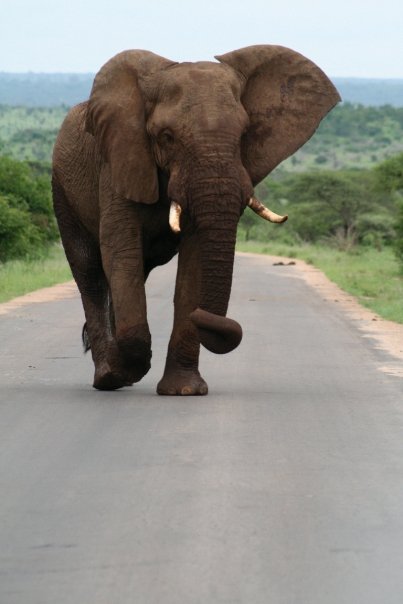
We were driving along and this guy was on the road. We stopped and watched him flapping his ears and walking slowly toward us. There was still some distance so we just waited. But when he started trotting, I put the truck in reverse and we got out of there! Later a guide told us the elephant was trying to defend his territory and we were in the way so he decided to charge. After we backed up, he stopped and ambled off of the road so we could pass.

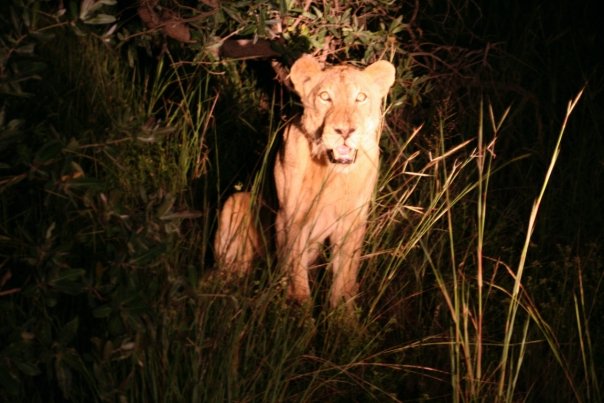
After a day of not seeing much at all, we went on a sunset drive with a guide. We saw about 20 rhinocerus, some in a herd of mothers and babies. Then we came upon a pride of lions parading down the road. I had heard of parades like this before but had never seen one. We stopped the truck and they stopped and stared at us like this one. They were so close it was almost scary!


The guide had his window down with his arm resting on it. He was also down closer to the road and I asked him what would prevent the lions from just jumping in. He said they were used to the truck and thought his arm was a black stick! Hmm, I hope for his sake that he knows what he's talking about. Earlier he told us about the time an elephant charged him right through the windshield and one tusk went right beside him and into the seat. Wow, he's had some adventures and lived to tell about it.


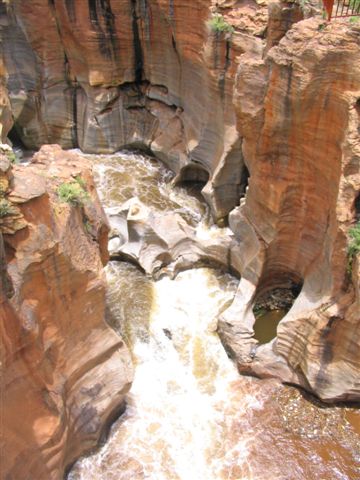
We've posted pictures of Blyde River Canyon here before, but it is such a beautiful place, we will post some more.


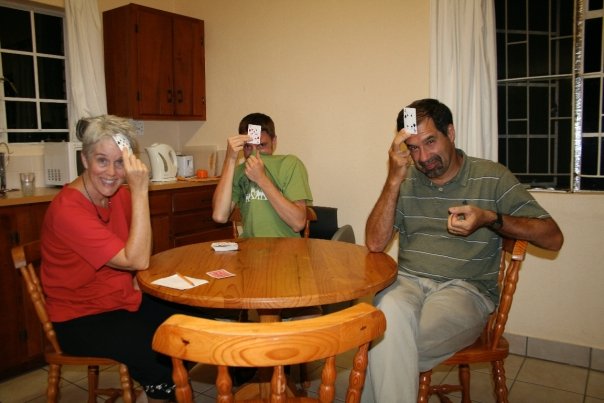
Here we are on our last night together playing cards as we got in the habit of doing. This is "Up and Down the River" where you have to say how many tricks you will take starting with 10 cards and going down to 1 and back up. When you get to 1, you cannot look at it, you put it on your head and others see it and guess whether they will take the trick or not. Keith always covers his mouth, he says he doesn't have a poker face!

Fun times, and we will remember them gratefully. It was hard to say "see you later" but it is one of the realities of being here. We were very blessed to have them visit.

Monday, January 12, 2009

Travels around Moz


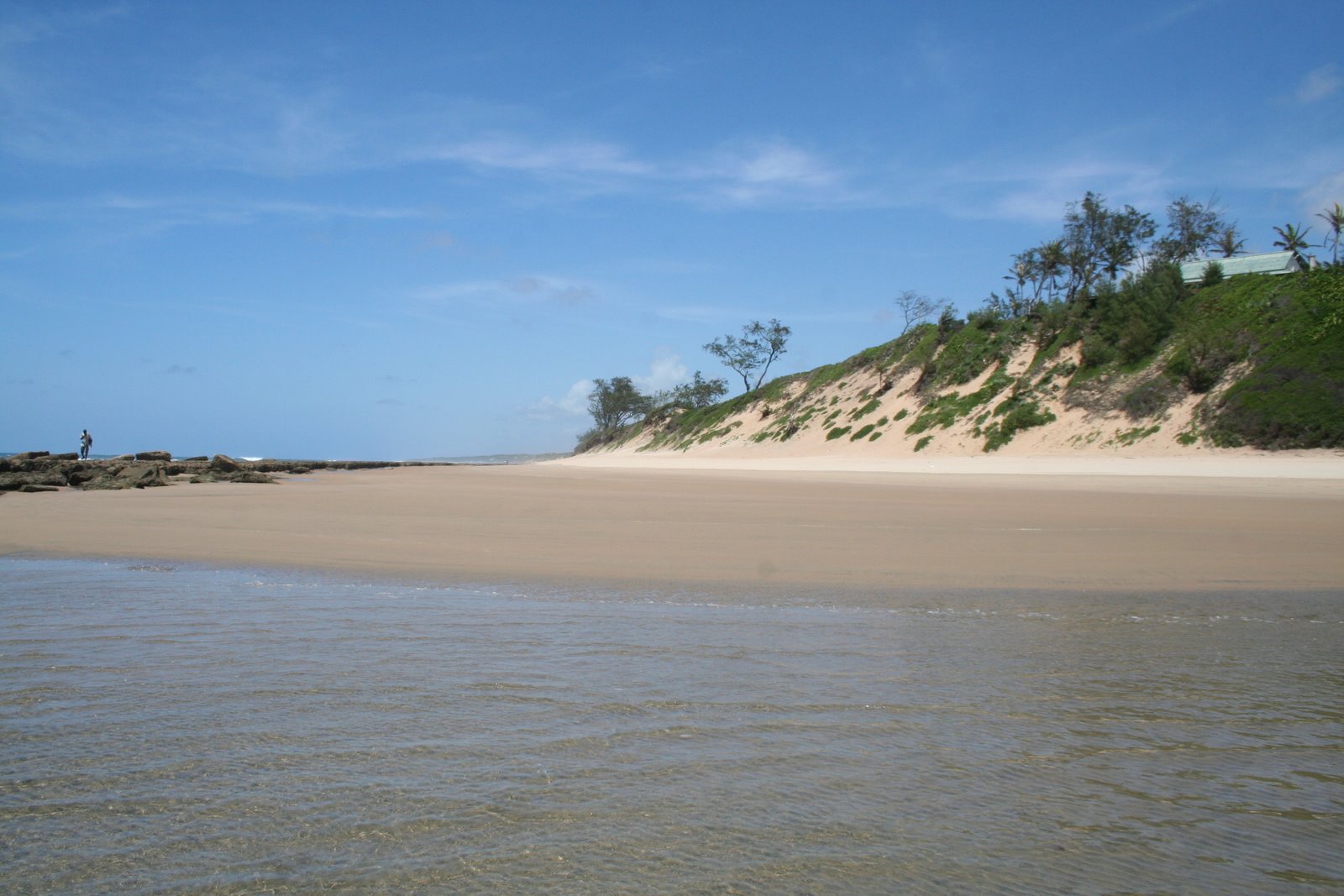
After Christmas our daughter and son-in-law came to visit and we've been to the beaches where we tried not to get too sunburned and the coconut oil factory. We enjoyed lots of critters at the beach including this jelly fish.


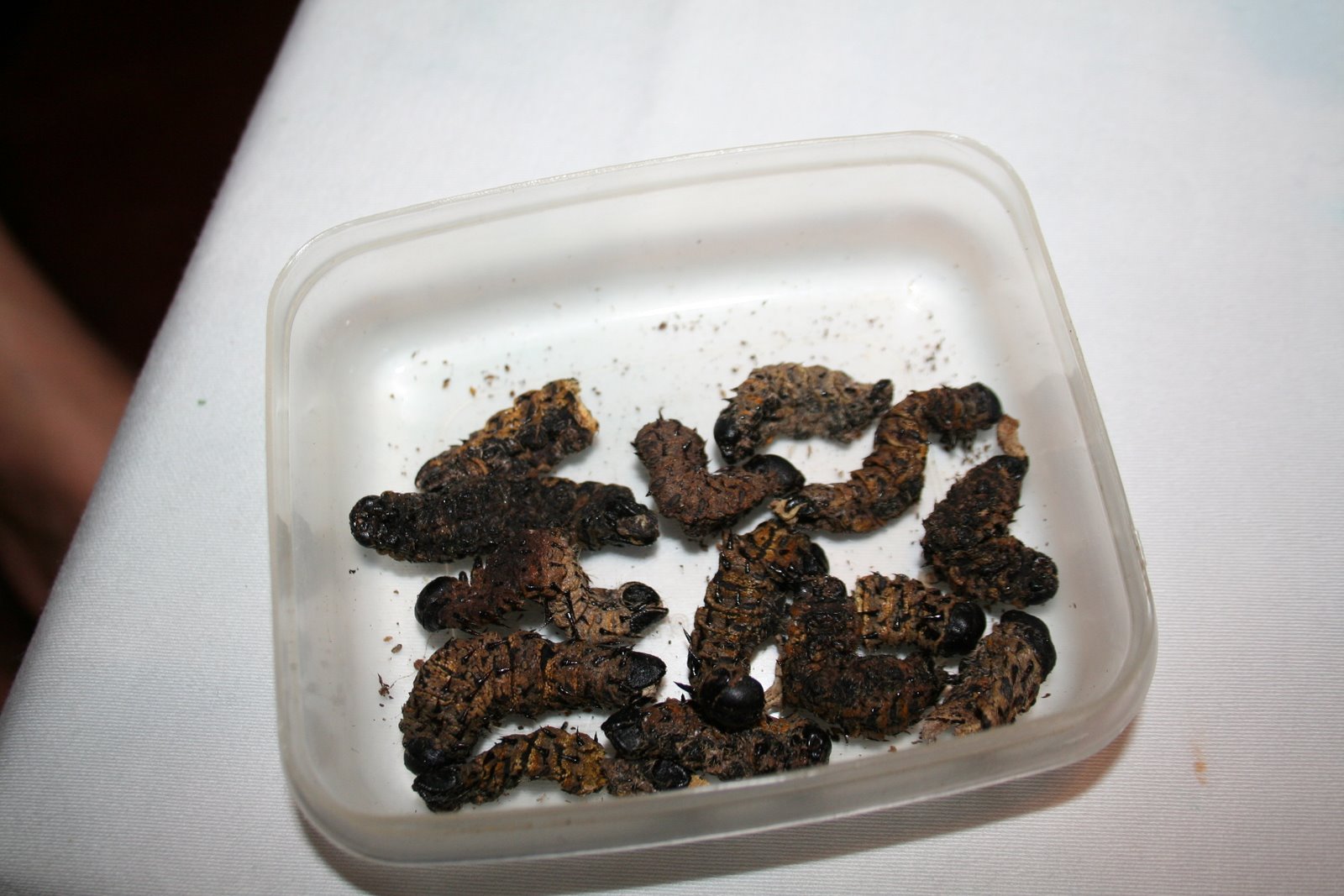
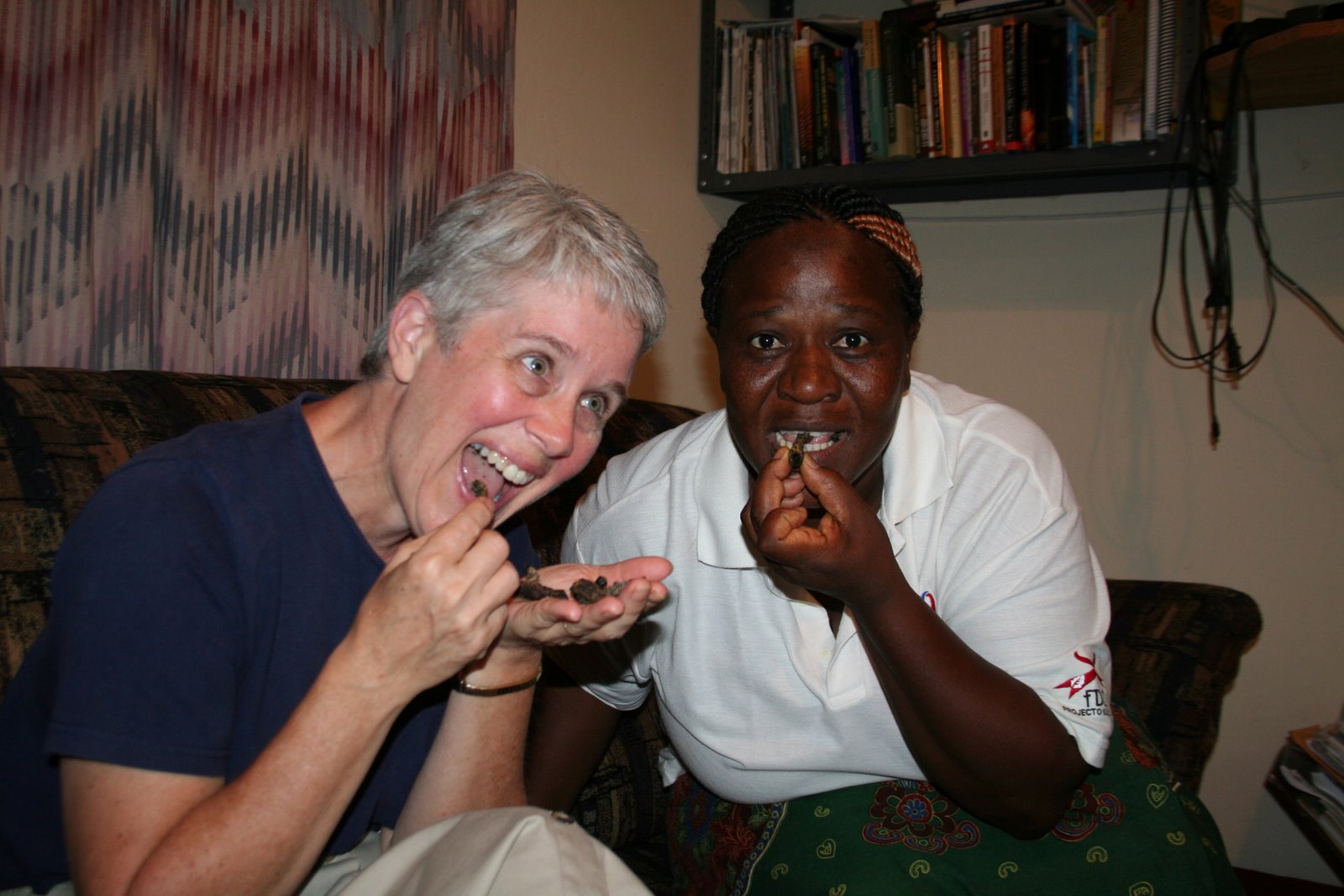
Then we were off to Chokwe to visit our friends that we used to spend a lot of time with and hardly see anymore because of program changes and the fact that we hardly ever visit Chokwe (3 hrs away). It was so good to have an evening with them. Sybil loves Mapani worms and actually got us all to taste a dried one. Thankfully I didn't have my glasses on. Now that I see them in this picture, I'm not sure I would have been brave enough to eat one!


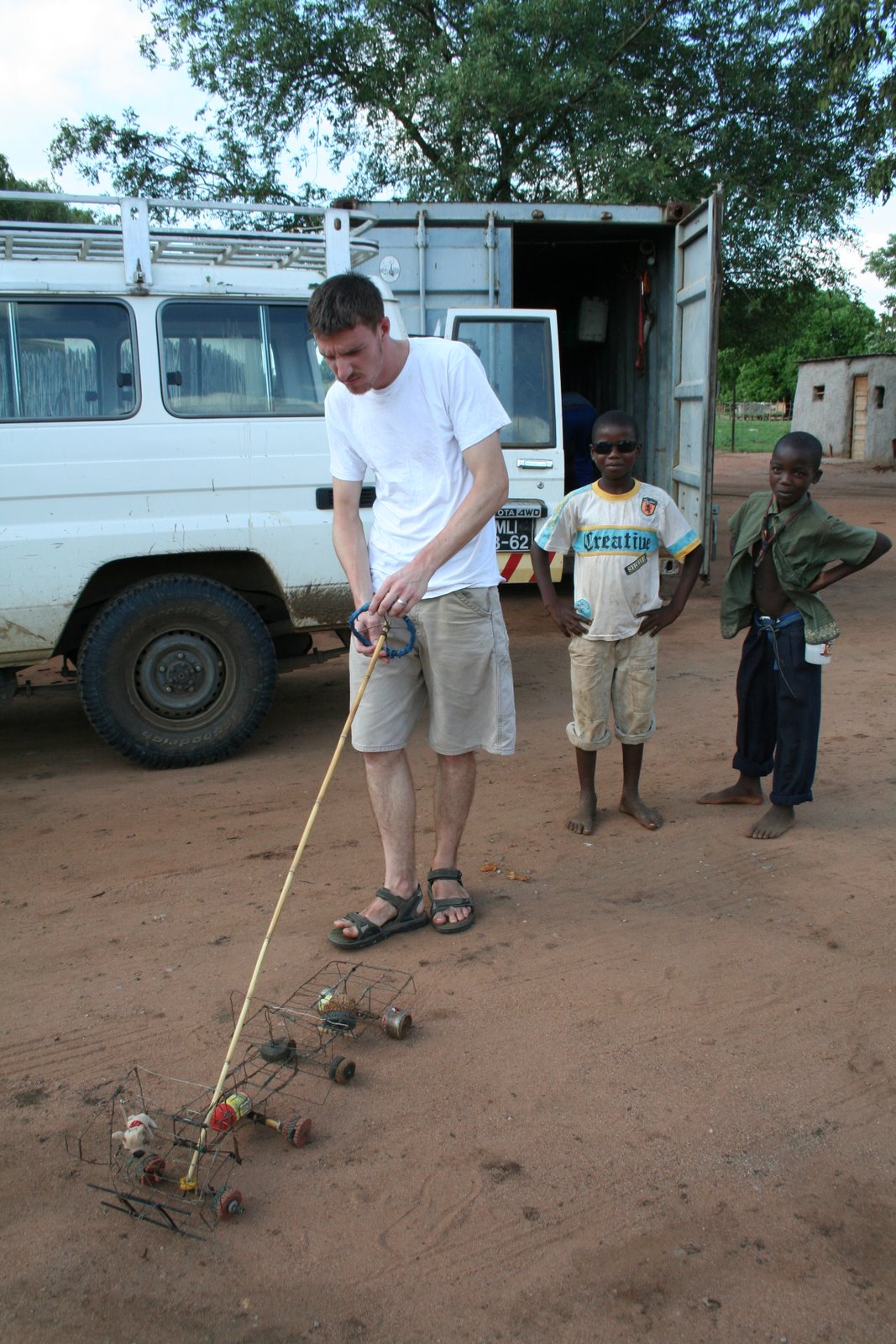
Mucatini is a village where a lot of WR work has been invested. This is a large field of tomatoes and a plot is given to each volunteer to care for. Input costs are provided as a loan and when it is harvest time, they sell and pay off their loan. The village is doing much better and there is not as much hunger. We also met some cute kids playing with the wire truck and trailer they created. Keith traded his sunglasses short-term for a chance to "drive" it.


On the way home we stopped at the orphanage where M&Y, our friends that have been living with us, have been working. These kids are all orphaned by AIDS and the ones in this picture were at the orphanage because there is no family to go home to for the holidays. There are about 40 boys who live there. M&Y are back with us until they get some funding and make arrangements to move to the orphanage. Their parenting, medical, sewing, and many other skills and love are much needed there. Pray that God will continue to open the doors for this dream to be realized.


Now we're back in Maputo where it has been hot, hot--upper 90s and 100 with no AC at home. It's not the best sleeping weather, but now it has rained and we're back to "normal" in the 80s. Tomorrow we start another adventure in S Africa.

Friday, December 05, 2008

Malawi Wonders

Steve got inspired to make some papaya jam and this is what he found on the internet and made. It was quite tasty! It's good for all of you in the sub-tropics right now with hundreds of mangos going to waste.

3 cups cup up papaya
3 cups cut up mango
3 cups sugar
juice from 1/2 lemon

Stir it all together, boil and then simmer for about 35 min or until most of the liquid is gone and it starts to set.

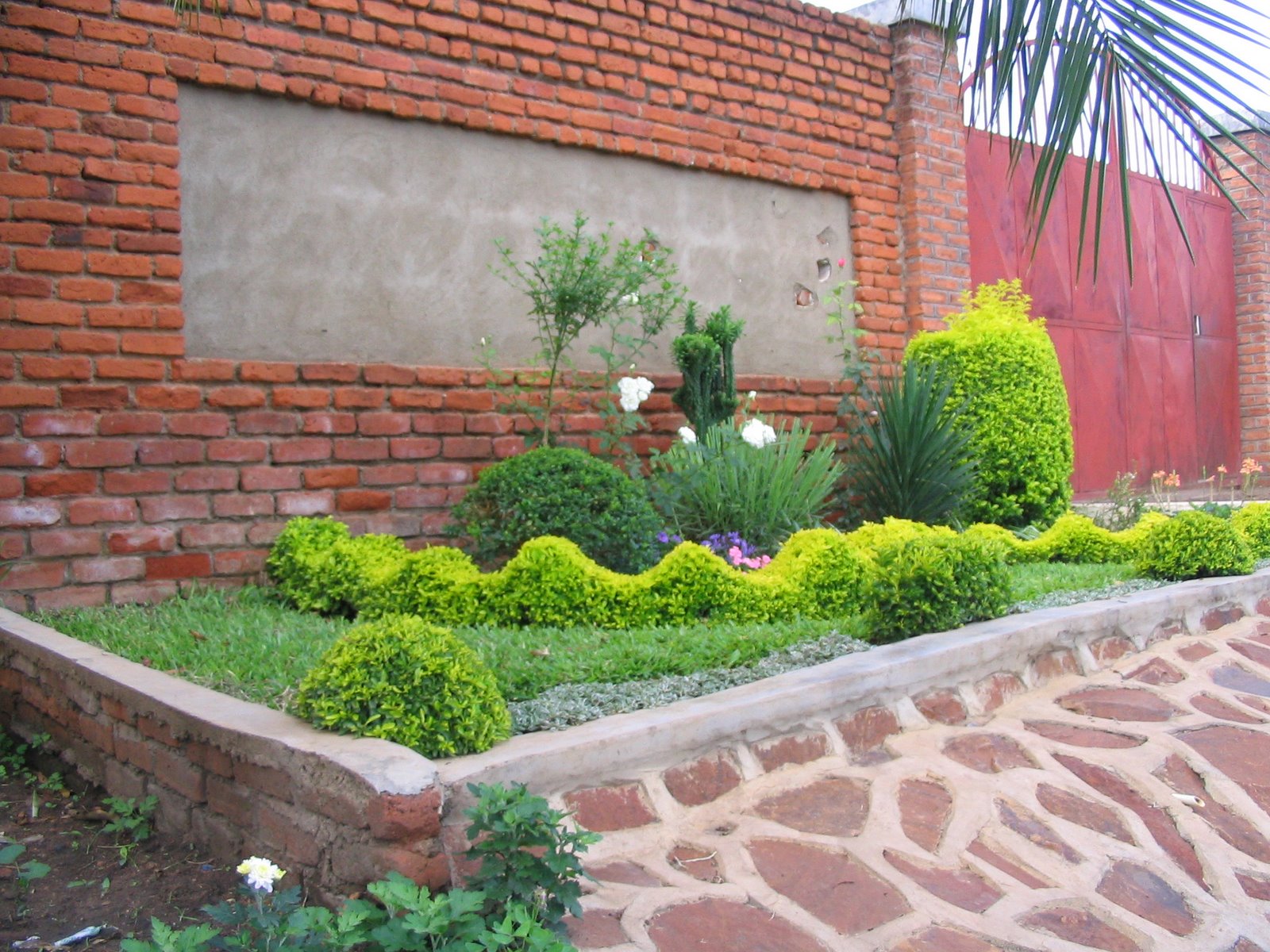
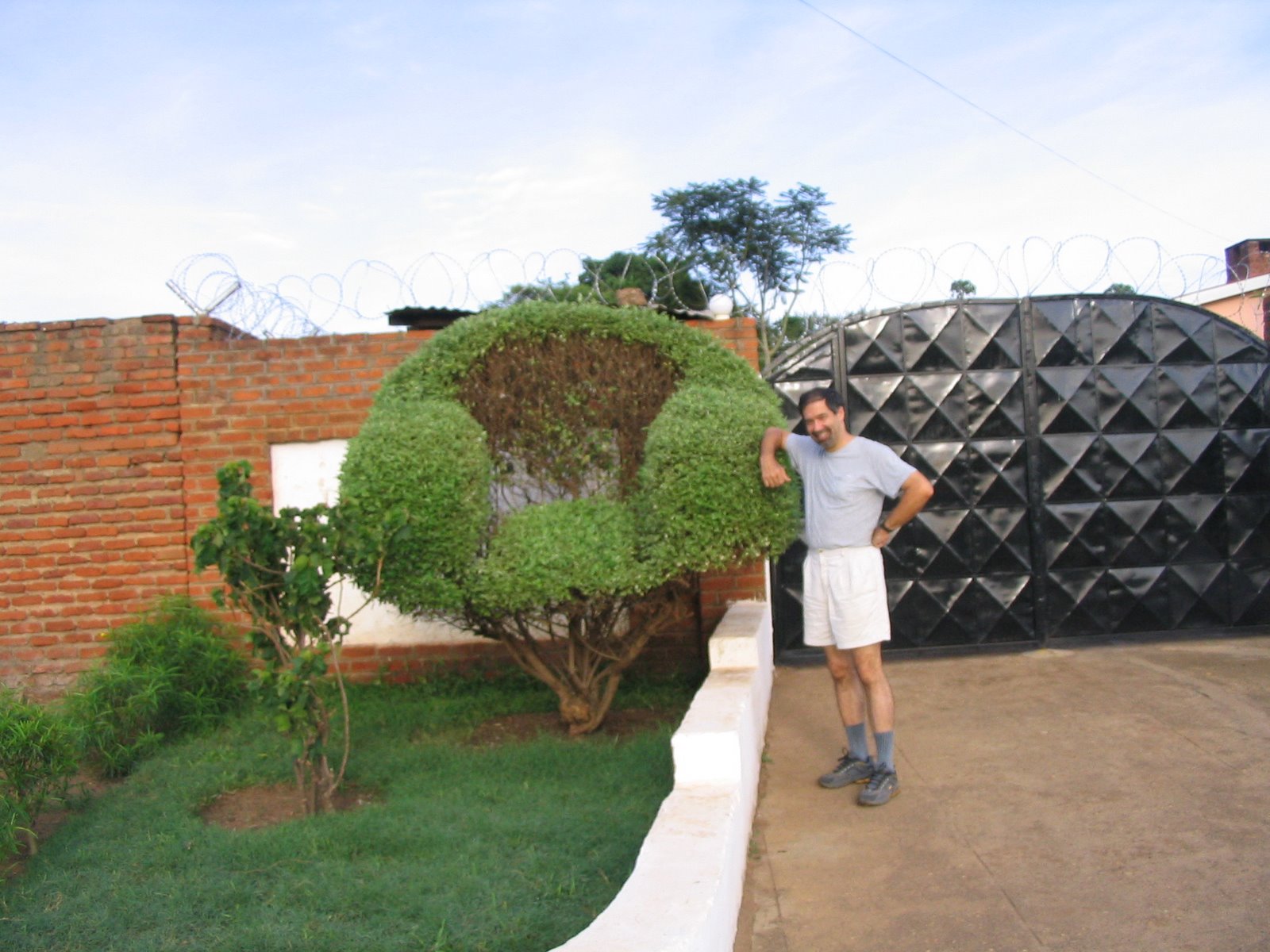
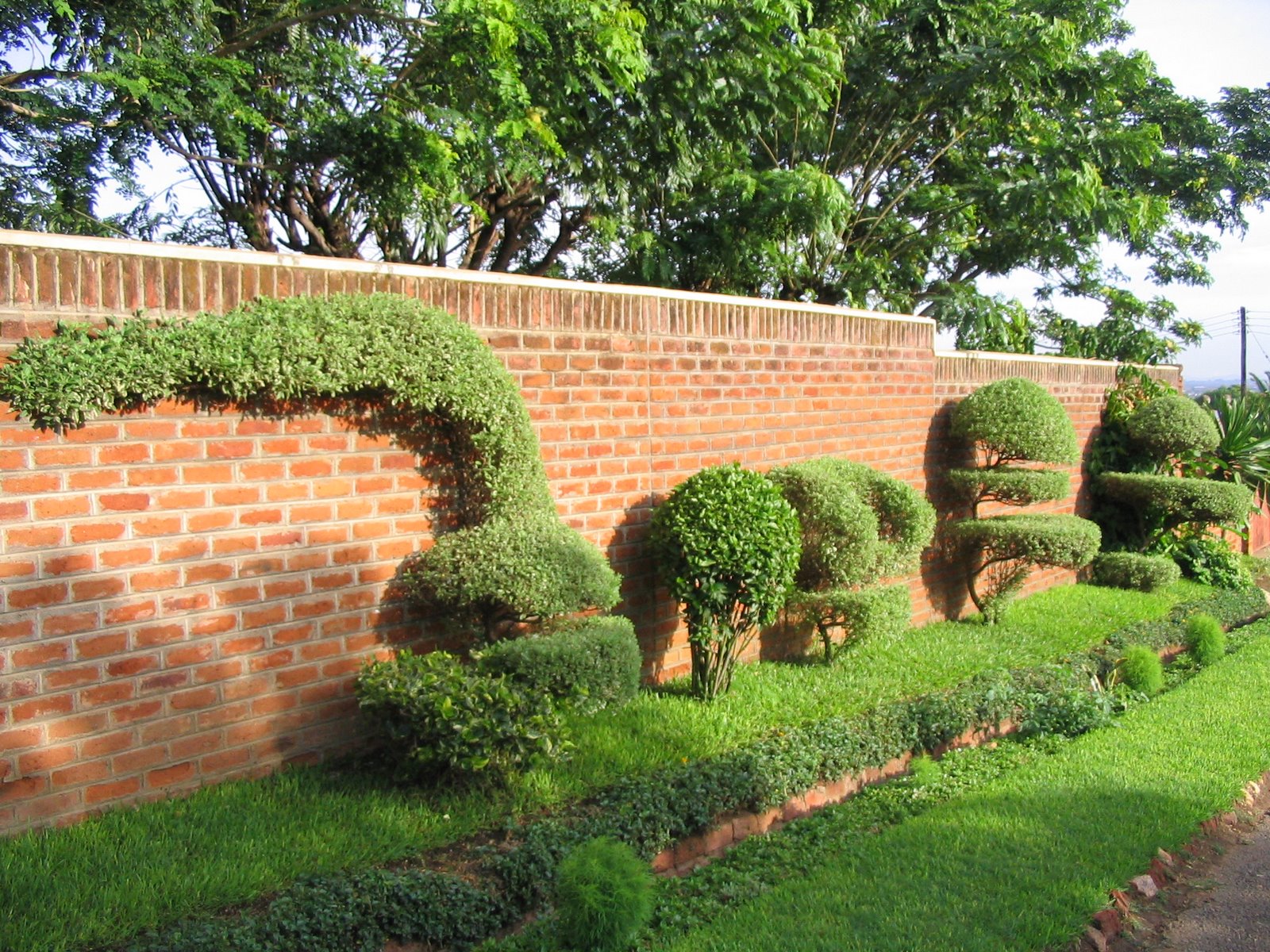
We have been enjoying early morning walks in Malawi (Steve is more faithful than I). Most houses in Lilongwe have high walls around them. What is interesting is that they also landscape between the wall and the street. Here are some pictures of some fascinating sculptures by some artistic gardeners.


I like this scalloped border:


Steve checking out the big chair:


Arches, 3-level topiaries, you name it!


Last night we attended an international Christmas celebration at the church. We heard some beautiful new Christmas music besides some traditional songs and heard prayers and songs in Chichewa, Swahili, English and German.

Tuesday we head back to Maputo. We're excited that Joanna and Keith will be with us for New Years and the first couple of weeks in January.

We will hit the ground running on our return as we have an Ancient Paths seminar scheduled for Thur and Fri nights and all day Saturday. This will be for a group of pastors. Pray that they will be touched by God.

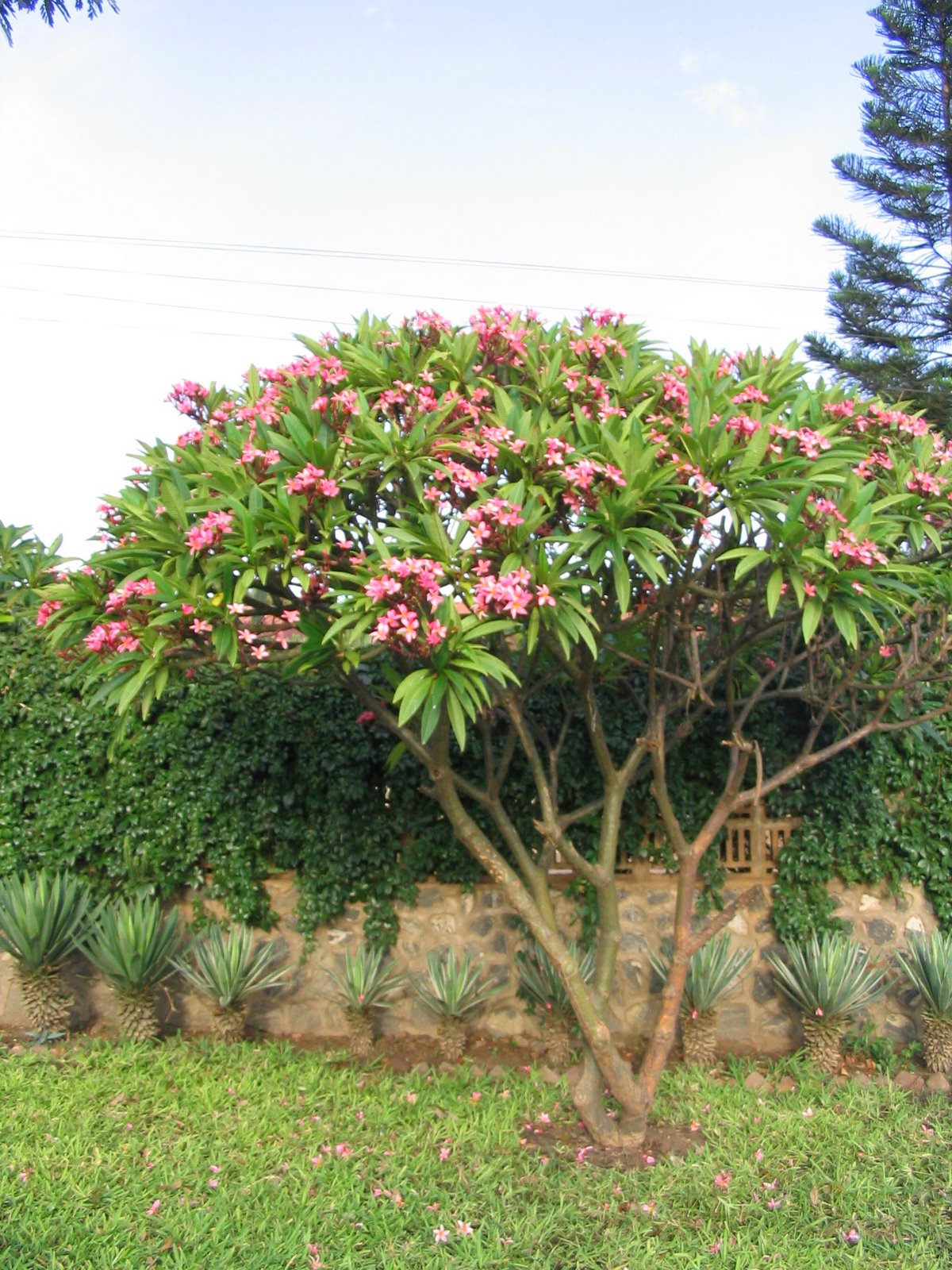
We'll end with a beautiful tree - the frangipani. We've seen different varieties with white and yellow flowers, pink and yellow and orange. The fragrance is incredible. I can usually smell them before I see them.

Tuesday, November 18, 2008

Lilongwe, Malawi

We arrived in Malawi Friday afternoon. Steve spent Thursday night on an overnight bus in Zambia and actually slept about 5 hours. From there he went straight to the airport where he found out his ticket had not been paid so he had to run to a bank to get cash to pay it. My flights were good and I was very happy to see the new set-up at the Jo’berg airport for international transfers. It’s a lot nicer than it was. They must be getting ready for World Cup in 2010.

It is quite hot here and Lilongwe is not used to this. There is no air con anywhere that we’ve been and not even many fans. Screens are also rare. We go ahead and open the windows of our little guesthouse during the day but at night when it’s coolest we cannot open the windows because the mosquitoes come in. If it weren’t for malaria, I think I’d just let ‘em in so we could be cooler. It has started raining some and today is not quite as hot.

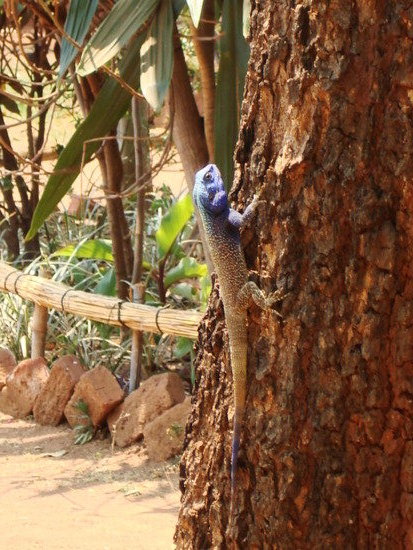
We enjoyed watching a beauty just like this one in the yard today.


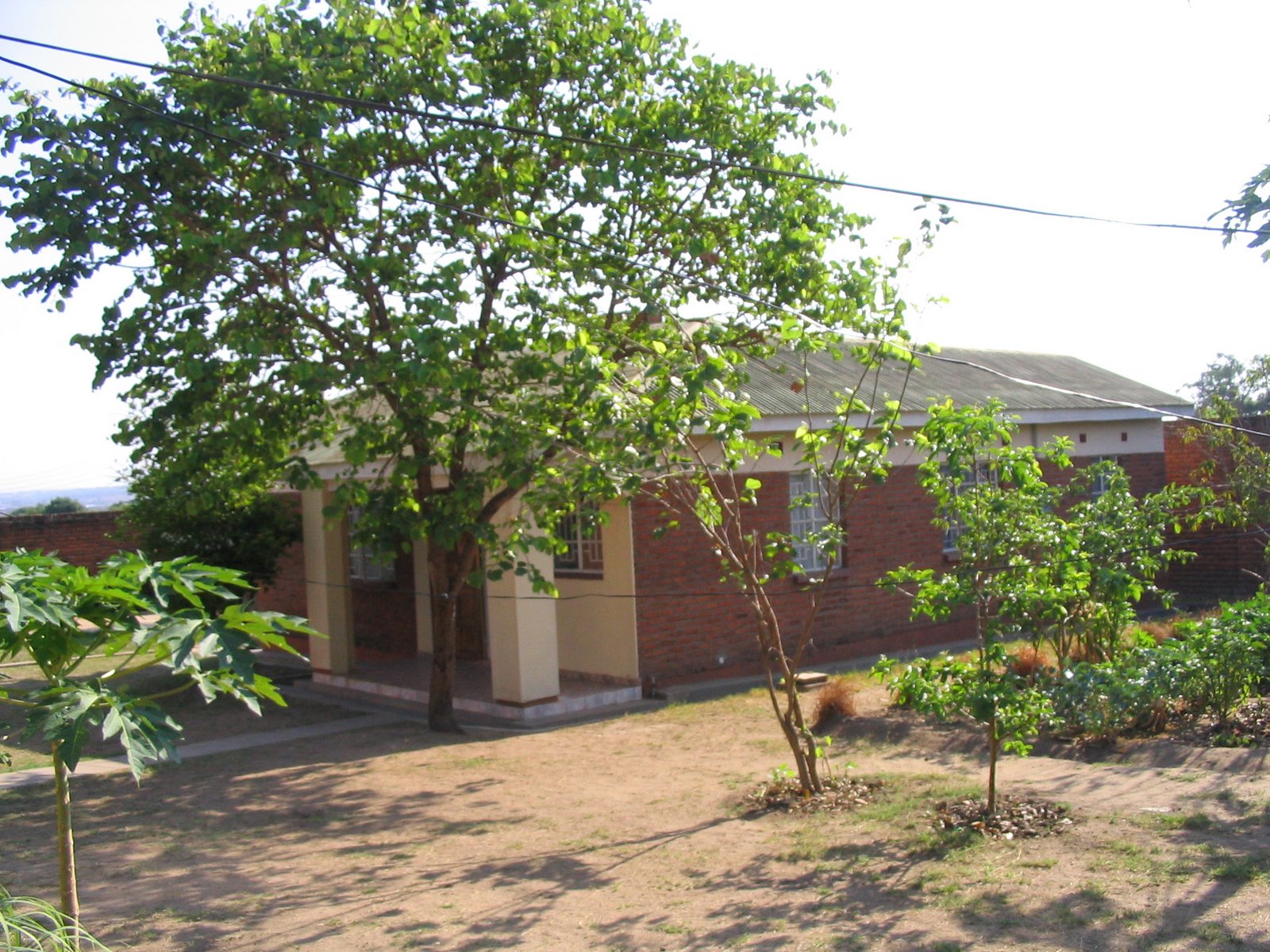
We are staying in a family’s guesthouse. They also have many extended family members coming and going as well as a friend who is staying there. They have a household cleaner, a cook and a gardener/guard. There is a nice garden, lots of fruit trees (the papayas are really sweet), chickens, a rooster that wakes us up and rabbits, dogs and a cat that bites.


The guesthouse is nice with a kitchenette/living room, a bedroom and a bathroom. Saturday we went to buy groceries and were amazed at the prices. Cost of living has really gone up here. Corn, the staple food, tripled in price over a couple of months. Prices are even higher than Maputo because so much is imported from S Africa and the cost of fuel is factored in. We can't bring ourselves to pay $7-8 for a 3 lb. bag of apples even though we love them. After living at an apple orchard and eating many per day, that price is just too much. We will eat our main meals at the WR office at noon and do a lighter meal in the evening.

T was giving me some cultural lessons the other day. In the village it is difficult to get higher education and many of the girls get married young. Usually all the teen girls stay in one house and the young men come calling. They sit on either side and look at each other and even though they may not know each other, the men will pick out a girl and declare that they want to marry her. She can say she is interested or not. If she is, she will give a list of relative’s names to the man and he will begin to contact them. The process for the dowry begins but there are several times when the girl can say yay or nay. T had a lot of pressure from the village aunties and others to marry early, and she turned down several suitors because she wanted to study. She was one of the few who got into university and that is where she met her husband.

When a child is born he/she stays with the mother until he/she is weaned. At that point the first baby goes to the paternal grandmother’s house, at least at night. Following children all to go the maternal grandmother’s house. So, we’ll be waiting for our grandbabies to come live with us! Just kidding… The mother’s sisters have a lot of authority/responsibility over what happens in the child’s life. In other words, the child is not just reared by mom and dad—the whole extended family gets in on the action. It definitely goes along with the cultural sense of community vs. individualism that we have in the West. One of our friends is Cameroonian but she and her husband live in Moz. Her mother wants her to have another child so that she can rear him/her in Cameroon! So this is an African tradition, not just Malawian.

Steve found a spot for some experimental work with amaranth, salba and quinoa at the Nazarene seminary where our friends Jon and Margaret are. We will meet with the other key players today to talk about AfricaWorks Malawi and the way forward.

Yesterday after church at Capital City Baptist (a large church with a good mixture of Malawians and ex-pats) we drove around to learn more about the city. We ended up at a Chinese restaurant and found that the Malawian waitress didn’t speak English too well. We did get our meal ordered after some amusement at the Chinese translations on the menu. Thank God for pictures. Did you know that boiled wheat is noodles? When the food came we were amazed at the spiciness of it. The cooks must be from Szechuan province. One never knows what a day will bring!

Monday, November 17, 2008

U.S. Elections from Afar

Since all of the election fever has mostly died down in the US, perhaps you would like to hear about some of the US election news from an African perspective.

1. Starting as early as 1.5 years ago when some of the campaigning got started, people could not believe they were starting soooooo early.
2. Then the amazement and wonder of Hillary, wife of beloved Bill, (we never figured out why Bill is so loved, except maybe he is admired as a good politician who talks a good game and makes everyone feel good).
3. Then the amazing possibility that someone so “close” to Africa could even be in the running and people getting excited that an African might be come the president of the US, the most powerful president in the world.
4. Then all the collective speculation that Hillary might be vice president or maybe Condoleezza Rice on the Republican side.
5. When Palin was chosen, people were even more amazed.
6. When interest heightened, specific questions were being asked of Americans and when it was noted that husband and wife might even vote for different candidates and parties, heads began to shake in wonder. It would never be heard of here. And to think that people might switch parties based on who they like. Parties here are often connected to tribal relations and voting for candidates of a different party would only be slightly considered under extreme duress (like Zimbabwe).

AP Photo
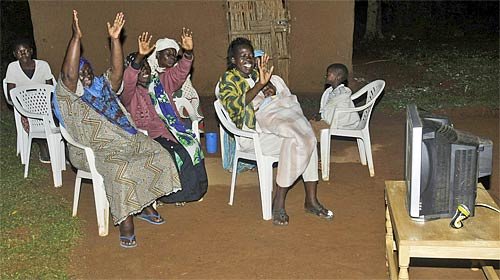
7. When Obama won, Americans were celebrating, Africans were dancing. Dance is the highest cultural form of expression of joy. Kenya called for a day of national celebration. When asked why, someone said, “because we all want to be Americans.”
8. When McCain graciously conceded the election on election night, Africans stood in wonder because the losers in Africa never concede defeat, they keep on fighting and claim fraud by the winning party. Losers even incite riots and get arrested for doing it.
9. When asked why the intense interest in this election, someone else said, we have our African country presidents, but the American president is the president of the world.
10. After the recent election in Zambia, we saw the new president sworn in the next day. They marvel at the process for transition of power in the U.S.
11. During comments on the riot in Zambia after the elections, the radio commentator said, "why can’t the opposition be like the Americans and concede the election so the country can go on with the process of governing?"
12. When asked if we would vote, (and told we weren’t going to this year) some thought we ought to get on a plane to go back and vote.

Tuesday, November 04, 2008

Zanda

We just had an Ancient Paths seminar this past Saturday and Sunday. The folks organizing it were quite discouraged because at least 20 people had said they would come but in reality only about 10 came and their attendance was sporadic. But God encouraged us that we are planting seeds and God will bring a harvest, even if it is only in a few people.

Zanda was in our small group. He hadn't even known about the seminar but he is a maintenance guy at the place where we met and someone invited him to stay, so he did. He wrote the following and gave permission to share it: "Today God cleansed and purified my soul. He has made me a new creation and he has separated me from the memories that I had that tormented my life. [Memories of atrocities committed during the civil war.] I am a new creation with the will to serve Him but I need continuous protection and support. God does miracles when we believe. Let's seek God on earth and worship Him because He is the only God and he has power."

Please pray for Zanda as he admitted that he is an alcoholic and uses drugs. He grew up in the church but has not been there for a long time. God spoke many things to him and removed his fear, replacing it with peace. Thank you, Lord for the work you are doing in Zanda!

Tuesday, October 28, 2008

Kruger Park

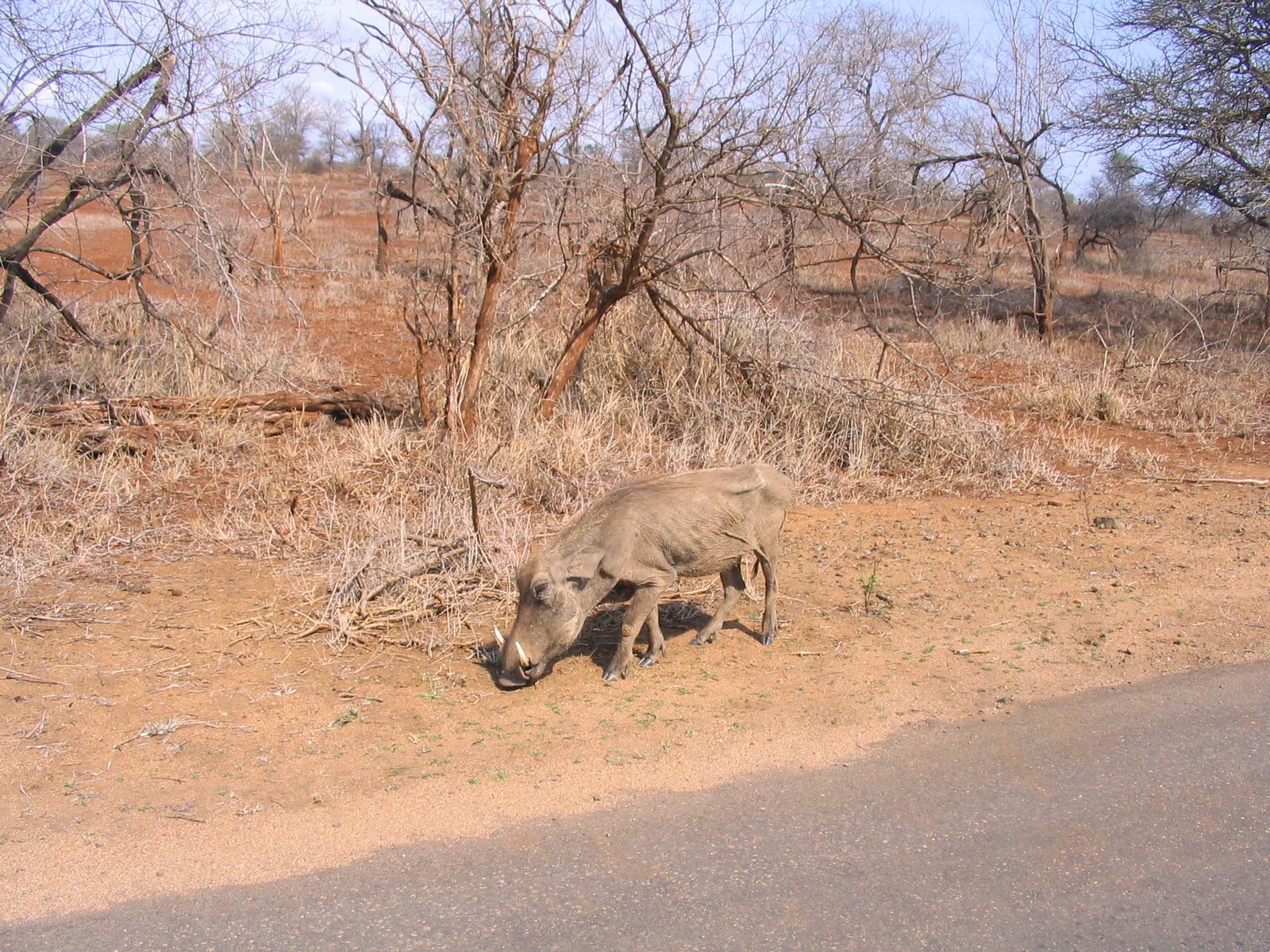
A friend is leaving Moz soon and asked if I'd go with her to Kruger Park for her last hurrah. We left Maputo early in the morning and arrived at the gate a couple of hours later. The first thing we saw were some really scrawny warthogs. Apparently they are the first to starve during a drought because they eat roots.
As we moved along we began seeing impalas--they are a dime a dozen. I learned some interesting things about impalas. They all give birth at the same time at the beginning of the rainy season, Nov-Dec. If it does not rain, they can delay giving birth for 1-2 months! (I can just imagine them wanting desperately for it to rain.) If it does not rain by then, they give birth, but kill the young so that they don't have to starve to death.
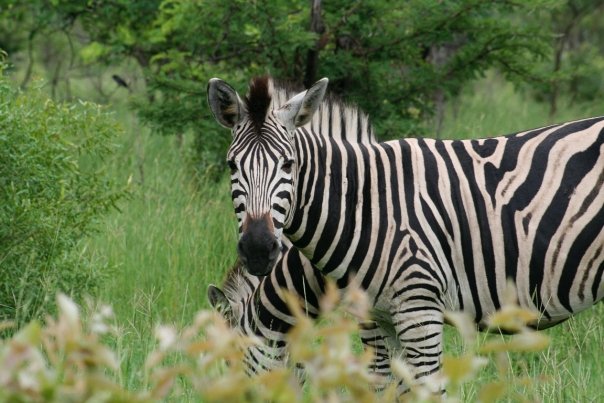
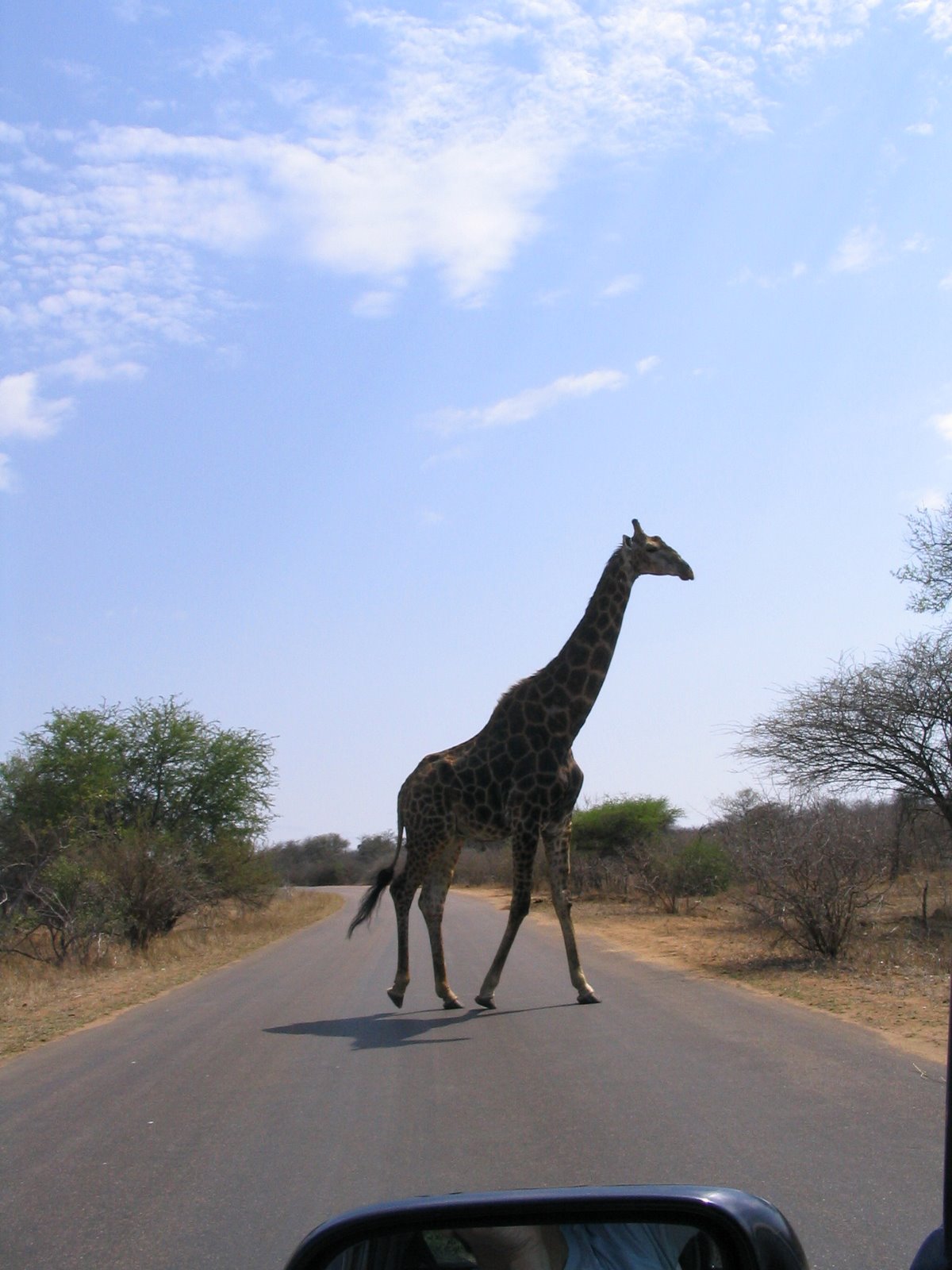
We saw lots of giraffe and zebras. Giraffe are so interesting - God really got creative when he thought them up.


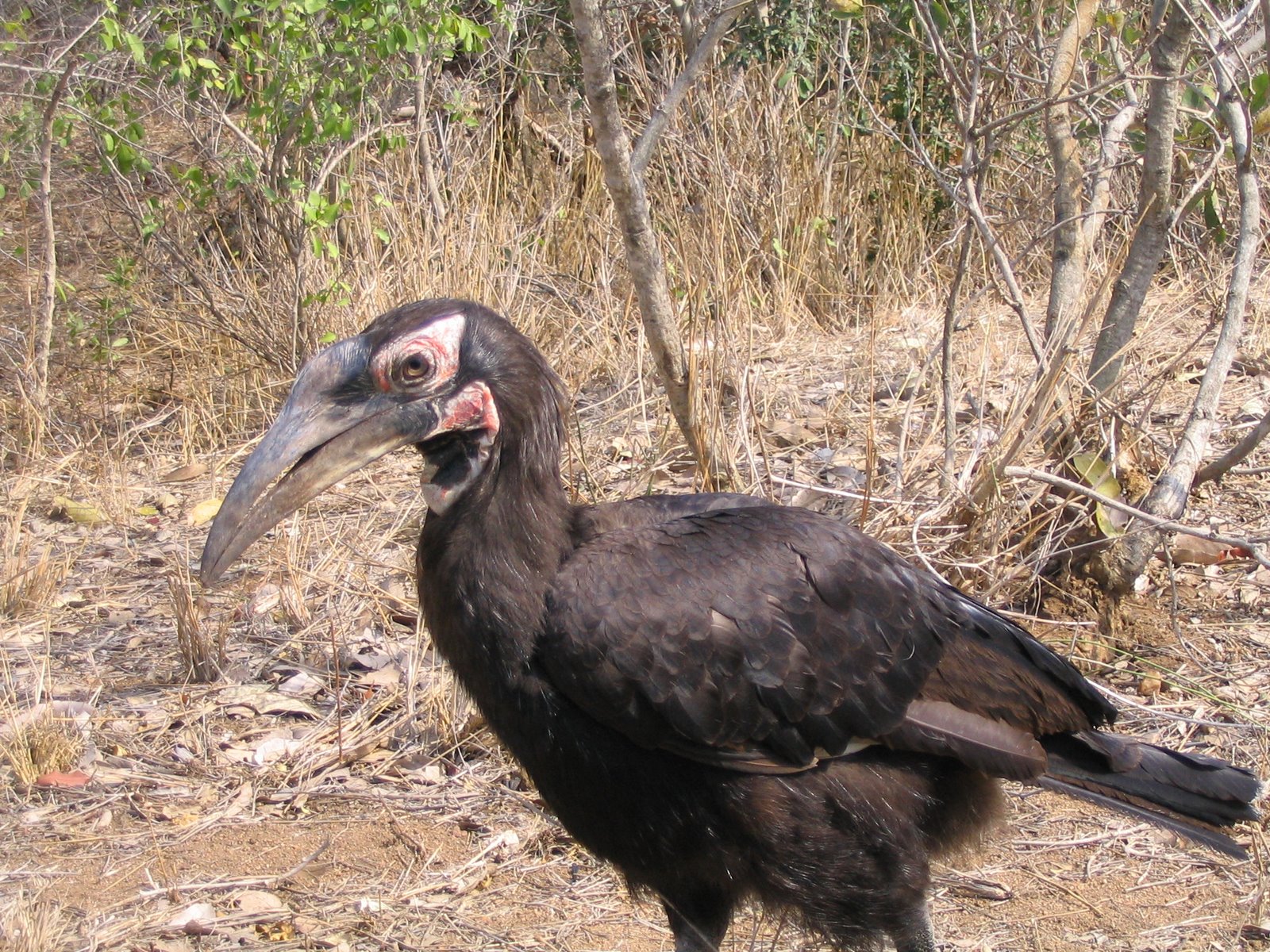
This ugly bird was up close. He turned at the last minute, I guess he wanted a profile shot.

Elephants were quite abundant as well as the hippos off in the distance. We saw several rhinos. One was running alongside the car. It seemed he wanted to cross the road so we stopped and he ran right in front of us. Better than running into us! Sadly my camera is slow to shoot and I just got his back side. Later we saw a big male lion trying to drag or chew on a dead rhino. According to another observer, some lions killed the rhino a couple of days earlier and were standing by to make sure no one else took it. Occasionally they came out for a snack. We saw lions several other times, but usually at a distance. The binoculars came in handy.

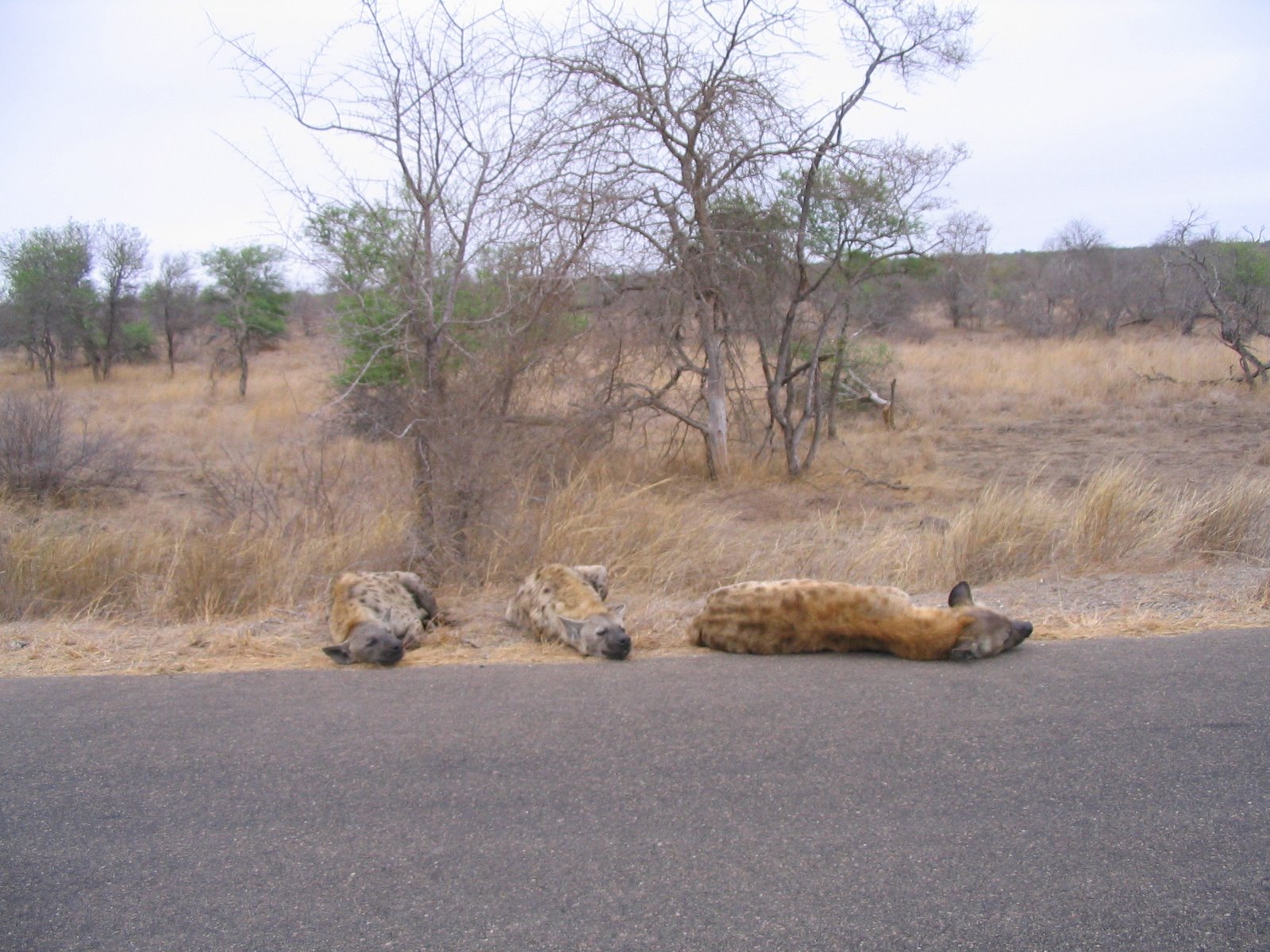
My friend really wanted to see a leopard as that is the one animal of the Big 5 that she has not seen. The Big 5 are lion, buffalo, rhino, elephant and leopard. I'm not sure who made that designation or why. I enjoy the other animals as well. We went on a sunset drive and I'm always impressed by the knowledge of the guides. They pointed out a hyena and talked of how hyenas love to eat bones. Their dung is actually pure white and other animals eat it as their calcium tablets! These guys were tired after being out all night.


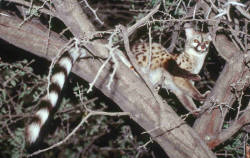
When it got dark on the safari, we shone lights to see if we could spot any eyes. Sure enough, there were some big ones in a tree. The guide figured out that it was a spotted genet, a cat-like animal that is actually related to the mongoose. It had a black and white ringed tail, very unique. We also saw some bushbabies that jump like kangaroos and sail through trees like squirrels only farther.
Sorry I can't take credit for these last two pictures. My camera isn't that good. I got them off the web.

Whenever I'm at Kruger I know I'm only seeing a small part of what is really there. It is an amazing place and awesome to think that most of Africa used to be inhabited by these animals. Kruger is a really big place - as big as a small country! We could continue to visit there many times and not see it all.

Wednesday, October 08, 2008

Spring in Mozambique

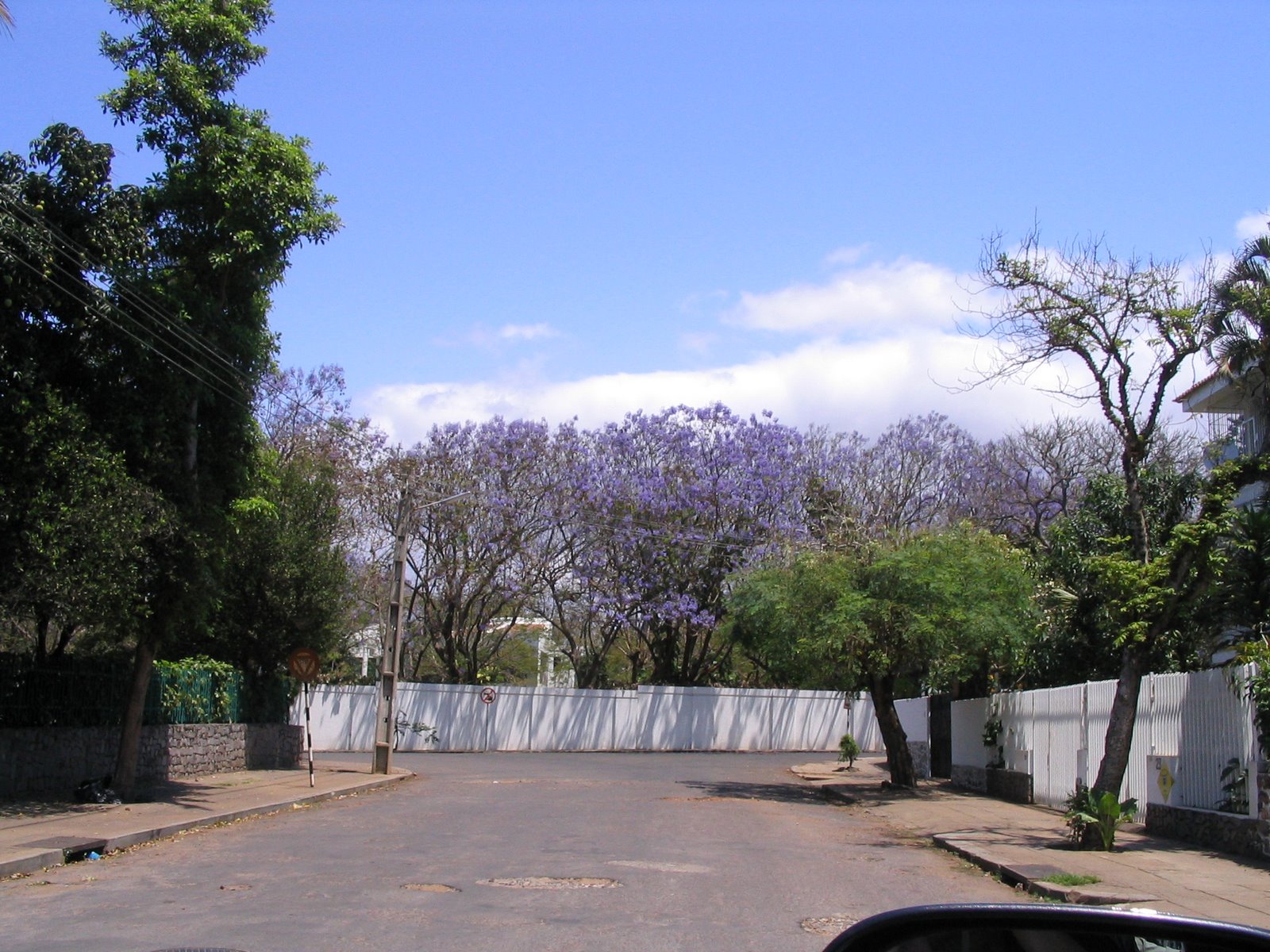
Here we are again in Mozambique. We have returned to Spring where some days are cool (73) and some are hot (95) and that might all be in the same week. Sometimes there is wind and thunder but there has been very little rain since we left. Hopefully the coming wet season will produce adequate rain. Here are some of the beautiful jacaranda trees we see these days.

We returned to our housemates who have been keeping our place guarded and clean and the Rottweiler, Wally, well fed and bathed. It’s been a big job with him as the tick season is in full swing and ticks are everywhere. Apparently they were even climbing up the walls of our house! It’s pretty amazing because we hardly have any dirt, it is mostly a concrete drive with a little strip of dirt beside it and a couple of flower beds. They had been trying special shampoos and everything else and nothing worked. Steve looked it up online and found out that oil kills ticks. So he found some second grade coconut oil and the Saturday project began. First they covered Wally head to toe with oil and let it soak for a couple of hours. Then they began picking off hundreds of ticks and it took several hours. Wally just laid there patiently and at one point he even went to sleep! He has not been too happy lately and we can see why. He has a lot more energy now.

M&Y have wanted to learn to play some card games and we have had fun teaching them Uno, Crazy 8s, Rook, Rummy. They catch on fast and laugh a lot. It’s a good way to pass an evening. They are also diligently trying to learn English and the book I brought them that teaches English using Spanish is rarely out of their sight. They have been around the circle a couple of times trying to work on visa issues and we hope something will work out for them.

Steve is working daily on the challenges of selling coconut oil. People who sampled it at the commercial fair loved it but the price was set low to get samples out and now when they see the real price they are balking. They don’t understand why a local product costs almost as much as olive oil which comes from Europe. What they don’t understand is that the costs of containers for a small operation along with import duties to bring them in from SA are very high. If we want to have a sustainable business, we have to have some margin as well. Mozambicans do pay high prices (for unhealthy things like alcohol or candies), but if they can get something cheaply they will go that route. The education on the health benefits must be ramped up but all of that takes time, effort and money. Sometimes I think it would be easier to outsource it all and sell it online to people who already know about the product. If you have not heard one of Steve’s spiels, you can go to www.kokonutpacific.com.au and learn all about coconut oil.

At work we were encouraged to hear how the LifeWinds lessons went while we were gone. These are moral value Bible studies that are taught in an interactive way in a small group with role play, small group discussion and other adult learning techniques. We have used them with our microenterprise course and asked to use them during devotions at WR. People were enthused at what they learned, the chance to ask questions and discuss things as a group. Many of them remembered topics and specific discussion from weeks back. It was an affirmation of what we have experienced with this method of adult teaching. We are getting ready to start a study on the book of Acts using the same method.

Yesterday I connected with a group of women who get together once a month and speak Spanish. It was great to meet people from all over the world, chat, eat ethnic foods, and plan activities for the future. It is really fun to speak Spanish and not worry that I am messing up (as I do in Portuguese) and to find other people who are fluent in Portuñol! Two of the women I met are photographers who have set up a business selling photos and cards. You can see some of their beautiful photos of Mozambique and S Africa at www.pictureperfectconcepts.blogspot.com (sorry I can't get my linker to link so just paste it into your browser, it's worth it).

There's more to tell you, but we don't want to wear you out so we'll keep it for another time. Perhaps if we would write more often these entries wouldn't have to be so long...

Saturday, September 13, 2008

Aunt Katie and the Peach


Following is a poem written by Elaine Sommers Rich about my grandmother, Kathryn Troyer.


AUNT KATIE AND THE PEACH


My Aunt Katie, on furlough from India

            after six missionary years,

Picked a peach from a tree

            in my father’s orchard,

Its slim leaves gleaming deep green

            in Indiana sunshine.

I see her silhouetted against

            our kitchen window,

Eating the peach,

            thinkingly eating the peach,

The features on her face

            etched on my childhood mind,

For she did not gobble,

            nor simply swallow.

She contemplated the response

            of her taste buds.

She savored.  She let each bite

            take time on her tongue.

At last she said,

            surprising herself,

I think I’d rather have a mango.


Now, more than half a century

            later, I wonder

Does distance sweeten

            Both peaches and mangos?


You can see that my cross-cultural roots go back two generations and I also am very fond of mangos, although I must say I have enjoyed fresh peaches this summer as well.  This also reminds me of something Grandpa Troyer used to say:  “The best place to eat a mango is in the bathtub!”

Friday, September 05, 2008

Amazing Happenings at FACIM

WOW! Something most amazing has happened in Mozambique while we have been away. Every year the country of Mozambique holds a trade convention to showcase national products that are available from Mozambique and invites local and international vendors to demonstrate their products to the public/business community.

Rachel and I went last year and knew it was a place where our virgin coconut oil should be on display. We had tried last year, but ran into many roadblocks such that we decided to postpone it to this year. The biggest challenge was that we could not be there to help set it up and assist in the promotion. Also because we were leaving for two months, the marketing and sales needed to continue while we were gone. A month before we left, we identified a person who had some marketing experience and put her in a position to do whatever needed doing for the time we were gone with oversight from Sam Grottis our boss at WR.

If you know me, you know that I was trying to help get things lined up well in advance for this presentation/convention that runs for a week. If you know Africa, you would probably guess that everything happened last minute and would be different than I envisioned or suggested. I really wondered it anything would happen at all, as even the Friday before plans were changing.

WHAT HAPPENED? Mozambican President Guebuza came to see our product, talked to our people and asked some pointed questions. Former president Chissano also came and received a 100 ml sample. Beyond these, there has been lots of interest, contacts and excitement generated.

For me, the presence of the President was more than amazing. We had been praying but didn’t imagine Guebuza would show up! Hope he doesn’t mind being on our blog!